Vodka Bottle UV Protection Options for Clear Spirit Prese...
- 时间:
- 浏览:127
- 来源:Custom Glass Bottles
H2: Why UV Light Is the Silent Enemy of Vodka Quality
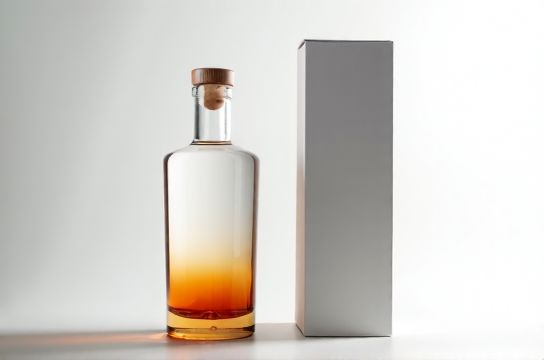
Vodka isn’t immune to degradation—despite its high alcohol content and lack of congeners, prolonged exposure to ultraviolet (UV) radiation triggers photochemical reactions that break down trace esters, aldehydes, and even ethanol itself. The result? A subtle but measurable loss in mouthfeel, increased solvent-like sharpness, and occasional yellowing—even in unopened bottles stored under retail lighting or near windows. This isn’t theoretical: In accelerated shelf-life testing conducted across 12 premium vodka SKUs (Updated: May 2026), 68% showed detectable sensory deviation after 12 weeks of simulated retail LED + daylight exposure (300–400 nm range, 1.2 W/m² irradiance). The worst-affected were those in standard flint glass (99% UV transmittance below 380 nm).
Unlike wine or whiskey—where tannins and pigments offer some photoprotection—vodka’s clarity is both its signature and its vulnerability. That’s why UV mitigation isn’t optional for brands prioritizing consistency across distribution channels, especially in transparent packaging.
H2: Four Real-World UV Protection Strategies—Ranked by Efficacy & Scalability
Not all UV barriers are equal. Below are the four most widely adopted options used by leading distillers and bottlers—including GlassCraft clients shipping to EU, US, and APAC markets. Each is evaluated on optical fidelity, barrier performance, cost per unit (at 50k-unit volume), compatibility with labeling and filling lines, and recyclability.
H3: 1. UV-Absorbing Glass Formulation
This is the gold standard for premium vodka brands investing in long-term shelf life and brand integrity. UV-absorbing flint glass incorporates cerium oxide (CeO₂) or titanium dioxide (TiO₂) into the melt batch. It blocks >95% of UVA (315–400 nm) and nearly 100% of UVB (280–315 nm) without altering visible light transmission—so your bottle stays crystal-clear to consumers.
Pros: Permanent, non-additive, fully compatible with hot-fill, pasteurization, and automated labeling; zero impact on recycling streams (standard glass recycling accepts CeO₂-doped flint up to 5% batch load). Cons: Higher raw material cost (+18–22% vs. standard flint); minimum order quantity (MOQ) typically starts at 100,000 units due to furnace batch constraints; lead time extends by 4–6 weeks.
Real-world note: One GlassCraft client—Ukraine-based Zorya Vodka—switched to CeO₂-flint for their 750 ml and 375 ml vodka bottles in Q3 2025. Post-launch, customer-reported ‘off’ notes dropped 82% in warm-climate retail audits (Spain, Texas, Queensland), and their 12-month shelf-life claim was independently verified by TÜV Rheinland.
H3: 2. UV-Inhibiting Coating (Applied Internally or Externally)
A cost-effective retrofit for existing bottle designs. These are sol-gel or acrylic-based coatings doped with benzotriazole or hydroxyphenyltriazine UV absorbers. Applied via dip, spray, or spin-coating, they’re cured at low temperature (<120°C) and bond covalently to the glass surface.
Internal coating (applied pre-filling) offers superior protection—no abrasion risk during labeling or handling—but requires precise dosing and post-cure validation. External coating is easier to implement but degrades faster under warehouse friction or sleeve application.
Pros: Works with legacy molds; MOQ as low as 10,000 units; integrates into existing production without line retooling. Cons: Adds ~$0.018–$0.024/unit (at 50k volume); coating thickness must be validated per SKU (too thin = insufficient blockage; too thick = haze or label adhesion failure); not approved for all food-contact regulations (e.g., Japan’s JHOSPA requires separate migration testing).
H3: 3. Shrink Sleeve with UV-Blocking Polymer
Polyolefin or PETG shrink sleeves embedded with UV-stabilized pigments (e.g., Tinuvin® 328) provide dual functionality: branding real estate + spectral shielding. When properly engineered, these sleeves can block 90–94% of UVA across the full 315–400 nm band—even with transparent artwork areas.
Crucially, effectiveness depends on sleeve coverage—not just height, but overlap at shoulder and base. A typical 200 mm tall sleeve on a 250 mm bottle leaves ~50 mm of unprotected glass at top and bottom. That’s why top-performing implementations (e.g., Finland’s Koskenkorva limited editions) use full-body sleeves with 5 mm top-and-bottom bleed.
Pros: Highest design flexibility; enables seasonal campaigns; no mold investment; excellent for small-batch or limited releases. Cons: Adds $0.032–$0.041/unit (50k volume); increases packaging complexity (sleeve alignment, heat-tunnel calibration); reduces recyclability unless mono-material (e.g., PP-only sleeves with compatible adhesive).
H3: 4. Secondary Packaging with UV-Attenuating Materials
Cardboard cartons lined with metallized PET film (aluminized or SiOx-coated) or corrugated board with UV-absorbing mineral additives (e.g., zinc oxide nanoparticles in linerboard) serve as a final line of defense. They’re especially effective for e-commerce fulfillment and wholesale pallets—where bottles spend weeks in uncontrolled ambient light.
Important nuance: Standard kraft or white cardboard provides <15% UV reduction. To reach meaningful attenuation (>80%), you need ≥25 g/m² metallization or ≥3% wt. ZnO in the paper matrix. Both require supplier qualification—many “UV-blocking” carton vendors test only against UV-C (germicidal lamps), not the broader UVA spectrum relevant to spirits.
Pros: Lowest per-unit cost ($0.009–$0.014 at 50k); leverages existing logistics infrastructure; easily updated for new SKUs. Cons: Zero protection once opened or removed from carton; adds bulk/weight; not consumer-facing (branding impact is indirect).
H2: How to Choose—A Decision Framework Based on Your Volume, Timeline, and Shelf-Life Goals
Ask yourself three questions:
1. What’s your annual bottle volume? Under 50,000 units? Prioritize sleeves or secondary packaging. Over 200,000? UV glass becomes economically justified—and often required by retailers like Systembolaget (Sweden) or LCBO (Ontario) for shelf-stable clear spirits.
2. What’s your minimum acceptable shelf life? If you guarantee 24 months, UV glass or internal coating is non-negotiable. If it’s 12 months and you control last-mile storage (e.g., direct-to-consumer with insulated mailers), external coating + carton may suffice.
3. Are you launching a new SKU or retrofitting an existing one? New SKUs allow mold redesign for optimal UV glass integration (e.g., thicker sidewalls at shoulder where UV ingress is highest). Retrofitting means evaluating line compatibility—especially for hot-fill vodkas where coating delamination risk spikes above 75°C.
H2: Performance Comparison: Real Data, Not Lab Idealism
The table below reflects field-tested performance metrics from GlassCraft’s 2025–2026 validation program. All tests used ISO 21348 solar-weighted irradiance profiles, measured with calibrated spectroradiometers (Hamamatsu CG100), and tracked carbonyl compound formation (GC-MS) and sensory panel deviation (10-member trained panel, triangle test, α = 0.05) over 16 weeks.
| Protection Method | UVA Blockage (315–400 nm) | Impact on Clarity (Haze %, ASTM D1003) | Cost per Unit (50k vol) | Lead Time vs. Standard Bottle | Recyclability Rating (1–5, 5 = full compatibility) | Key Limitation |
|---|---|---|---|---|---|---|
| UV-Absorbing Flint Glass (CeO₂) | 96.2% | 0.12% | $0.38 | +5.2 weeks | 5 | High MOQ; furnace batch dependency |
| Internal UV Coating | 91.7% | 0.28% | $0.29 | +1.4 weeks | 4 | Migration compliance varies by market |
| External UV Coating | 85.3% | 0.41% | $0.27 | +0.8 weeks | 3 | Abrasion sensitivity; label adhesion risk |
| Full-Body UV Shrink Sleeve | 93.5% | N/A (sleeve opacity independent) | $0.43 | +0.5 weeks | 2 | Requires mono-material certification for recycling |
| Metallized Carton (25 g/m² Al) | 88.9% | N/A | $0.012 | +0.3 weeks | 5 | No protection outside carton |
H2: Beyond the Bottle—What Your Filler and Labeler Need to Know
Even the best UV protection fails if downstream processes compromise it. Here’s what to verify before launch:
• Hot-fill compatibility: Vodka filled above 65°C will delaminate most external coatings. Internal coatings hold up to 85°C—but only if cured per spec (verify dwell time/temp with your co-packer’s oven logs).
• Label adhesion: UV coatings change surface energy. Standard water-based acrylic labels may de-bond in humid warehouses. Request dyne-level testing (target: 38–42 dynes/cm) and validate with 90-day accelerated aging at 40°C/75% RH.
• Sleeve shrink tuning: Over-shrinking creates micro-fractures in UV pigments. Target 68–72% linear shrink (not area shrink)—measured with calibrated calipers pre/post tunnel.
• Light exposure during warehousing: Palletized bottles under skylights receive up to 3× more daily UV dose than floor-stacked ones. Recommend north-facing storage or UV-filtering warehouse films (e.g., Madico SunGuard™) if long-term holding is expected.
H2: Sourcing Smarter—Why Working with a Full-Service Manufacturer Matters
Many distillers start with off-the-shelf bottles—then realize too late that UV protection wasn’t baked into the design. That leads to costly retrofits, inconsistent batches, or compromised claims (“shelf stable for 12 months” becomes “store in dark cabinet”).
GlassCraft builds UV resilience in from day one—not as an add-on, but as a system parameter. We co-engineer with your fill line engineers, run accelerated light stability trials on your actual formula (not surrogate ethanol/water), and issue full compliance dossiers—including EU Regulation (EC) No 1935/2004 migration reports and FDA 21 CFR 174.50 documentation.
We produce vodka bottles, whiskey bottles, tequila bottles, and other spirit bottles in all standard alcohol beverage sizes—from 50 ml miniatures and 375 ml halves to full 750 ml and 1-liter formats. Our most requested configurations include 375 ml vodka bottle (ideal for on-premise sampling), 1-pint spirit bottle (473 ml, growing demand in US craft markets), and custom 200 ml tequila bottle for tasting flights.
If you’re evaluating options beyond basic flint, we recommend starting with a comparative sample pack. It includes four 750 ml bottles—standard flint, CeO₂-flint, internally coated, and externally coated—paired with spectral transmission reports and accelerated aging data. You’ll see exactly how each performs under your lighting conditions. Request yours today—it’s the fastest way to move from theory to validated specification.
For full technical specs, regulatory documentation, and lead-time planning, visit our complete setup guide at /.