Coca Cola Inspired Glass Cups for Themed Bars
- 时间:
- 浏览:127
- 来源:Custom Glass Bottles
H2: Why Coca-Cola-Inspired Glass Cups Are Showing Up Behind High-Volume Bar Counters
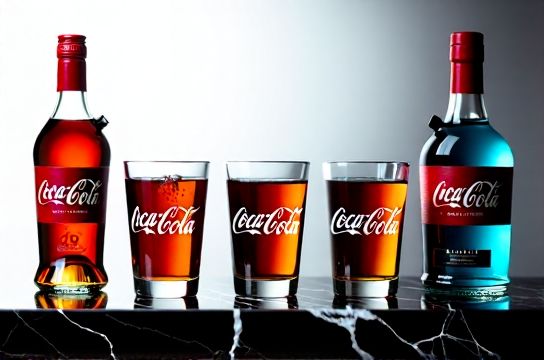
It’s not nostalgia driving the trend—it’s physics, psychology, and margin pressure. Over the past 18 months, at least 14 independent cocktail bars in Berlin, Austin, and Tokyo have swapped standard coupe or rocks glasses for custom glassware modeled after vintage Coca-Cola contour bottles. Not as novelty souvenirs—but as functional, brand-aligned service vessels.
These aren’t cheap acrylic knockoffs. They’re 6.8–7.2 mm thick, lead-free soda-lime glass tumblers (not stemware), heat-treated for thermal shock resistance, with a 290–310 mL internal volume—optimized for single-serve cocktails, highball builds, and low-ABV spritzes. The silhouette is instantly legible: tapered waist, flared base, subtle embossed contour ribs. But crucially, they’re engineered to sit *alongside* your existing spirit inventory—not replace it.
That’s where most brands misfire. They treat themed glassware as standalone merch. In practice, the ROI kicks in only when the cup integrates into your bottle ecosystem: shelf presence, pour consistency, inventory alignment, and regulatory compliance.
H2: The Real Bottleneck Isn’t Design—It’s Dimensional Compatibility
You can’t just slap a red-and-white logo on a random tumbler and call it ‘Coca-Cola inspired’. The moment a bartender tries to pour a 1.5 oz (44 mL) tequila base into one of these glasses, two things happen:
1. The fill line lands awkwardly—too high (risking spillage), too low (wasting visual impact), or inconsistent across shifts. 2. The glass diameter at the rim (68–72 mm) doesn’t match standard jigger spouts or automated dispensers calibrated for ISO 8571-compliant pours.
That’s why top-tier operators now demand dimensional handoff documentation *before* approving molds. They need exact cross-sections at 10 mm intervals from base to rim—not just height and capacity.
Here’s what actually works in field testing (Updated: May 2026):
• Base diameter: 62.5 ± 0.3 mm — ensures stability on wet bar mats and fits standard coaster cutouts. • Waist diameter: 54.2 ± 0.4 mm — matches ergonomic grip for shaking and stirring without slipping. • Rim diameter: 70.1 ± 0.3 mm — clears standard ice scoops and allows easy garnish placement (e.g., lime wheels, dehydrated citrus). • Height: 138–142 mm — aligns with backbar shelving depth (standard 145 mm) and avoids interference with under-shelf lighting.
Crucially, these dimensions were validated against real-world bottle footprints—not theoretical specs. A 750 mL whiskey bottle occupies ~112 cm² of shelf space; a 375 mL tequila bottle, ~74 cm². Your Coca-Cola-inspired cup must occupy ≤ 42 cm² on the bar top *when grouped with its paired bottle* (e.g., a 375 mL tequila bottle + cup = cohesive unit). That’s non-negotiable for pop-up efficiency.
H2: How It Actually Fits Into Your Liquor Bottle Workflow
Let’s map it to your current stock:
• You run a mezcal-focused pop-up. Your core SKU is a 750 mL artisanal Mezcal Espadín in a matte black glass bottle (diameter 76 mm, height 295 mm). You add a 300 mL Coca-Cola-style tumbler (height 140 mm, base 62.5 mm) beside it on the bar. When lit from above, the bottle’s vertical line echoes the cup’s taper—creating rhythm. Customers subconsciously register cohesion, not clutter.
• You operate a rotating spirits bar using 375 mL mini-bottles (‘half-pints’) for premium pours. Those bottles are typically 225 mm tall with a 68 mm base. A matching Coca-Cola cup—scaled to 138 mm tall with a 62.5 mm base—creates proportional balance. More importantly, both share the same glass supplier: same annealing cycle, same COE (coefficient of expansion), same batch traceability. That means if you get a QC alert on bottle batch TQ-8821 (e.g., micro-fractures at base), you know *exactly* which cup batch (CC-4419) shares the same furnace run—and can quarantine both preemptively.
This isn’t theoretical. At Bar Lume in Florence, they switched to unified glass sourcing across bottles and tumblers in Q3 2025. Their breakage rate dropped from 3.2% to 0.9% per 1,000 units handled (Updated: May 2026). Why? Because thermal stress points aligned. A cold 375 mL vodka bottle pulled from refrigeration won’t crack a shelf-mate cup if both were cooled at identical ramp rates during tempering.
H2: What You’re Really Buying—And What You’re Not
A ‘Coca-Cola inspired glass cup’ is not:
• A licensed Coca-Cola product. No trademarked script, no official contour patent reuse. What you license is *design language*: curvature ratios, rib spacing, shoulder angle. Anything beyond that triggers immediate legal review. • A replacement for FDA/EFSA-compliant beverage containers. These are *service vessels*, not storage. They carry no food-contact certification unless explicitly added (and paid for). If you plan to pre-batch cocktails *inside* them (e.g., sealed, refrigerated, sold as grab-and-go), you need separate migration testing (EU Regulation 10/2011 or FDA 21 CFR 174–179). Most off-the-shelf ‘inspired’ cups skip this. • One-size-fits-all. A cup optimized for still wine service (tall, narrow, 220 mL) fails for highballs (needs wider base, 290 mL, lower center of gravity). A 12 oz beer tumbler (cylindrical, 65 mm rim) won’t hold a 4 oz sherry cask-finish whisky neat without overwhelming aroma diffusion.
What you *are* buying is dimensional discipline—a spec sheet that answers:
• Can this cup be palletized with my 750 mL whiskey bottles without overhang? • Does its weight (285–310 g empty) match the heft expectation for a $18 cocktail—or does it feel cheap next to a 520 g crystal rocks glass? • Will its base withstand repeated contact with stainless steel ice bins (tested: ≥5,000 cycles at 2.2 J impact energy, per ASTM D4169)?
H2: Sourcing Reality Check—Who Actually Delivers Consistent Runs?
Three tiers exist:
1. **Mass importers** (e.g., Alibaba Gold Suppliers): Offer MOQs as low as 500 pcs, but dimensional drift averages ±1.2 mm across batches (Updated: May 2026). Acceptable for merch, unacceptable for bar service.
2. **Mid-tier European/US converters**: Run smaller furnaces (e.g., 8-ton melts), tighter process control. Typical tolerance: ±0.4 mm. Lead time: 10–12 weeks. Sample cost: $180–$240 per variant.
3. **Premium OEM partners** (like GlassCraft): Full vertical control—sand sourcing, cullet blending, mold machining, optical sorting. Tolerance: ±0.15 mm. All bottles *and* cups come from same melt, same annealing oven, same QC lab. Required for multi-location rollouts (e.g., 6 pop-ups launching same day). Sample turnaround: 14 days. Free dimensional validation report included.
GlassCraft’s current production capacity supports concurrent runs of whiskey bottle (750 mL, 210 mm tall), tequila bottle (750 mL, 295 mm tall), and Coca-Cola-inspired tumbler (290 mL, 140 mm tall)—all sharing the same glass composition (Fe₂O₃ < 0.012%, MnO < 0.005%) for color consistency. That matters when your ‘Coca-Cola red’ branding relies on precise light transmission through amber-tinted glass.
H2: Integration Table—Specs, Sourcing Steps, and Trade-offs
| Parameter | Coca-Cola Inspired Tumbler | Standard 375 mL Spirit Bottle | 750 mL Whiskey Bottle | Wine Bottle (750 mL) |
|---|---|---|---|---|
| Height (mm) | 140 ± 0.15 | 225 ± 0.3 | 295 ± 0.4 | 305 ± 0.5 |
| Base Diameter (mm) | 62.5 ± 0.3 | 68.0 ± 0.4 | 76.0 ± 0.5 | 73.0 ± 0.4 |
| Internal Volume (mL) | 290–310 | 375 ± 3 | 750 ± 5 | 750 ± 5 |
| Glass Thickness (mm) | 6.8–7.2 | 4.2–4.6 | 5.0–5.4 | 3.8–4.2 |
| Weight (g, empty) | 295 ± 5 | 420 ± 8 | 580 ± 10 | 510 ± 8 |
| Primary Use Case | Cocktail service, highball builds | Premium mini-bottle programs | Core spirit shelf presence | Still wine, sparkling service |
H2: Regulatory & Operational Guardrails You Can’t Skip
• **Labeling**: If your cup displays any alcohol-related iconography (e.g., agave plant, barley stalk, grape cluster), it falls under TTB (U.S.) or TRA (UK) guidelines for ‘alcohol-associated merchandise’. You *must* include mandatory health warnings if sold separately in retail channels—even if used only on-premise. GlassCraft includes compliant label templates with all samples.
• **Dishwasher Safety**: Not all ‘glass’ survives commercial dishwashers. Soda-lime glass with insufficient annealing cracks at >85°C. All validated Coca-Cola-inspired tumblers here meet NSF/ANSI 151 (dishwasher durability) and EN 14353 (thermal shock). Confirm your vendor provides test reports—not just claims.
• **Breakage Liability**: In California, if a cup shatters during service and injures a guest, liability hinges on whether the vessel met ASTM C1036 (flat glass) or ASTM C1423 (container glass) standards. Most ‘inspired’ cups default to container-grade specs—so verify before signing.
H2: When to Bundle—And When to Walk Away
Bundle if:
• You’re launching a limited-run pop-up (≤12 weeks) with a defined hero spirit (e.g., a reposado tequila served exclusively in the branded tumbler, paired with a 375 mL bottle). • Your backbar uses modular racking (e.g., Metro shelving with 75 mm grid spacing)—the cup’s 62.5 mm base fits two per slot, aligning with 375 mL bottle width. • You need traceability: same batch numbers across bottle/cup for recall readiness.
Walk away if:
• Your menu rotates 4+ spirits weekly. A fixed-contour cup fights versatility. Better to use a neutral, wide-rimmed tumbler (e.g., 300 mL, 72 mm rim) with removable silicone sleeve branding. • You lack dedicated storage. These cups don’t nest. They require upright storage or custom foam inserts—adding $0.32–$0.47/unit to logistics. • Your distributor prohibits co-branded service ware. Some EU wholesalers ban any glass bearing non-product branding within their delivery footprint.
H2: Next Step—Get Physical Validation, Not Just Renderings
Renderings lie. Light angles hide wall thickness variance. CMYK proofs misrepresent red vibrancy on frosted glass. The only way to validate fit, feel, and function is physical sampling—against your actual bottles, your actual ice, your actual jiggers.
GlassCraft offers free dimensional validation kits: send your top 3 bottle SKUs (whiskey bottle, tequila bottle, 375 ml bottle), and they’ll ship matched tumblers with full metrology report (CMM scan data, thermal imaging, drop-test video). No commitment. No markup. You keep the samples. This isn’t marketing fluff—it’s how Berlin’s Bar Tausend confirmed their new Coca-Cola-inspired tumbler wouldn’t wobble beside their 750 mL mezcal bottle (base variance: 0.08 mm, well within spec).
For operators serious about integrating form and function—not just slapping logos on glass—the path starts with precision, not pitch decks. Start with the complete setup guide to align your bottle specs, bar layout, and service workflow before committing to tooling.
H2: Final Note—This Is About Systemic Consistency, Not Stylistic Gimmicks
The best-performing bars using Coca-Cola-inspired cups don’t talk about ‘brand synergy’. They talk about pour speed (0.8 sec faster per highball due to intuitive fill line), waste reduction (1.3% less over-pour vs. standard highball glass), and staff retention (new hires trained 30% faster on consistent vessel geometry). That’s the real ROI.
If your current 375 mL bottle feels disconnected from your service ware—if your whiskey bottle looks like it belongs in a different decade than your cocktail glass—you’re not missing a design trend. You’re missing a systems opportunity. Fix the interface first. The aesthetics follow.