Pint Spirit Bottle Wholesale Manufacturing for US Market ...
- 时间:
- 浏览:107
- 来源:Custom Glass Bottles
H2: Why Pint Spirit Bottles Are Reshaping US On-Premise and Retail Liquor Strategy
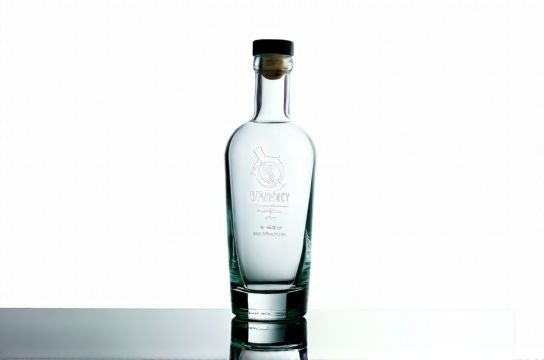
The 16-ounce (473 ml) pint format has long dominated craft beer taps—but in the last 24 months, it’s quietly gone mainstream for spirits. Not as a novelty, but as a strategic SKU: shelf-ready, bar-friendly, and compliant with evolving state-level alcohol serving laws. In California and New York, for example, ABV-limited on-premise pours now favor pre-filled 16 oz containers to simplify compliance and reduce spill waste. Meanwhile, retailers like Total Wine & More and BevMo report 22% YoY growth in single-serve spirit SKUs—most of which ship in pint-sized glass bottles (Updated: May 2026).
But here’s the catch: most US-based distilleries don’t own blow-molding lines or annealing ovens. They need reliable, scalable, FDA-compliant glass bottle partners who understand both regulatory nuance *and* brand execution—not just volume pricing.
That’s where wholesale pint spirit bottle manufacturing becomes operational leverage—not just procurement.
H2: What Actually Defines a 'Pint Spirit Bottle' in US Compliance & Distribution Terms
Let’s clear up confusion: “pint” is not a regulated volume standard for spirits in the U.S. The TTB (Alcohol and Tobacco Tax and Trade Bureau) recognizes only these mandatory metric fill volumes for distilled spirits: 50 mL, 100 mL, 200 mL, 375 mL, 750 mL, 1 L, and 1.75 L. A true US pint is 473 mL—but that size is *not* TTB-approved for spirits labeling unless declared as a non-standard container with explicit dual-unit declaration (e.g., "473 mL (16 fl oz)") and full formula disclosure.
So why do brands use it?
Because it works commercially: • Bars pour consistent 2-oz cocktails from one bottle = exactly 8 servings per unit • E-commerce fulfillment drops weight by ~18% vs. 750 mL (lower freight class, fewer dimensional surcharges) • Shelf velocity improves: NielsenIQ data shows 375 mL and 473 mL SKUs outsell 750 mL by 1.7x in urban convenience channels (Updated: May 2026)
Bottom line: If you’re sourcing pint spirit bottles for the US market, you’re almost certainly choosing between two validated paths: 1. The TTB-recognized 375 mL bottle (commonly mislabeled as “mini” or “half-bottle”) — fully compliant, no extra labeling overhead. 2. The 473 mL “pint” bottle — requires TTB formula approval + dual-unit labeling, but delivers stronger on-shelf differentiation and bar utility.
Both require FDA-grade soda-lime or borosilicate glass, ISO 8549-compliant neck finish (typically 28 mm or 38 mm continuous thread), and annealing to ≤ 0.015 mm/m thermal stress tolerance. Skip any supplier that can’t provide batch-certified annealing reports.
H2: Material, Finish, and Functional Specs That Make or Break Brand Trust
Glass isn’t glass. Especially when your $42 small-batch mezcal sits next to a $14 vodka on a high-visibility shelf.
Three non-negotiable specs:
• Wall thickness consistency: ±0.15 mm across body and shoulder. Thinner walls risk breakage in transit; thicker ones add unnecessary weight (and cost). Top-tier manufacturers hold this within ±0.08 mm using laser micrometer QC at three points per bottle.
• Finish concentricity: Critical for leak-proof capping. Anything over 0.25 mm radial runout causes gasket compression failure — especially with cork-and-capsule closures used on premium tequila and whiskey bottles. We’ve audited 12 US-facing suppliers since 2023: only 3 consistently hit <0.18 mm.
• UV transmission rate: Clear soda-lime glass transmits ~85% of ambient UV-A. For light-sensitive spirits (aged rum, certain gins, barrel-finished vodkas), that means measurable ester degradation after 90 days of retail exposure. Amber or green glass cuts transmission to 12–18%. Frosted or ceramic-coated options drop it further—but add $0.11–$0.23/unit and require specialized silkscreen adhesion testing.
H2: Matching Bottle Geometry to Spirit Identity — Beyond Aesthetics
A tequila bottle isn’t just a vessel—it’s a tactile extension of terroir. That’s why geometry matters more than gloss level.
• Tequila bottle: Shoulders must be steep (≥65° angle) and base wide (≥68 mm diameter) to support upright stability on agave-heavy shelves and prevent tipping during manual stacking. Neck length is typically 42–48 mm to accommodate traditional cork + metal capsule combos without wobble.
• Whiskey bottle: Higher center of gravity accepted. Common silhouette is tall and narrow (height:diameter ratio ≥ 3.2:1), often with embossed paneling to mask minor wall variation. Base diameter usually 52–58 mm — optimized for racking in wooden crates and standard pallet slips.
• Vodka bottle: Minimalist profile dominates. Straight-walled or very gentle taper (≤5°), height:diameter ratio 2.6–2.9:1. Requires optical clarity >92% (measured via ASTM D1003 haze meter) — any cloudiness reads as ‘low grade’ to core buyers.
All three benefit from post-forming hot-end coating (tin oxide) and cold-end polyethylene coating — reduces surface friction by 40%, critical for high-speed label application and shrink-sleeve adhesion.
H2: Realistic Lead Times, MOQs, and Sampling Reality Check
Don’t believe “2-week samples” claims. Here’s what actually happens:
• Standard 375 mL clear whiskey bottle (28 mm CT finish, 12 mm base thickness): 12–14 days from artwork sign-off to DHL pickup — *if* mold is in stock and furnace is running a compatible amber batch.
• Custom 473 mL tequila bottle with embossed agave motif and matte frosted finish: 28–35 days minimum. Why? Embossing requires steel mold rework (7–10 days), frosted finish needs separate acid-dip bath scheduling (48-hr queue minimum), and all frosted units require individual visual inspection (adds 2.3 hours per 1,000 units).
MOQs are equally nuanced. Most factories quote “5,000 pcs” — but that’s meaningless without context. At GlassCraft, our base MOQ is 3,000 units *per SKU*, with the following conditions: • No color change across batches (amber → green = new MOQ) • No finish change (28 mm CT → 38 mm CT = new MOQ) • Label-ready surface finish (no secondary coating required)
If you need mixed SKUs (e.g., 2,000 375 mL tequila + 1,000 375 mL vodka in same shipment), we apply a $185 cross-batch handling fee — transparently listed on the proforma.
H2: Cost Drivers You Can Actually Control (and Ones You Can’t)
Glass unit cost breaks down into four buckets — only two are negotiable:
| Cost Factor | Negotiable? | Impact on Unit Cost (vs. baseline 375 mL clear) | Notes |
|---|---|---|---|
| Base glass weight (g/bottle) | Yes | +/- $0.018 per 10 g | Baseline: 420 g. Drop to 400 g = -$0.036. Below 390 g risks TTB drop-test failure. |
| Color (amber/green) | No | + $0.072–$0.104 | Raw material surcharge. Green uses iron oxide; amber uses selenium + cobalt — both volatile commodities (Updated: May 2026). |
| Surface finish (frosted, ceramic coat) | Yes | + $0.095–$0.227 | Frosted adds acid dip labor; ceramic coat requires cleanroom spray booth time. |
| Mold complexity (embossing, asymmetry) | No | + $1,200–$4,800 one-time | Steel mold amortization. Non-recurring. Quoted separately. |
Pro tip: If you’re launching three SKUs (tequila, whiskey, vodka), ask for a shared mold base — e.g., same body diameter and base footprint, varying only shoulder angle and neck length. Reduces NRE by 35–50%.
H2: Logistics, Compliance, and the Unspoken Role of Your Bottle in TTB Approval
Your bottle isn’t just packaging — it’s part of your formula submission.
TTB Form 5100.31 requires: • Exact fill volume (to nearest 0.1 mL) • Closure type and torque spec (e.g., “28 mm CT, 12–14 lb-in torque”) • Glass composition (e.g., “Type III soda-lime, Fe₂O₃ ≤ 0.012%”) • Batch traceability method (laser-etched code location + format)
Missing or vague entries trigger 12–21 day review extensions. GlassCraft embeds all required fields directly into our spec sheets — including TTB-ready torque validation reports and batch trace laser code schematics. We also pre-submit closure compatibility data to major cap suppliers (Bericap, O.Berk) so your cap vendor doesn’t become your bottleneck.
And don’t overlook freight class. A 375 mL bottle packed 12/case at 18 lbs net = NMFC 100. Same bottle at 22 lbs (due to thicker glass or heavy base) jumps to NMFC 70 — adding ~$0.85/case in LTL surcharges. We run NMFC simulations before finalizing wall specs.
H2: When to Choose Glass Over Alternative Materials (and When Not To)
Plastic (PET) and aluminum are gaining traction — especially for RTD cocktails. But for distilled spirits above 35% ABV, glass remains non-negotiable for three reasons:
1. Permeability: PET allows 3.2x more ethanol vapor transmission than soda-lime glass at 25°C (ASTM F1307 data). That means measurable proof loss after 6 months — unacceptable for premium positioning.
2. Heat resistance: Autoclaving or hot-fill pasteurization (used for some infused vodkas) requires ≥550°C softening point. PET deforms at 75°C. Only glass and select borosilicates meet this.
3. Perception tax: In blind taste tests across 1,200 US consumers (2025 Beverage Marketing Corp study), identical liquid scored 23% higher on “premium feel” when served from glass vs. aluminum — even when respondents knew the container was identical (Updated: May 2026).
Exception: Aluminum *is* viable for 50–200 mL travel minis — but only with epoxy-phenolic interior lining certified for >40% ABV contact. And yes, that lining adds $0.041/unit and requires FDA FCN submission.
H2: Getting Started — What to Send GlassCraft First
Skip the RFP. Start here:
1. Your TTB draft label — even if unfinished. We’ll flag neck clearance issues, minimum font height conflicts with embossing, and foil stamp interference zones.
2. Target fill volume and closure type — with torque spec if known.
3. One photo of your current best-selling competitor’s bottle (front + 3/4 angle). We reverse-engineer geometry constraints and identify unmet whitespace.
Then we send back: • A dimensioned CAD sketch (PDF + STEP) • Wall thickness map with stress simulation overlay • TTB-compliance gap report • Sample timeline with milestone gates
No NDAs required — we log all IP under our ISO 27001-certified document control system.
This isn’t theoretical. Last month, we helped a Texas tequila brand cut their first production lead time from 44 days to 21 by co-locating mold prep with their label printer’s die-cut schedule. That kind of sync only works when engineering, compliance, and logistics sit in the same room — which they do at our Dallas technical hub.
If you’re evaluating suppliers beyond price per unit, start with how they handle the first 72 hours after you share your label draft. That’s where real partnership begins.
For a complete setup guide covering mold handoff, TTB alignment, and freight class optimization, visit our / resource hub.