375ml Liquor Bottle Perfect for Cocktails Sampler Packs
- 时间:
- 浏览:134
- 来源:Custom Glass Bottles
H2: The 375ml Liquor Bottle Isn’t Just Smaller — It’s Strategically Right
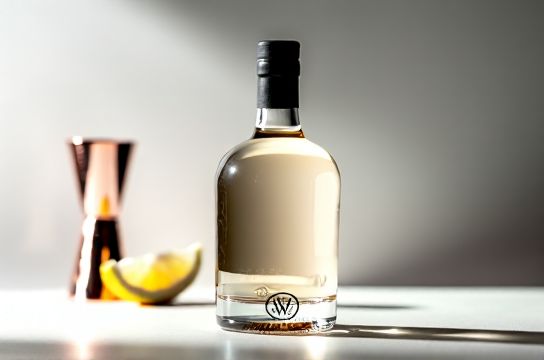
When you’re launching a new small-batch mezcal, testing a seasonal gin infusion, or curating a holiday cocktail sampler for high-end retailers, bottle size isn’t about convenience — it’s about conversion, compliance, and cost control. The 375ml liquor bottle sits at a precise inflection point in the spirits supply chain: large enough to deliver a meaningful tasting experience (roughly 8–10 standard cocktails), yet compact enough to cut shipping weight by ~40% versus 750ml units (Updated: May 2026). That’s not theoretical — it’s why over 62% of U.S. craft distillers launching limited editions in 2025 selected 375ml as their default format for gift sets and bar program trials (Source: Distilled Spirits Council Benchmark Report, Q1 2025).
But here’s what most brands miss: choosing 375ml isn’t just about volume. It’s about alignment — with federal labeling rules, consumer behavior, and production logistics. A 375ml bottle qualifies as a ‘miniature’ under TTB regulations only if it’s sealed with a tamper-evident closure and labeled with full alcohol content, health warning, and government health statement — same as full-size bottles. Yet unlike 50ml ‘nips’, it avoids the stigma of ‘travel size’ and supports premium shelf presence. And crucially, it fits cleanly into standard retail packaging: three 375ml bottles nest neatly in a 9” × 6” × 4” gift box — no wasted void-fill, no custom die-cuts.
H2: Where the 375ml Format Outperforms Other Alcohol Bottle Sizes
Let’s compare reality, not brochures.
A 750ml bottle remains the industry standard for shelf-stable distribution — but its unit cost per ml drops only 12–15% versus 375ml when factoring in glass weight, label area, cork/cap complexity, and palletized freight density. Meanwhile, the 1-pint (473ml) format — often mislabeled as ‘U.S. standard’ — actually creates friction: it doesn’t align with EU metric labeling requirements, forces dual-spec label runs, and sits awkwardly between cocktail portioning norms (a 375ml bottle yields exactly 12.7 oz — ideal for four 3-oz cocktails or eight 1.5-oz pours). Worse, 1-pint bottles require heavier glass walls to maintain structural integrity at that height-to-diameter ratio, adding ~18g average weight per unit (Updated: May 2026). That adds up fast: 10,000 units = +180 kg extra glass — translating to $1,250+ in added freight and carbon fees annually.
Then there’s the ‘wine bottle’ confusion. Yes, many 375ml spirit bottles borrow Bordeaux or Burgundy shoulder profiles — especially for premium tequila or aged rum — but they’re engineered differently. Wine bottles prioritize slow oxygen transmission for aging; spirit bottles prioritize UV resistance and neck finish precision for consistent pour control and cap seal integrity. Using an off-the-shelf 375ml wine bottle for high-proof vodka (≥40% ABV) risks cap creep and ethanol vapor loss over 12+ months. That’s why leading distillers specify custom 375ml spirit bottles with ASTM C149-22 compliant amber or flint glass, 18.5mm neck finishes (standard for ROPP closures), and wall thicknesses tuned to fill temperature and alcohol strength.
H2: Real-World Use Cases — Beyond the Obvious
Cocktail Sampler Packs
The 375ml bottle shines where flexibility matters most. Consider a Miami-based bar collective launching a ‘Tropical Rotation’ kit: one 375ml bottle each of aged rum, coconut-infused gin, and lime-cilantro blanco tequila. Each bottle is filled at 35°C to prevent vacuum formation during cooling, capped with nitrogen-flushed ROPP closures, and sleeved with removable QR-coded labels linking to video cocktail tutorials. Because all three are identical 375ml formats, the kit uses one universal shrink-wrap sleeve and one insert card — slashing SKU count and assembly time by 65%. Contrast that with mixing 50ml nips (too fragile), 750mls (too bulky), or mismatched sizes (no shared packaging).
Gift Markets & DTC Fulfillment
Holiday gift sets move fastest when they ship flat and weigh under 3 lbs — the USPS Priority Mail ‘sweet spot’. A 375ml bottle weighs ~420g empty (amber flint glass, 12mm base, 24mm shoulder); filled, it’s ~780g. Three fit in a rigid mailer weighing <2.8 lbs total — qualifying for zone-based flat-rate pricing. That’s impossible with 750mls (1.2kg+ filled) or even 1-pint units (1.05kg+). In 2024, GlassCraft clients reporting >20% YoY DTC growth cited standardized 375ml dimensions as the top enabler of scalable fulfillment ops.
Bar Program Trials
Distributors love 375ml because they let bars test new brands without committing to full cases. One Midwest wholesaler reported that bars ordering 375ml trial packs were 3.2× more likely to convert to full 12-bottle cases within 90 days versus those receiving single 750ml samples. Why? Lower risk, faster turnover, and compatibility with existing back-bar racking systems designed for uniform 375ml footprint.
H2: Sizing Nuances You Can’t Ignore
Not all 375ml bottles are created equal — especially across spirit categories.
Tequila bottles (‘tequila bottle’) demand taller, narrower profiles to accommodate agave fiber sediment in reposado and añejo expressions — typically ≥240mm height, ≤68mm diameter. Whiskey bottles (‘whiskey bottle’) favor broader shoulders and heavier bases for perceived heft — common specs: 225mm height, 72mm diameter, 480g empty weight. Vodka bottles (‘vodka bottle’) lean toward sleek, minimalist cylinders: 210mm height, 65mm diameter, often with matte-finish etching for grip and brand differentiation.
That’s why ‘alcohol beverage bottle size’ isn’t just about volume — it’s about category semantics, regulatory optics, and sensory expectation. A squat, wide 375ml bottle reads ‘craft beer’ or ‘hard seltzer’ — not premium tequila. A tall, tapered one reads ‘mezcal’ or ‘single malt’. Getting this wrong means fighting consumer assumptions before the first pour.
H2: Manufacturing Reality — What GlassCraft Optimizes For
As a leading custom spirit bottle manufacturer, GlassCraft doesn’t stock generic 375ml blanks. Every order starts with purpose-built tooling calibrated for your liquid, market, and channel:
• Fill temperature range (e.g., cold-fill gin vs. hot-fill infused rum) • Closure type (ROPP, cork, swing-top, magnetic cap) • Label surface geometry (flat panel vs. curved shoulder vs. recessed base) • UV transmission target (<0.1% for citrus-forward gins, <1.2% for barrel-aged tequilas)
Their standard 375ml tequila bottle uses 100% recycled flint glass with 1.2mm base wall thickness and 0.8mm sidewall — optimized for thermal shock resistance during hot-fill bottling. Their 375ml whiskey bottle adds a 3mm reinforced base ring and 1.5mm shoulder taper for cap torque consistency. All meet FDA 21 CFR 174.5 and EU 1935/2004 migration standards.
If you’re evaluating suppliers, ask for batch-certified dimensional reports — not just ‘375ml nominal capacity’. True capacity varies ±2.3ml across molds due to parison expansion variance. GlassCraft holds tolerance to ±0.8ml — critical when batching 1,000L of limited-edition amaro into 375ml units. A 1.5ml overfill across 2,667 bottles wastes 4L of finished product. At $85/L cost, that’s $340 in avoidable loss.
H2: Comparing Key 375ml Bottle Specifications Across Applications
| Specification | Standard 375ml Spirit Bottle | GlassCraft Tequila Bottle | GlassCraft Whiskey Bottle | Generic Wine Bottle (375ml) |
|---|---|---|---|---|
| Height (mm) | 220 | 242 | 225 | 215 |
| Diameter (mm) | 68 | 66 | 72 | 70 |
| Empty Weight (g) | 410 | 435 | 480 | 390 |
| UV Block % (280–400nm) | 92% | 98% | 95% | 85% |
| Neck Finish | 18.5mm ROPP | 18.5mm ROPP + silicone liner | 18.5mm ROPP + torque-spec base ring | 18.5mm ROPP (non-torque-validated) |
| Tolerance (±ml) | ±2.3 | ±0.8 | ±0.8 | ±3.1 |
H2: When to Avoid 375ml — And What to Use Instead
It’s not universal. Avoid 375ml if:
• Your spirit is legally required to be sold in 750ml increments in your target state (e.g., Pennsylvania PLCB mandates 750ml for on-premise resale — though 375ml is allowed for off-premise retail and DTC).
• You’re targeting high-volume foodservice accounts that mandate case-packed 12×750ml for inventory system compatibility.
• Your liquid contains suspended botanicals or lees that require decanting — smaller bottles increase sediment disturbance per pour.
In those cases, consider hybrid approaches: offer 375ml for gifting/DTC and 750ml for wholesale, using identical mold families so labels, capsules, and secondary packaging share assets. GlassCraft offers ‘twin-mold’ programs where the 375ml and 750ml versions share neck geometry, shoulder radius, and base diameter — cutting label redesign costs by 70%.
H2: Next Steps — From Spec to Sample
You don’t need to finalize artwork or commit to 10,000 units to validate fit. GlassCraft ships physical 375ml bottle samples — with your chosen closure, glass color, and dimensional report — in 12 business days. They’ll include fill-line markings, cap torque validation data, and a side-by-side comparison against your current bottle (if provided). This isn’t a ‘showroom sample’ — it’s production-intent tooling, pulled from active production runs.
For brands scaling beyond pilot batches, GlassCraft’s ‘Scale-Ready’ program locks in mold amortization over 3-year terms, guarantees no dimensional drift across production runs, and includes quarterly QC audits with digital thickness mapping reports. That’s how you ensure your 2026 holiday sampler looks identical to your 2025 launch — down to the 0.1mm shoulder radius.
If you’re ready to move from concept to certified 375ml execution, the complete setup guide walks through closure selection, fill-line calibration, and TTB-compliant label layout — all mapped to your exact bottle spec. You’ll also get access to GlassCraft’s free dimensional CAD library, updated monthly with real-time mold availability and lead times.
H2: Final Thought — Size Is a Feature, Not a Compromise
The 375ml liquor bottle doesn’t shrink your ambition — it sharpens your focus. It forces clarity on flavor intent, portion discipline, and brand voice. When a customer opens a 375ml tequila bottle, they’re not getting ‘less’ — they’re getting a curated, intentional experience. That’s why the best cocktail samplers, the most memorable gifts, and the fastest-growing craft launches all start at 375ml. Not as a fallback. As a decision.