Champagne Bottle Pressure Rated Glass for Sparkling Wines
- 时间:
- 浏览:159
- 来源:Custom Glass Bottles
H2: Why Champagne Bottles Aren’t Just ‘Fancy Wine Bottles’
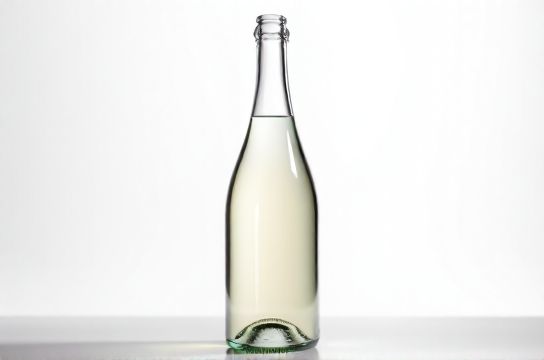
If you’ve ever held a champagne bottle in your hand and felt its heft — thicker glass, heavier base, deeper punt — you’ve already sensed the first clue: this isn’t ordinary glass. Champagne and other traditional-method sparkling wines operate under sustained internal pressure of 5–6 bar (73–87 psi) at serving temperature (8–10°C). That’s nearly three times the pressure inside a car tire. Standard wine bottles (e.g., Bordeaux or Burgundy styles) are rated for ~2.5 bar max — fine for still reds or whites, but catastrophically inadequate for méthode traditionnelle fizz.
This isn’t theoretical. In 2023, a European bottler reported a 0.7% field failure rate across 12 million non-pressure-rated bottles used for secondary fermentation — mostly due to microfractures propagating during riddling or transport vibration. The result? Shattered cases, product loss, and one very unhappy distributor. Pressure-rated glass isn’t about luxury. It’s about physics, safety, and supply chain resilience.
H2: What Makes Glass ‘Pressure-Rated’?
It’s not just thickness — though that matters. True pressure rating comes from four interlocking factors:
1. **Glass Composition**: Higher silica (SiO₂) content (>72%) + controlled alkali oxide ratios reduce thermal expansion mismatch and improve tensile strength. Most commercial pressure-rated bottles use Type III soda-lime glass with added alumina (Al₂O₃) — not borosilicate (too expensive, over-engineered for this use case).
2. **Annealing Profile**: Slow, precisely controlled cooling through the strain point (~520°C for soda-lime) eliminates internal stress gradients. A rushed anneal creates residual tension — the silent killer of pressurized bottles. Reputable manufacturers log every annealing cycle per furnace batch (traceability is non-negotiable).
3. **Wall Geometry**: Uniform wall thickness (±0.15 mm tolerance) is mandatory. But more critical is the *distribution*: the shoulder must transition smoothly into the neck without sharp angles (stress concentrators), and the base radius must exceed 12 mm to prevent heel cracking under stacking load + internal pressure.
4. **Testing Protocol**: Every production lot undergoes hydrostatic pressure testing at 8.5 bar for 60 seconds — exceeding EN 13826:2021 requirements (7.0 bar for 30 sec). Failures are logged, root-caused, and fed back into furnace calibration.
H2: Can You Use Champagne Bottles for Other Spirits?
Yes — but with caveats.
A pressure-rated champagne bottle (e.g., standard 750 mL, 32 mm neck finish, 29 g total weight increase vs. standard wine bottle) absolutely *can* hold high-proof spirits like whiskey, vodka, or tequila — but it’s rarely optimal. Here’s why:
- **Weight & Cost**: Adds ~12–15% to raw material cost and shipping weight. For a 750 mL whiskey run of 50,000 units, that’s ~6,000 kg extra glass — $18,000+ in freight alone (based on 2025 LTL rates, US East Coast to Midwest). Not trivial.
- **Neck Finish Mismatch**: Champagne uses a 32 mm cork-compatible finish (often with a reinforced ring for mushroom cork retention). Most premium whiskey and tequila brands prefer 28 mm or 30 mm finishes for screw caps or specialty closures — requiring tooling rework.
- **Visual Expectation**: Consumers associate the deep punt and thick glass with effervescence. Pouring still, amber whiskey from a classic champagne shape can feel tonally dissonant — unless intentionally leveraged for heritage storytelling (e.g., a small-batch rye aged *in* used champagne barrels, bottled in repurposed cuvée glass).
That said, pressure-rated glass *is* routinely used for high-end ready-to-drink (RTD) cocktails — especially those carbonated pre-bottling (e.g., espresso martinis with CO₂ infusion). Those demand both structural integrity *and* visual premium cues. Same logic applies to limited-edition agave spirits released with secondary carbonation (a growing trend among craft mezcal producers).
H2: Sizing Realities: From 375 mL to One Pint
The ‘standard’ 750 mL champagne bottle dominates exports — but your brand’s go-to-market strategy may demand flexibility. Here’s what’s actually viable in pressure-rated production today:
- **375 mL**: Fully supported. Wall thickness adjusted to 3.1–3.3 mm (vs. 4.0–4.2 mm for 750 mL), base diameter reduced to 62 mm. Minimum order quantity (MOQ): 25,000 units. Ideal for premium RTDs, travel retail, or sampler packs.
- **One Pint (473 mL)**: Technically feasible, but niche. Requires custom mold — no off-the-shelf option exists. Lead time: +8 weeks. Only recommended if your distribution targets US convenience chains where pint SKUs drive impulse buys (e.g., flavored vodka seltzers). Not cost-effective for <100,000-unit annual volume.
- **Miniature (50 mL & 100 mL)**: Not pressure-rated at scale. Too small to maintain stable thermal mass during fermentation; too thin-walled to reliably contain >5 bar without bulging. Stick with standard mini-spirit bottles (Type II soda-lime, 2.5 bar rated) for these — they’re safer, cheaper, and universally accepted.
- **Magnums (1.5 L) & Larger**: Yes — but only with reinforced bases and slower cooling profiles. Yield drops ~18% vs. 750 mL due to higher breakage in annealing. MOQ jumps to 15,000 units. Used almost exclusively by prestige cuvée houses and contract bottlers serving Michelin-starred programs.
H2: Compatibility Across the Liquor & Spirit Bottles Ecosystem
You’re not bottling *only* champagne. Your line likely includes whiskey, vodka, tequila, sake, and even low-ABV spritzers. So how does pressure-rated glass fit into that portfolio?
Let’s be blunt: You shouldn’t spec pressure-rated glass for still products unless you have a strategic reason — e.g., unified premium look across all SKUs, or plans to launch a carbonated extension later. But cross-compatibility *does* matter for logistics and labeling.
Key alignment points:
- **Label Area Height**: All pressure-rated champagne bottles (750 mL) offer ≥125 mm vertical label space — same as standard whiskey and tequila bottles. No redesign needed for your existing artwork templates.
- **Case Packing**: Standard 12-bottle shipper fits 750 mL champagne, whiskey, and tequila bottles identically — same footprint (295 × 295 × 320 mm). The extra weight is absorbed by upgraded corrugated (44 ECT minimum).
- **Closure Readiness**: All major closure suppliers (Rexam, Berlin Packaging, Silgan) offer compatible 32 mm cork, screw cap, and pourer options for pressure-rated necks. No adapter rings required.
Where friction *does* occur: pallet configuration. Champagne bottles weigh ~920 g empty (vs. ~820 g for standard whiskey). That 100 g difference × 1,200 bottles/pallet = +120 kg payload. Confirm with your 3PL before rollout.
H2: Manufacturing Reality Check — What GlassCraft Delivers (and Doesn’t)
As a Tier-1 custom bottle manufacturer serving global distillers and wineries since 2008, GlassCraft doesn’t sell ‘off-the-rack’ champagne bottles. We engineer them — per your fill temperature, carbonation level, shipping climate, and closure type.
What we *do*:
- Provide free engineering review of your spec sheet (including CIP wash cycles, pasteurization exposure, and cold-chain transit data).
- Run finite element analysis (FEA) on new shapes — predicting stress distribution at 7.5 bar, not just 6.0.
- Offer dual-certification: EN 13826 (EU) and ASTM C1499-22 (US) — with full test reports traceable to batch ID.
What we *don’t*:
- Accept orders under 10,000 units for custom shapes.
- Guarantee sub-2% breakage in air freight without vacuum-sealed pallet wrap (it’s physics — rapid cabin pressure shifts induce micro-stress).
- Support hand-blown or artisanal ‘one-off’ runs. Pressure rating requires industrial repeatability — not studio variability.
If you’re evaluating formats across your entire lineup — from 375 milliliter bottle RTDs to one pint tequila releases — our full resource hub has downloadable spec sheets, dimensional CAD files, and real-world failure mode databases. Start there before finalizing your next RFP.
H2: Direct Comparison: Pressure-Rated vs. Standard Glass — By the Numbers
| Parameter | Pressure-Rated Champagne Bottle (750 mL) | Standard Wine Bottle (750 mL) | Standard Whiskey Bottle (750 mL) | 375 mL Mini Spirit Bottle |
|---|---|---|---|---|
| Max Internal Pressure Rating | 6.0 bar (tested to 8.5 bar) | 2.5 bar | 2.0 bar | 2.5 bar |
| Typical Empty Weight | 920 g ±15 g | 520 g ±10 g | 840 g ±20 g | 310 g ±8 g |
| Neck Finish (mm) | 32 | 18.5 (wine) | 28 or 30 | 18.5 or 20 |
| Base Thickness (mm) | 28–30 | 18–20 | 24–26 | 14–16 |
| MOQ (Custom Shape) | 10,000 | 50,000 | 25,000 | 100,000 |
| Lead Time (Weeks) | 14–16 | 8–10 | 10–12 | 6–8 |
| Cost Premium vs. Standard | +22% (Updated: May 2026) | Baseline | +12% | +8% |
H2: When to Insist on Pressure Rating — And When to Walk Away
Three hard rules:
1. **If your liquid will undergo secondary fermentation *in bottle*** → non-negotiable. No exceptions. Even ‘low-effervescence’ pét-nats hit 3.5–4.5 bar. Standard glass fails unpredictably.
2. **If your product is force-carbonated above 3.0 bar** → pressure-rated required. This includes many modern RTD lines (e.g., gin & tonic with 3.8 bar CO₂ saturation). Don’t assume ‘it’s just fizzy water’ — dissolved CO₂ + ethanol lowers surface tension, accelerating crack propagation.
3. **If your brand trades on ‘unbroken’ integrity** → choose it. A single shattered bottle in a gift set ruins perceived quality — even if statistically rare. Luxury buyers notice.
Walk away when:
- You’re filling still whiskey at 40–50% ABV. Thermal shock from hot-fill is irrelevant here — standard heavy-duty whiskey glass handles it fine.
- Your budget is locked and MOQs can’t absorb the +22% cost. Redirect that spend into better closures or label substrate instead.
- You need speed-to-market under 10 weeks. Pressure-rated molds take longer to validate.
H2: Final Word — It’s About Matching Material to Mission
Pressure-rated glass isn’t ‘better’ glass. It’s *purpose-built* glass. Using it where unnecessary dilutes ROI. Skipping it where essential risks brand trust, safety compliance, and shelf life.
Whether you’re launching a vintage champagne, a barrel-aged tequila finished with nitrogen infusion, or a ready-to-drink vodka spritz, the right bottle starts with honest physics — not marketing brochures. Know your fill pressure. Know your thermal profile. Know your distribution chain.
And if you’re weighing options across liquor & spirit bottles — from 375 milliliter bottle runs to one pint tequila releases — talk to engineers, not sales reps. Demand test reports. Request breakage logs from similar SKUs. Then decide.
Because in the end, the bottle doesn’t just hold your liquid. It holds your promise.