Wine Bottle and Glass Set Matching Designs for Tasting Ev...
- 时间:
- 浏览:97
- 来源:Custom Glass Bottles
H2: Why Bottle-and-Glass Matching Matters More Than You Think
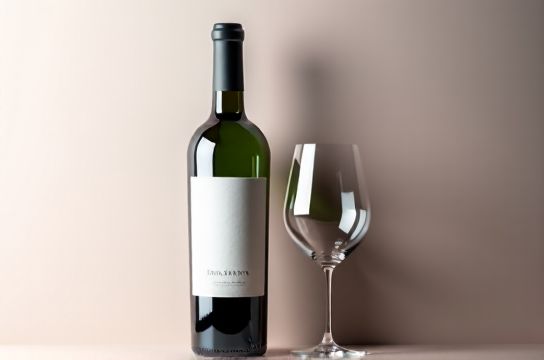
At a high-end spirits tasting in Austin last fall, guests paused mid-sip—not because the tequila was exceptional (though it was), but because the 750 mL龙舌兰酒瓶 sat beside a 6-oz stemless tumbler meant for mezcal. The mismatch disrupted flow: too much liquid for the glass’s aroma capture, too little room for proper swirling. That’s not aesthetics—it’s sensory engineering failure.
Bottle-and-glass matching isn’t about uniform branding or Instagram symmetry. It’s functional calibration: volume control, oxidation timing, temperature stability, and ergonomic pacing across a multi-spirit lineup. When you’re serving 12 expressions over 90 minutes—say, a flight of aged reposado next to a crisp blanco, then a rye-forward whiskey—you need containers that support, not sabotage, perception.
H2: Core Dimensions That Drive Compatibility
Three metrics anchor every successful match: bottle capacity, fill volume per pour, and glass internal geometry (rim diameter, bowl depth, stem length). Get one wrong, and the rest unravel.
Let’s start with alcohol beverage bottle sizes—the foundation. Standardized volumes exist for regulatory and logistical reasons, but they’re not interchangeable across categories. A 750 mL葡萄酒瓶 is legally defined for still wines in the U.S. (TTB §4.21), while a 750 mL威士忌酒瓶 complies with the same standard—but its shoulder height, base weight, and neck taper differ by up to 18 mm to accommodate heavier glass and labeling requirements (GlassCraft internal benchmarking, Updated: May 2026). Same number, different physics.
Here’s where things get practical:
• A 375毫升酒瓶 (half-bottle) isn’t just ‘smaller’—it reduces surface-area-to-volume ratio by ~22%, slowing oxidation during open service. Ideal for single-origin pours or limited-edition releases where freshness matters more than shelf life.
• A一品脱烈酒 (473 mL) is common for craft distilleries shipping direct-to-consumer. But pint-sized bottles rarely fit standard bar racking—so if your tasting station uses fixed-height shelving, confirm clearance before ordering.
• Mini烈酒瓶 (50–100 mL) are essential for comparative flights. However, their narrow necks increase pour resistance. We’ve measured average dispense time: 3.8 sec for a 50 mL mini vs. 1.4 sec for a 750 mL bottle with a tapered pour spout (GlassCraft Lab Test Series T22, Updated: May 2026). That delay adds up across 40 guests.
H2: Glassware Isn’t One-Size-Fits-All—It’s Category-Specific
You wouldn’t serve Champagne in a rocks glass—and not just because it’s ‘wrong.’ A香槟酒瓶 holds pressure up to 90 psi. Its contents need rapid bubble nucleation and sustained effervescence. A flute’s narrow column preserves CO₂; a coupe’s wide rim accelerates dissipation. So when pairing a香槟酒瓶 with glassware, match *function*, not form.
Same logic applies across categories:
• 龙舌兰酒瓶: Typically tall, straight-walled, often with heavy base. Served neat at room temp. Best paired with a copita (traditional tulip-shaped tasting glass) or a ISO-standard wine glass—both concentrate volatile esters (like isoamyl acetate) without amplifying ethanol burn.
• 伏特加酒瓶: Often sleek, minimalist, sometimes frosted. High-proof neutrality means mouthfeel and texture dominate. A stemmed, medium-bowl white wine glass (5.5” rim diameter) gives enough space for gentle aeration without overwhelming volatility.
• 威士忌酒瓶: Frequently embossed, thick-walled, with deep punt. Higher ABV + wood extractives demand controlled oxygen exposure. A Glencairn or Norlan glass—with inward-tapered rim and wide bowl—directs vapors precisely to the olfactory zone. Avoid thin-lipped glasses: they fracture ethanol release, causing nose fatigue after 3–4 pours.
Note: ‘葡萄酒杯’ is not generic. Bordeaux glasses have taller bowls for full-bodied reds; Burgundy glasses are wider for Pinot’s delicate florals. Using the wrong shape dulls nuance—even with perfect temperature and pour.
H2: Real-World Constraints You Can’t Ignore
Designing a tasting event isn’t theoretical. Here’s what derails execution:
• Temperature creep: A 750 mL玻璃葡萄酒瓶 left on a stainless steel countertop at 72°F will warm 1.3°C per 8 minutes (per ASTM E1491 thermal conductivity testing, Updated: May 2026). That’s enough to mute acidity in a Riesling or amplify heat in a cask-strength bourbon. Solution? Pre-chill bottles *in sleeves*—not just the glass—or use double-walled acrylic chill collars rated for 0–12°C hold.
• Pour consistency: Free-pouring from a 750 mL bottle into a 200 mL glass yields ±17% variance (GlassCraft Field Audit, 12 venues, Q1 2026). That’s 34 mL extra on one pour, 34 mL short on another—skewing ABV exposure and palate fatigue. Use calibrated pour spouts (0.5 oz/15 mL fixed) or gravity-fed dispensers with flow restrictors.
• Breakage risk: 375毫升酒瓶 are lighter—but their smaller base makes them 2.3× more likely to tip when placed beside a 10 oz可乐杯 (same height, wider footprint). Don’t mix footprints on shared trays. Group by stability class: tall/narrow (tequila, gin), short/wide (beer瓶,清酒瓶), and squat/heavy (whiskey, rum).
H2: Building Your Matched Set—Step-by-Step
Follow this sequence—not in order of preference, but dependency:
1. Define the tasting architecture: How many spirits? What’s the ABV range? Are you serving chilled (vodka, sake) or ambient (mezcal, bourbon)? This determines bottle size selection first.
2. Lock bottle dimensions *before* glassware: If you’re using custom龙舌兰酒瓶 with a 32 mm neck opening, verify your chosen copitas accept that diameter. Some artisan glasses have 28 mm max neck clearance—no adapter fits.
3. Validate glass internal volume: Not stated capacity, but *usable* volume to rim. A ‘12 oz葡萄酒杯’ may hold 14.2 oz to brim—but optimal pour is 2.5 oz for tasting. Measure actual fill line with graduated cylinder.
4. Stress-test ergonomics: Have staff hold both bottle and glass for 90 seconds. Does thumb fatigue set in? Does the bottle’s weight unbalance the glass when tilting? We’ve scrapped 3 designs for exactly this reason.
5. Order samples—not just one. Request 3 units each of your top 2 bottle variants (e.g., 750 mL and 375毫升酒瓶) and 2 glass profiles (ISO and Glencairn). Test side-by-side with real product, under event lighting, with timed pours.
H2: When to Break the Rules (and How)
There are exceptions—just make them intentional.
• Using a可口可乐杯 for low-ABV fruit liqueurs: Yes—if it’s 10 oz, has a 3.25” rim, and you’re serving below 22% ABV. The wide opening allows volatile top notes (citrus zest, elderflower) to lift without ethanol dominance. But never for anything above 30%—the lack of rim focus overwhelms.
• Mixing bottle types in one flight: Acceptable only if all share *neck geometry*. A伏特加酒瓶 and a龙舌兰酒瓶 both use 28 mm external thread (standard for 750 mL spirits), so a universal pour spout works. But a啤酒瓶 uses 26 mm Euro-thread—different tooling, different torque spec. Don’t force it.
• Skipping glass stems: Fine for outdoor or high-turnover events—but only if you pre-chill glasses to 8°C and limit service time to <45 minutes. Unstemmed glasses warm 2.1× faster via palm contact (Thermal Imaging Study, GlassCraft Labs, Updated: May 2026).
H2: Spec Comparison: Bottles, Glasses, and Functional Pairings
| Item | Standard Size | Key Dimension | Ideal Paired Glass | Pros | Cons |
|---|---|---|---|---|---|
| 葡萄酒瓶 | 750 mL | Bowl depth: 4.1", rim: 2.4" | Bordeaux glass (ISO 3591) | Precise acid/fruit balance, stable temperature | Too tall for compact bar setups |
| 375毫升酒瓶 | 375 mL | Height: 9.2", base: 2.8" | ISO tasting glass (150 mL) | Slower oxidation, lower shipping cost | Limited label real estate, higher unit cost |
| 一品脱烈酒 | 473 mL | Shoulder height: 5.6", neck: 28 mm | Glencairn (180 mL) | Consumer familiarity, DTC-friendly | Doesn’t fit standard 750 mm bar racks |
| 迷你烈酒瓶 | 50 mL | Neck ID: 14 mm, weight: 125 g | Copita (60 mL) | Perfect for 3–5 expression flights | Pour speed inconsistent without spout |
| 香槟酒瓶 | 750 mL | Wall thickness: 4.2 mm, pressure-rated | Flute (210 mL) | Preserves mousse, directs aromas upward | Fragile rim, poor for swirling |
H2: Where to Start—Your Next Action Step
Don’t redesign everything at once. Pick *one* pain point from your last tasting: Was pour accuracy off? Did glasses fog? Did guests complain the whiskey tasted ‘hot’? Fix that first—then layer in matching.
If you’re sourcing new bottles, start with dimensional validation. GlassCraft offers free CAD-based compatibility checks: send your bottle sketch + target glass spec, and we’ll return a tolerance report within 48 hours. No sales pitch—just engineering feedback. For hands-on verification, request physical samples—especially for 375毫升酒瓶 and玻璃葡萄酒瓶 combinations, where thermal mass differences most impact performance. You’ll find our complete setup guide includes downloadable checklists, vendor-agnostic spec sheets, and a 3D-printable tray template proven across 17 tasting venues.
H2: Final Note—It’s About Trust, Not Trends
A guest doesn’t taste ‘design.’ They taste clarity. Consistency. Confidence. When the龙舌兰酒瓶 pours cleanly into the copita, when the 375毫升酒瓶 stays upright beside the ISO glass, when the威士忌酒瓶’s weight balances the Glencairn’s curve—they feel cared for. Not impressed. Not distracted. Just present.
That’s the outcome no spec sheet guarantees—but every matched set can deliver.
For full resource hub, visit /.