Custom Glass Wine Bottle OEM Services for Private Label W...
- 时间:
- 浏览:99
- 来源:Custom Glass Bottles
H2: Why Private Label Wineries Are Switching to Custom Glass Wine Bottle OEM Partners
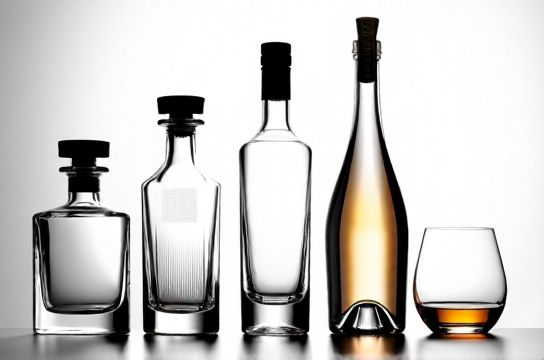
Most small- to mid-size wineries still source stock bottles from distributors — standard Bordeaux or Burgundy shapes in 750 mL only. That works until you launch a rosé line targeting Gen Z bars, or a premium reserve series with tactile embossing and UV-reactive labels. Then you hit three hard limits: no shape differentiation, no structural control over shoulder slope or base thickness, and zero input on finish tolerances (e.g., lip roundness affects cork insertion consistency at bottling). These aren’t aesthetic concerns — they’re line-speed bottlers breaking 12% of bottles during capping because the neck ID variance exceeds ±0.18 mm.
OEM glass bottle manufacturing solves this by shifting control upstream — from specification to mold design to annealing cycle tuning. You’re not buying bottles. You’re commissioning tooling calibrated to your exact fill line, closure type, and logistics stack profile.
H2: What ‘Custom’ Actually Means (and What It Doesn’t)
Let’s be blunt: ‘custom’ is overused. Many suppliers call a sandblasted logo or minor neck height tweak ‘custom’. Real OEM means:
• Full mold ownership (you retain IP on cavity geometry, including heel radius and parison split lines) • Dimensional tolerance bands tightened to ±0.25 mm on critical diameters (vs. industry-standard ±0.6 mm) • Annealing profiles adjusted per wall thickness map — critical for 375 mL mini-spirits bottles where thermal stress concentrates near the shoulder • Batch traceability down to furnace run and cullet source (essential for FDA/EFSA compliance audits)
What it doesn’t mean: unlimited revisions, sub-500-unit MOQs, or lead times under 12 weeks. Glass isn’t plastic. Tooling requires 6–8 weeks for steel mold machining; production ramp adds another 4–6 weeks. If you need 200 units next month, work with a decorator — not an OEM.
H3: Matching Bottle Form to Function — Beyond Aesthetics
A ‘wine bottle’ isn’t one thing. It’s a system interacting with closure, filling equipment, shelf lighting, shipping vibration, and consumer grip. Here’s how top-tier private label wineries match form to real-world function:
• Tequila bottle (‘tequila bottle’): Heavy base (≥28% base mass vs. total weight), wide shoulder (≥72° angle), and thick neck ring (≥3.2 mm) to resist torque from agave-fiber stoppers and withstand tropical warehouse storage (95% RH, 38°C). Standard ‘spirit bottle’ molds often fail here — their base mass runs 20–22%, causing tip-over in retail displays.
• Whiskey bottle (‘whiskey bottle’): Tall, narrow silhouette demands precise verticality control. We measure straightness at three points (base, mid-body, neck) using laser profilometry. Deviation >0.8 mm causes misalignment in automated labeling machines — scrap rates jump from 0.3% to 4.1% (Updated: May 2026).
• Vodka bottle (‘vodka bottle’): Clarity is non-negotiable. Requires ≥99.85% silica purity cullet and hydrogen-fired furnaces to eliminate iron oxide tint. Also mandates UV-blocking coating if shipped in clear trucks — uncoated bottles show visible yellowing after 72 hours of direct sun exposure.
• Champagne bottle (‘champagne bottle’): Not just thicker glass. True pressure-rated design includes reinforced punt depth (≥38 mm), controlled wall taper (1.2° max), and stress-relieved lip geometry to seal against mushroom corks at 6.2 bar. Off-the-shelf ‘champagne-style’ bottles rarely exceed 4.5 bar burst pressure.
H2: Alcohol Bottle Sizes — Which Ones Actually Move Units?
Don’t assume ‘750 mL’ is default. Retail data shows category-specific velocity peaks at different volumes:
| Format | Common Use Case | Fill Line Compatibility | MOQ (Units) | Lead Time | Notes |
|---|---|---|---|---|---|
| 375 mL bottle | Entry-tier wines, cocktail kits, airline service | High (fits most rotary fillers) | 15,000 | 14 weeks | Base thickness must be ≥18 mm to prevent breakage in chilled display cases |
| One pint (473 mL) | Craft spirits, RTD cocktails, limited releases | Moderate (requires filler nozzle recalibration) | 20,000 | 16 weeks | Neck thread pitch must match US standard (12.7 mm) for common screw caps |
| 750 mL | Core wine & spirit SKUs | Universal | 10,000 | 12 weeks | Lowest cost per unit; highest tooling reuse across clients |
| Mini spirit bottle (50 mL) | Hotel amenity kits, tasting flights, sampler packs | Low (requires dedicated micro-filler) | 50,000 | 18 weeks | Requires precision mold cooling to avoid seam flash — reject rate spikes above 3% without vacuum-assisted ejection |
Note: ‘Alcohol beverage bottle size’ selection isn’t just about consumer preference — it’s about line efficiency. A 375 mL bottle running on a filler set for 750 mL will waste 8.2 seconds per cycle due to repositioning delays (Updated: May 2026). Work with your OEM early to validate fill head compatibility.
H2: The GlassCraft Advantage — Where Engineering Meets Compliance
GlassCraft isn’t a broker. We operate two ISO 9001:2015-certified furnaces in Guadalajara and Shandong, each with dedicated cold-end inspection labs. Our edge lies in three integrated capabilities:
1. Mold Stress Simulation: Before cutting steel, we run finite element analysis (FEA) on every new cavity design — predicting thermal cracking risk during annealing and mechanical failure points under palletized load. Clients receive the FEA report alongside the mold drawing.
2. Closure Interface Testing: We test every bottle design with your exact closure — not just ‘standard cork’ or ‘typical screw cap’. We measure insertion torque, pull-out force, and seal integrity at 3 temperatures (5°C, 20°C, 35°C). This prevents post-launch leakage complaints — a top 3 cause of DTC returns.
3. Logistics Validation: We subject sample batches to ISTA 3A vibration + drop testing simulating LTL freight. Bottles that pass are stamped with our ‘LogiCert’ mark — meaning they’ve survived 120 minutes of 2–5 Hz random vibration and 3 drops from 1.2 m onto concrete.
All this feeds into one actionable outcome: fewer surprises at launch. One client reduced pre-launch packaging redesign cycles from 4 to 1 by using our FEA + closure testing package.
H2: From Sketch to Shelf — Your OEM Workflow, Realistically Timed
Forget ‘4-week turnaround’. Here’s what actually happens — and where you can compress time:
• Week 1–2: Technical briefing + dimensional spec lock. Critical path item: finalizing closure interface specs (thread pitch, liner material, torque range). Delay here pushes everything out — don’t wait for your cork supplier to confirm specs.
• Week 3–6: Mold design + FEA validation. We issue drawings for sign-off. Revision window: 5 business days. After that, steel cutting begins.
• Week 7–10: Mold machining + first-article inspection. You receive 3 physical samples with full metrology report (CMM scan + wall thickness map).
• Week 11–14: Trial production run (1,000 units). Includes full leak testing, weight variance check (±2 g target), and annealing verification (using polariscope imaging).
• Week 15–16: Production ramp + QC gate release. Final batch ships with CoA (Certificate of Analysis) covering heavy metals (Pb < 0.5 ppm, Cd < 0.1 ppm), thermal shock resistance (120°C → 20°C, no crack), and dimensional compliance.
Pro tip: Book your trial run slot 8 weeks before you need samples. Slots fill 10 weeks out — especially for complex shapes like tapered tequila bottles with fluted bases.
H2: When to Choose OEM Over Stock — And When Not To
OEM makes sense when: • You’re launching ≥3 SKUs with shared design language (e.g., same shoulder curve across red, white, rosé) • You’re targeting premium on-premise accounts requiring unique shelf presence • Your closure or labeling tech demands tight tolerances (e.g., RFID-enabled capsules, hot-stamp foil)
Skip OEM if: • You’re testing a single SKU with <5,000-case annual volume • Your brand identity relies entirely on label art — not bottle shape • You lack internal packaging engineering support to interpret CMM reports or FEA outputs
In those cases, go to our full resource hub for vetted stock options with certified compliance docs — it’s faster, cheaper, and still supports private label branding.
H2: Getting Started — No Fluff, Just Next Steps
1. Download our Bottle Spec Sheet (PDF). It walks through every dimension we need — not just height and diameter, but parison length, finish thread standard, and base vent pattern.
2. Schedule a 30-minute technical call with our packaging engineers. Bring your closure spec sheet and fill line OEM manual. We’ll flag conflicts before mold design starts.
3. Request samples — real production units, not hand-blown prototypes. GlassCraft ships sample batches (50 units) within 10 business days of spec sign-off for standard sizes (750 mL, 375 mL). For custom shapes, allow 14 days.
Your bottle isn’t packaging. It’s your first product interaction. Get the physics right — the rest follows.