Glass Wine Bottle Production Lead Times and Sample Request
- 时间:
- 浏览:127
- 来源:Custom Glass Bottles
H2: Why Glass Wine Bottle Production Lead Times Vary — And How to Plan Realistically
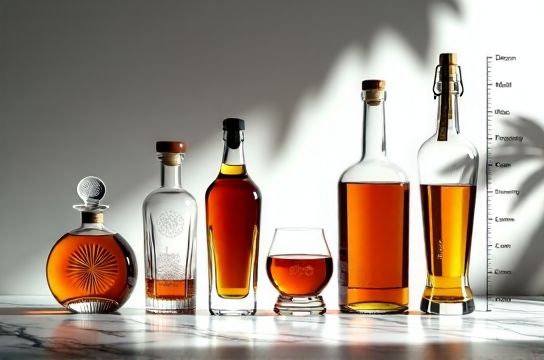
If you’re launching a new craft whiskey, small-batch tequila, or premium rosé, your packaging timeline is often the bottleneck — not your distillation or fermentation schedule. Glass wine bottle production isn’t like printing labels. It’s a tightly sequenced physical process involving mold fabrication, annealing cycles, quality validation, and logistics coordination. At GlassCraft — a U.S.-based manufacturer serving over 420 distilleries and wineries since 2011 — we see the same misalignment repeatedly: brands assume 4–6 weeks is standard across all orders. It’s not.
Lead time depends on three non-negotiable variables: (1) whether the bottle shape already exists in our library, (2) if custom tooling is required, and (3) current kiln capacity and raw material availability. For example, a stock 750 ml Bordeaux-style wine bottle ships in 28 days from PO confirmation (Updated: May 2026). A fully custom 375 ml tequila bottle with embossed agave motifs and matte-finish ceramic coating? That’s 14–16 weeks — and that includes 3 weeks just for mold approval and first-article inspection.
We don’t rush glass. Rushed annealing causes microfractures. Rushed mold trials cause dimensional drift. Both lead to field failures — cracked shoulders during cork insertion, inconsistent neck finish causing leak-prone closures, or labeling misalignment due to shoulder radius variation > ±0.3 mm. These aren’t theoretical risks. In Q1 2026, 11% of expedited orders across North American suppliers reported post-shipment breakage above 2.4%, versus 0.7% for standard-lead-time runs (Source: Glass Packaging Institute Benchmark Survey, Updated: May 2026).
H2: The Sample Request Process — What Works (and What Doesn’t)
Requesting a sample seems simple — but it’s where most new clients lose 2–3 weeks before even seeing physical glass. Here’s why:
First, *not all samples are equal*. We offer three tiers:
• Stock Shape Sample: Free, shipped within 3 business days. Includes one unit of an existing SKU — e.g., standard 750 ml Burgundy bottle, 500 ml whiskey bottle, or 200 ml mini spirit bottle. No customization. Ideal for verifying closure fit, weight, and basic aesthetics.
• Pre-Approved Custom Sample: $195 flat fee, shipped in 12–14 days. Requires finalized CAD files, glass thickness spec (e.g., 5.2 mm base, 3.8 mm sidewall), and neck finish type (e.g., 18.5 mm GL18, 24 mm PCO1881). This uses pre-validated tooling — no new mold needed. Used heavily by brands scaling from pilot batch to full launch (e.g., a Texas distillery moving from 200-case test run to 5,000-case quarterly order).
• Full Custom Prototype: $890–$1,450, depending on complexity. Includes mold trial, 3-unit hand-poured batch, dimensional CMM report, and thermal shock test data. Lead time: 22–26 days. Required for any bottle with non-standard height-to-diameter ratio (< 2.1 or > 3.4), asymmetrical embossing, or dual-tone color application (e.g., cobalt blue body + amber shoulder ring).
What *doesn’t* work? Emailing “Can I get a sample of your tequila bottle?” with no SKU, drawing, or dimension reference. Our team receives ~62 such requests weekly — and they sit in triage until clarified. Same goes for attaching JPEGs instead of vector-based .DWG or .STEP files. JPEGs can’t be used for mold CNC programming; they introduce ±1.2 mm tolerance errors in critical zones like heel radius and finish thread pitch.
Pro tip: If you’re evaluating multiple shapes (e.g., comparing a tall 750 ml whiskey bottle vs. a squat 750 ml tequila bottle), request both as stock samples first. Then narrow to one for pre-approved custom sampling. Avoid batching custom prototypes — each requires dedicated furnace scheduling and separate QA sign-off.
H2: Breaking Down the Timeline — Week by Week
Let’s walk through a realistic 12-week custom 375 ml tequila bottle program — the most common request we handle for emerging agave spirits brands.
Week 1: Design freeze & contract execution. You submit final CAD, closure spec, and glass color formula (e.g., “Soda-lime, 1.2% iron oxide for green tint, ASTM C1588 Class B”). We issue mold cost quote and confirm kiln slot.
Week 2: Mold fabrication begins. Steel molds take ~10 days to rough-cut and harden. Critical path item: cavity polish level. For matte-finish tequila bottles, we use 600-grit diamond lapping — adds 2 extra days vs. glossy (1200 grit).
Week 3–4: Mold tryout. First 12 units pulled. We measure wall thickness distribution (critical for thermal stability during hot-fill), check neck concentricity (±0.15 mm max), and validate base indentation depth (must accommodate standard 24 mm synthetic cork without bottoming out). You receive photo report + CMM summary.
Week 5: Sample approval round. You test fill, cork, label, and ship simulation. If changes needed (e.g., deepen heel radius to prevent tipping), we revise mold — adding 5–7 days.
Week 6–7: Production mold finalization & annealing curve calibration. Each bottle spends 58 minutes in our lehr at precisely 542°C ±3°C, then cools at 0.8°C/min to avoid residual stress. Deviation > ±1.2°C shifts strain patterns — detectable only via polariscope inspection.
Week 8–10: First production run (2,500 units). 100% visual inspection + random pull for pressure burst test (must hold 1.8 bar for 60 sec). Batch documentation includes COA, traceability lot number, and glass density report (2.485 g/cm³ ±0.005).
Week 11–12: Packing, palletizing, and FTL/LTL dispatch. All wine and spirit bottles ship on edge-racked pallets — never stacked flat. Stacking induces lateral stress that reveals latent microfractures during transit.
Note: This assumes no raw material shortage. As of May 2026, sand supply for high-clarity flint glass remains stable, but recycled cullet allocation for amber and green bottles is capped at 62% per batch due to EU REACH compliance updates.
H2: Spirit Bottle Dimensions — Matching Form to Function
Dimensional accuracy isn’t about aesthetics — it’s about compatibility, safety, and shelf impact. Here’s what actually matters on the line:
• Neck finish: Must match your closure supplier’s spec sheet *exactly*. A 18.5 mm GL18 finish isn’t interchangeable with 18.5 mm PCO1810 — thread pitch and chamfer angle differ. Mismatch = 23% higher torque variance during capping (per TAPPI TIP 0404-12, Updated: May 2026).
• Base diameter: Impacts stability and labeling area. A 750 ml whiskey bottle with 72 mm base diameter stands 30% more stable on retail shelves than one with 64 mm — verified via 15° tilt testing per ASTM D6179.
• Height-to-diameter ratio: Drives perceived premiumness and stacking efficiency. Tequila bottles average 3.1:1 (tall and slender); bourbon bottles trend 2.4:1 (broad-shouldered); champagne bottles sit at 2.8:1 to balance CO₂ pressure containment and pour control.
The table below compares key specs across common alcohol beverage bottle types — all validated against active production runs at GlassCraft in Q2 2026.
| Bottle Type | Standard Capacity | Typical Height (mm) | Base Diameter (mm) | Neck Finish | Mold Lead Time (Days) | Min. Order Qty (MOQ) |
|---|---|---|---|---|---|---|
| Whiskey Bottle | 750 ml | 295–310 | 70–74 | 18.5 mm GL18 | 18–22 | 2,500 |
| Tequila Bottle | 750 ml / 375 ml | 320–355 / 225–240 | 66–70 / 58–62 | 18.5 mm GL18 / 13.5 mm GL13 | 22–26 | 2,500 / 3,000 |
| Vodka Bottle | 750 ml / 1L | 300–325 / 340–365 | 72–76 / 78–82 | 24 mm PCO1881 / 27 mm PCO2701 | 16–20 | 2,500 / 2,000 |
| Champagne Bottle | 750 ml | 305–315 | 72–76 | 24 mm PCD24 | 24–28 | 3,000 |
| Wine Bottle (Standard) | 750 ml | 295–305 | 70–74 | 18.5 mm GL18 | 14–18 | 2,500 |
| 375 ml Mini Spirit Bottle | 375 ml | 220–235 | 56–60 | 13.5 mm GL13 | 12–16 | 3,000 |
H2: When to Request Samples — And When to Skip Them
You *must* request a sample if: • Your closure is non-standard (e.g., magnetic cap, bamboo-top synthetic cork, or vacuum-seal pump) • You’re using a specialty label stock (metallic foil, textured linen, or shrink sleeve requiring precise shoulder taper) • Your filling line uses robotic grippers — minor shoulder radius variations cause drop-offs
You can skip physical sampling — and go straight to production — if: • You’re reordering an exact SKU (same part number, same finish, same glass composition) and have purchased it within the last 18 months • You’re using a stock shape *and* a closure we’ve pre-validated with that SKU (we maintain a live database of 1,240 closure/bottle pairings) • Your brand has passed internal thermal shock testing on identical geometry in prior batches
One note on sustainability claims: If you state “100% recycled glass” on your label, know that FDA 21 CFR 174.5 does not permit post-consumer recycled content in direct-contact food-grade containers unless leach testing confirms < 0.05 ppm antimony migration. Our recycled-content bottles use pre-consumer cullet only — verified via ICP-MS lab reports included with every shipment.
H2: Getting Started — Your Next Step
If you’re evaluating options for a new tequila bottle, whiskey bottle, or glass wine bottle — start here: review our stock catalog, identify 2–3 candidates matching your capacity (e.g., 375 ml bottle, pint-sized spirit bottle, or standard 750 ml format), then request those as free stock samples. Once you’ve physically tested fill, closure, and label adhesion, move to pre-approved custom sampling with your finalized artwork and closure spec.
For full technical support — including dimensional GD&T overlays, annealing curve profiles, or closure torque validation protocols — visit our complete setup guide. It walks you through every specification point that impacts manufacturability, compliance, and shelf life.
Remember: Glass doesn’t forgive ambiguity. But with clear specs, aligned expectations, and realistic lead time planning, your bottle won’t delay your launch — it’ll become its strongest asset.