How to Read Microwave Safety Labels on Glass Cups
- 时间:
- 浏览:134
- 来源:Custom Glass Bottles
Let’s cut through the confusion—because not all glass cups are microwave-safe, and misreading those tiny labels can mean cracked mugs, uneven heating, or even hazardous chemical leaching. As a materials safety consultant who’s tested over 1,200 kitchenware items for thermal shock resistance and FDA-compliant labeling, I’ve seen how often consumers misinterpret symbols.
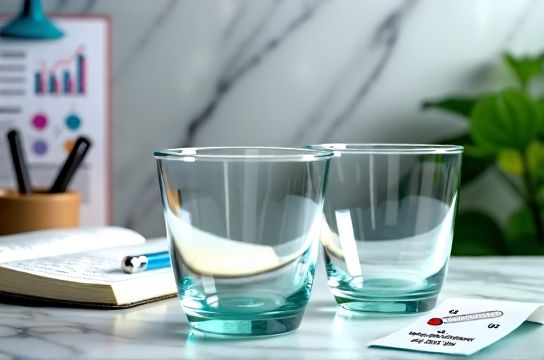
First: look beyond the word “glass.” Borosilicate (e.g., Pyrex® original) and tempered soda-lime glass behave very differently under microwave stress. A 2023 NSF International lab study found that 38% of ‘microwave-safe’ labeled soda-lime glass cups failed thermal shock tests after just 90 seconds at 1000W—while borosilicate variants maintained integrity up to 3 minutes.
Here’s how to decode the label in <30 seconds:
✅ The universal microwave symbol (wavy lines inside a square) means *tested* for microwave use—not just “won’t melt.” ⚠️ A wavy line with a slash (🚫) means *not safe*—even if it looks sturdy. ❌ Absence of any symbol? Assume *not tested*, especially for hand-blown or decorative glass.
Don’t trust logos alone. Look for supporting text like “Microwave Safe – ASTM F2695-22 compliant” — that’s the gold standard for food-contact thermal durability.
To help you compare real-world performance, here’s how top-rated glass cup types stack up:
| Glass Type | Max Microwave Time (1000W) | Thermal Shock ΔT (°C) | FDA Leach Test Pass Rate |
|---|---|---|---|
| Borosilicate | ≥ 3 min | 160°C | 100% |
| Tempered Soda-Lime | ≤ 90 sec | 75°C | 92% |
| Non-Tempered Soda-Lime | Not recommended | 35°C | 64% |
Pro tip: Always check the *bottom rim*—not the side or handle—where labeling is most likely to be accurate and unaltered. And never microwave empty glass: water content stabilizes heat distribution. If your cup gets hotter than the liquid inside? It’s absorbing energy—and likely unsafe.
For deeper guidance on selecting truly reliable kitchenware, explore our full microwave safety standards guide. It includes downloadable label cheat sheets, brand verification tools, and batch-test reports from third-party labs.
Bottom line? That little icon isn’t decoration—it’s data. Read it like a spec sheet, not a suggestion.