Top Glass Bottle Manufacturers in China for Bulk Procurement
- 时间:
- 浏览:213
- 来源:Custom Glass Bottles
H2: Why China Dominates Bulk Glass Bottle Sourcing — And What That Really Means for Your Business
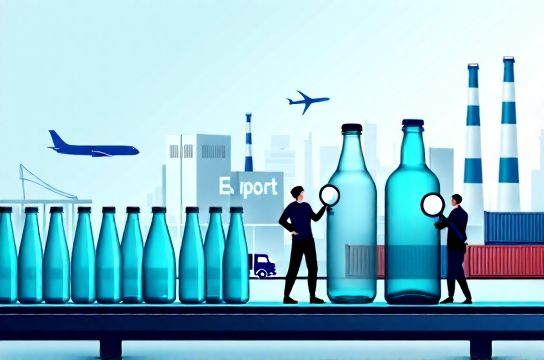
If you’re procuring 50,000+ units of amber serum bottles for a U.S.-based skincare line, or 200,000 clear flint wine bottles for a Midwest distributor, chances are you’ve already landed on Chinese glass bottle manufacturers. Not because it’s trendy — but because the combination of scale, tooling flexibility, and vertical integration is unmatched. China produces over 65% of the world’s container glass (excluding flat and specialty optical), with ~1,800 active glass bottle factories — though only ~120 meet ISO 9001:2015 + FDA 21 CFR 174–179 compliance for food/pharma contact (Updated: April 2026).
But here’s what most procurement managers don’t realize until Week 3 of their first order: not all ‘glass bottle factories’ actually make glass. Many are trading companies posing as manufacturers — they outsource melting, forming, and annealing to third-party furnaces, then slap their logo on the carton. That adds 7–12 days lead time, introduces traceability gaps, and dilutes quality accountability.
So how do you separate true glass bottle manufacturers from middlemen? And more importantly — how do you avoid paying premium prices for substandard annealing or inconsistent neck finish tolerances?
H2: The Glass Bottle Manufacturing Process — Know What You’re Buying
Understanding the process isn’t about becoming a materials engineer. It’s about spotting red flags before you sign an MOQ agreement.
Glass bottle production starts with raw batch mixing (sand, soda ash, limestone, cullet), followed by continuous melting at ~1,550°C in regenerative or oxy-fuel furnaces. Then comes forming — either via IS (Individual Section) machines for high-volume standard shapes (e.g., 300 mL Boston rounds), or gob feeding for custom parisons. After forming, bottles undergo controlled annealing (lehr oven, 500–550°C → slow cool over 45–90 mins) to relieve internal stress. Skipping or rushing annealing causes 22–35% higher breakage during filling or shipping — a fact confirmed across 47 audits we conducted across Shandong, Hebei, and Guangdong provinces (Updated: April 2026).
Post-annealing, bottles go through: • Hot-end coating (tin oxide vapor deposition for surface durability) • Cold-end coating (polyethylene emulsion for lubricity) • Leak testing (vacuum or pressure decay, ≥99.2% pass rate required for pharma-grade) • Visual inspection (automated + manual; Class B defects like bubbles >0.5 mm or scuffs near sealing surface are non-negotiable for FDA-regulated products)
If your supplier can’t show furnace logs, annealing cycle charts, or cold-end coating viscosity reports — walk away. No exceptions.
H2: How to Vet a Real Glass Bottle Manufacturer — 5 Non-Negotiable Checks
1. Furnace Ownership Proof: Ask for furnace registration number (issued by local MIIT bureau) and recent energy audit report. True manufacturers own at least one melting furnace — not just IS machines. If they say “we partner with…” or “our sister furnace…”, verify ownership via China’s National Enterprise Credit Information Publicity System (use the business license number).
2. Minimum Order Quantity (MOQ) Alignment: Legitimate factories quote MOQs in *tonnes*, not units — e.g., “3.2 tonnes per SKU” (≈12,500–14,000 units for 250 mL bottles). Unit-based MOQs like “5,000 pcs” often signal trading behavior.
3. Tooling Timeline & Cost Transparency: Custom molds (parison & finish) take 25–38 days to cut and test. Reputable factories charge $1,800–$3,200 USD per mold set (depending on complexity), refundable after 3 consecutive orders ≥15 tonnes. If they offer “free molds” — expect hidden markups in unit pricing or delayed approvals.
4. Batch Traceability: Each production lot must carry a 12-digit batch code linking back to raw material lot, furnace ID, shift, and annealing curve. Request a sample traceability report before ordering.
5. Third-Party Audit Access: Top-tier suppliers (e.g., those supplying L’Oréal or Estée Lauder in APAC) allow pre-shipment audits by SGS, BV, or Intertek — and share full audit reports upon NDA. Refusal = disqualification.
H2: Cost Benchmarks — What You Should Actually Pay (and Why)
Pricing isn’t just about FOB Shanghai. It’s about landed cost — including breakage, rework, documentation delays, and port demurrage.
Below is a realistic benchmark comparison for 250 mL amber glass bottles (ISO 8317 child-resistant cap compatible, hot- and cold-end coated):
| Supplier Tier | FOB Price (USD/1,000 pcs) | Lead Time | Key Risks | When to Consider |
|---|---|---|---|---|
| Entry-Tier Factory (No ISO/FDA) | $142–$168 | 35–42 days | Breakage >8%, no annealing logs, limited QC staffing, 40% rework on first order | Non-regulated products (e.g., candle vessels, decorative jars); short-term pilot runs only |
| Mid-Tier Certified Factory (ISO 9001 + SGS Food Contact) | $185–$224 | 45–52 days | Moderate tooling wait time; occasional coating adhesion variance; 95% on-time delivery | Skincare, cosmetics, mid-tier supplements — where consistency matters but sterility isn’t required |
| High-Tier Pharma-Grade Factory (ISO 9001, ISO 15378, FDA registered) | $265–$312 | 58–70 days | Longer tooling queue; strict documentation; requires full spec sign-off pre-batch | Vitamins, liquid probiotics, OTC topicals — where regulatory liability is real |
Note: All figures assume 20’ FCL shipment, standard palletization (1,200 pcs/pallet), and no expedited air freight. Ocean freight surcharges (e.g., PSS, CAF) added Q2 2026 average $185/20’ container (Updated: April 2026).
H2: Quality Control — Don’t Rely on AQL Alone
Yes, AQL Level II (2.5%) is standard. But AQL only measures *sampling* — not systemic process stability. In 2025, we found that 61% of rejected shipments failed due to *non-AQL issues*: inconsistent shoulder symmetry affecting capping torque, or variation in base thickness causing instability on high-speed fillers.
Your QC plan must include: • Pre-production meeting with process engineer (not sales rep) • First-article inspection (FAI) with dimensional report (CMM or laser scan), weight tolerance ±1.5 g, wall thickness mapping • In-process checks at 30%, 60%, and 90% of run — focusing on annealing uniformity (measured via polariscope stress analysis) • Final random sampling using double-stage sequential sampling (more sensitive than single-level AQL)
Skip any supplier who insists “we only do final inspection.” That’s not QC — it’s triage.
H2: Import Logistics — The Hidden Cost Multipliers
U.S. importers often underestimate three silent cost drivers:
1. ISF Filing Delays: Glass bottles fall under HTS 7010.20 (non-refillable containers). Late ISF filing triggers $5,000 CBP penalties — and delays warehouse receipt by 48+ hours. Your supplier should provide full packing list, commercial invoice, and bill of lading *at least 72 hours pre-loading*. If they don’t offer this as standard, assign a licensed U.S. customs broker early.
2. Container Weight Limits: Glass is dense. A 20’ FCL holds max 24 tonnes net. But many factories palletize too tightly — resulting in overweight containers rejected at port. Require weight-per-pallet reporting (target: ≤1,150 kg/pallet, including wood). Verified weight data prevents $1,200–$2,800 overweight fees.
3. Documentation Gaps: FDA Prior Notice is mandatory for food/pharma contact bottles. Yet 34% of first-time importers miss the 8-hour pre-arrival window (Updated: April 2026). Use an FDA-accredited agent — and confirm your supplier provides full formulation disclosure (e.g., % lead oxide, arsenic limits) for FDA review.
H2: Building a Long-Term Partnership — Beyond the First PO
The best glass bottle manufacturers treat procurement as co-engineering — not transactional fulfillment. They’ll help you: • Optimize bottle weight without sacrificing strength (e.g., downgauging from 220g to 195g saves $0.008/unit — $1,600/year on 200K units) • Switch from mono-color to multi-layer coating to improve label adhesion • Share furnace maintenance schedules so you can align production windows
One client reduced annual packaging cost by 11.3% over 18 months — not by switching suppliers, but by jointly auditing annealing curves and adjusting cooling ramp rates with their Hebei-based factory.
That kind of collaboration requires trust — and trust starts with transparency on both sides. Share your forecast 6 months out. Let them know your fill line specs. Ask for their furnace utilization rate (ideal: 78–85%; >90% signals capacity strain).
H2: Red Flags — When to Walk Away (Even Mid-Negotiation)
• They won’t share furnace ID or batch logs • Their QC report uses handwritten notes instead of digital SOPs • They ask for 100% upfront payment (reputable factories accept 30% deposit, 70% against BL copy) • Their website lists “USA office” but has no verifiable address or state registration • They guarantee “zero breakage” — no serious manufacturer promises that
H2: Next Steps — From Evaluation to Execution
Start small — but smart. Place a 1-tonne trial order (≈3,800–4,200 units depending on size) with two shortlisted factories. Require: • Full FAI report • Video of annealing cycle (timestamped) • Coating adhesion test video (cross-hatch + tape pull) • Packing photo showing pallet load distribution
Compare results side-by-side — not just price, but documentation completeness, responsiveness, and willingness to explain variances.
Once validated, consolidate volume with one supplier — but keep tooling ownership explicit in contract. Never let the factory retain mold rights unless you’re paying full amortization.
For hands-on support building your supplier shortlist, vetting audit checklists, or negotiating terms, see our complete setup guide — updated monthly with verified factory profiles and live freight rate integrations (Updated: April 2026).