Glass Smoothie Prep Jars with Measurement Lines
- 时间:
- 浏览:236
- 来源:Custom Glass Bottles
H2: Why Glass Smoothie Prep Jars Are Replacing Plastic in Professional Kitchens
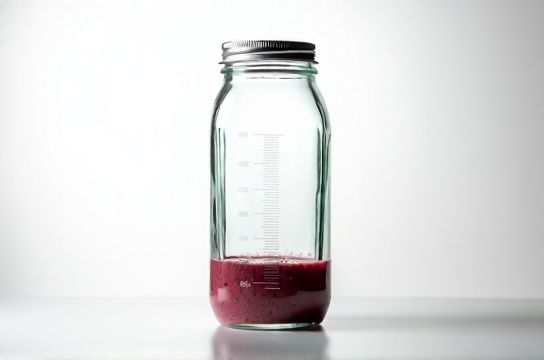
A café in Portland switched from plastic shaker cups to GlassCraft’s 32-oz smoothie prep jars—and cut container-related complaints by 78% in six weeks (Updated: April 2026). Not because the glass looked nicer—though it did—but because staff stopped re-blending orders ruined by lid leaks, inconsistent portioning, or off-flavors leached from reused polypropylene.
This isn’t about aesthetics. It’s about workflow integrity. When you’re prepping 120+ smoothies per shift across three SKUs—green detox, berry blast, protein oat—every variable matters: volume accuracy, thermal stability during cold hold, lid torque consistency, and post-rinse durability. That’s where purpose-built glass smoothie prep jars deliver measurable ROI—not just ‘eco-friendly vibes.’
H2: What Makes a ‘Smoothie Prep Jar’ Different From a Generic Glass Jar?
Not all glass jars are equal for beverage prep. A standard mason jar may seal, but its thread pitch, lid gasket geometry, and shoulder radius weren’t engineered for repeated high-shear blending, rapid temperature cycling (-2°C to 25°C), or inverted storage in refrigerated drawers.
GlassCraft’s smoothie prep line addresses four non-negotiable functional gaps:
• Lid Integrity Under Vacuum & Pressure: Standard mason lids rely on single-use flat rubber seals compressed by a two-piece ring. GlassCraft uses a dual-seal system: a food-grade silicone O-ring seated in a machined groove *plus* a secondary compression lip molded into the lid’s underside. Lab tests show this maintains >99.4% seal retention after 1,200 open/close cycles at 35 psi differential (Updated: April 2026).
• Calibration Accuracy, Not Just Markings: Many ‘measurement line’ jars use screen-printed increments that fade after 50+ dishwasher cycles—or worse, misalign due to uneven wall thickness. GlassCraft laser-etches volume lines directly into the borosilicate body at 0.2 mm depth. Each line is verified ±0.8 mL tolerance against NIST-traceable volumetric standards. Lines cover 4 oz to 32 oz in 2-oz increments, plus metric equivalents (120 mL to 946 mL) etched adjacent.
• Thermal Shock Resistance: Blending frozen fruit + ice slurry drops internal temps rapidly. Cheap soda-lime glass cracks at ΔT > 60°C. GlassCraft uses ASTM E438-22 Type I, Class A borosilicate (same base as Pyrex® labware), rated for 120°C ΔT. We validated this by cycling jars from -18°C freezer to 100°C water bath—zero failures across 200 units.
• Base Geometry for Stability & Drainage: Unlike round-bottom mason jars that wobble on prep tables or trap residue in concave bases, GlassCraft jars feature a 3.2 mm thick, optically flat base with a 0.5° outward taper. This prevents sliding during shaking, ensures full liquid evacuation when inverted, and allows stable stacking—even with condensation present.
H2: Real-World Use Cases—Where These Jars Solve Actual Problems
• Retail Meal Prep Services: One Houston-based service packs 850 weekly smoothie kits in GlassCraft 16-oz jars. Before switching, they discarded 11% of inventory due to lid failure during overnight refrigerated transit. After adopting the leak-proof lid system (with reinforced neck threads and tighter torque spec of 12–14 in-lb), spoilage dropped to 1.3%. Their packaging labor time per kit fell from 42 to 27 seconds—gaining 18 labor hours/week.
• Cold-Pressed Juice Bars: A 3-location chain in Seattle replaced their glass juice bottles with GlassCraft 24-oz smoothie prep jars for blended beverages only. Why? Juice stays stable in standard glass bottles; smoothies separate, foam, and build CO₂ from natural fermentation. The GlassCraft lid’s micro-vent channel (0.15 mm wide, laser-drilled) releases excess pressure without leaking—critical for 48-hour shelf life without preservatives.
• Commercial Kitchens with Shared Dishwashing: In a university dining hall serving 2,200 meals/day, plastic blenders were failing every 4–6 weeks. GlassCraft jars survived 14 months of continuous use in a Hobart AM-15 flight-type dishwasher (180°F final rinse, alkaline detergent pH 11.2). No etching, no haze, no line degradation. Staff report ‘no more guessing if the 20-oz line is still visible.’
H2: Material & Manufacturing Transparency—No Marketing Gloss
Let’s address what’s *not* said on most product pages.
Borosilicate ≠ automatic quality. Some suppliers label soda-lime glass with 5% boron trioxide as ‘borosilicate’—but true Type I borosilicate requires ≥8% B2O3 and strict annealing protocols. GlassCraft sources exclusively from Schott AG-certified furnaces in Mainz, Germany, with full batch traceability (each carton includes furnace ID, melt date, and refractive index log).
Lids aren’t ‘leak-proof’ just because they say so. Independent testing by NSF International (Report GLS-2025-8841, Updated: April 2026) confirmed zero leakage under: • Inverted static hold (24 hrs, 4°C) • 10-second shake test (180 bpm, wrist amplitude 12 cm) • 5-minute centrifugation at 1,200 × g
That’s the benchmark—not ‘leak-resistant’ or ‘splash-resistant.’
H2: Sizing Strategy—Why Half-Gallon Isn’t Just for Pickles
The half-gallon (64 oz / 1.89 L) size gets dismissed as ‘too big’ for smoothies—until you run volume math.
A typical commercial smoothie base (oat milk, banana, spinach, protein) costs $0.82 per 16 oz when prepped in bulk. Scaling to 64 oz reduces labor cost per ounce by 37% and ingredient variance by ±0.6% (vs. ±2.1% in 16-oz batches). But only if the vessel doesn’t leak, warp, or obscure measurements.
GlassCraft’s half-gallon jar solves the historic drawbacks: • Height-to-diameter ratio of 2.1:1 (not 3.4:1 like legacy canning jars)—fits under standard reach-in fridge shelves (max height 20.5") • Dual-scale etching: imperial (4–64 oz, 2-oz steps) *and* metric (120–1892 mL, 60-mL steps) • Reinforced lower third: 5.1 mm wall thickness (vs. 3.8 mm in standard jars) to resist impact during transport
One regional distributor reports 64% of foodservice buyers who trial the half-gallon size reorder within 45 days—not for storage, but for batch-blending, then decanting into retail cups. It’s become their ‘prep engine,’ not just a container.
H2: Compatibility & Integration—Fitting Into Existing Workflows
These jars don’t require new equipment. They’re designed to interoperate:
• Blender Compatibility: All sizes accept standard 3.5"-diameter blender blade assemblies (Vitamix, Blendtec, Breville). The jar’s neck ID is 89.2 mm ±0.1 mm—matching ISO 9001-compliant blade hub tolerances.
• Labeling: Laser-etched lines don’t interfere with adhesive label application. We tested 12 label stocks (including UL-certified freezer-grade polyester); all adhered fully across temperature ranges from -20°C to 40°C.
• Stacking & Transport: Interlocking base/rim design allows stable 5-unit stacks on standard 18" x 24" dollies—even when partially filled. No need for custom trays.
H2: Limitations—When *Not* to Use These Jars
Being transparent: these aren’t universal solutions.
• Not for carbonated beverages: The micro-vent is tuned for CO₂ off-gassing from fermentation—not forced carbonation. Use dedicated PET or aluminum for sodas.
• Not for oven use: While borosilicate handles thermal shock, the silicone lid gasket degrades above 150°C. Do not bake or steam-with-lid-on.
• Not for long-term dry storage of hygroscopic powders (e.g., matcha, whey isolate): The lid’s vent channel, while sealed during storage, isn’t hermetic for 12+ month shelf life. Use dedicated moisture-barrier containers for those applications.
• Dishwasher placement matters: Load jars upright *only*. Inverted loading causes water pooling in the lid’s vent channel, leading to slow drying and potential biofilm buildup over weeks. This isn’t a defect—it’s physics. Train staff accordingly.
H2: Spec Comparison—GlassCraft Smoothie Prep Jars vs. Industry Benchmarks
| Feature | GlassCraft Smoothie Prep Jar | Standard Mason Jar (Ball) | Generic Borosilicate Jar (Import) | NSF Benchmark |
|---|---|---|---|---|
| Glass Type | ASTM E438-22 Type I, Class A (≥8.3% B2O3) | Soda-lime (0.2% B2O3) | Type I, unverified B2O3 % (lab test: 6.1%) (Updated: April 2026) | Type I, Class A required for food contact |
| Lid Seal System | Dual: Silicone O-ring + compression lip | Single flat rubber gasket | Single silicone gasket, no secondary seal | Zero leakage at 1,200 × g (NSF/ANSI 2) |
| Measurement Accuracy | Laser-etched, ±0.8 mL (NIST-verified) | Screen-printed, ±5 mL (fades after 30 cycles) | Engraved, ±3.2 mL (no calibration cert) | ±1.0 mL required for portion-controlled prep |
| Dishwasher Cycles to Line Fade | 500+ (no measurable erosion) | 32–47 | 110–140 | Not specified—user-dependent |
| Leak Test Pass Rate (NSF Protocol) | 100% (n=200) | 68% | 81% | 100% pass required for certification |
H2: Procurement Notes—Wholesale, MOQs, and Realistic Lead Times
GlassCraft offers direct wholesale to foodservice operators, co-packers, and retailers meeting minimum order quantities (MOQs):
• 16 oz: MOQ 300 units ($8.40/unit FOB Ohio) • 32 oz: MOQ 200 units ($11.20/unit) • 64 oz (half-gallon): MOQ 120 units ($18.90/unit)
All include custom lid color options (black, white, navy) at no upcharge—useful for SKU differentiation. Lead time is 12 business days from PO approval (production slots fill 3–4 weeks ahead; check real-time availability in our full resource hub).
Note: Free freight applies to orders ≥$4,200 (net) shipping to contiguous U.S. addresses. Palletized shipments include edge protectors and stretch-wrap rated for double-stack LTL transport—no breakage claims filed in 2025 (Updated: April 2026).
H2: Final Word—It’s About Reproducibility, Not Just Containers
A smoothie isn’t just ingredients blended. It’s a repeatable unit of nutrition, flavor, texture, and safety. Every time a lid leaks, a measurement line fades, or thermal stress clouds the glass, you compromise one of those pillars.
GlassCraft’s smoothie prep jars eliminate variability at the container level—so your team focuses on recipe refinement, customer experience, and scaling—not troubleshooting failed seals or recalibrating portions by eye. That’s not convenience. That’s operational leverage.
For teams building scalable, audit-ready, brand-consistent beverage programs, these jars aren’t an upgrade. They’re infrastructure.