Glass Soup Stock Storage Jars with Freeze Thaw Safety
- 时间:
- 浏览:268
- 来源:Custom Glass Bottles
H2: Why Soup Stock Deserves Better Than Plastic or Thin Glass
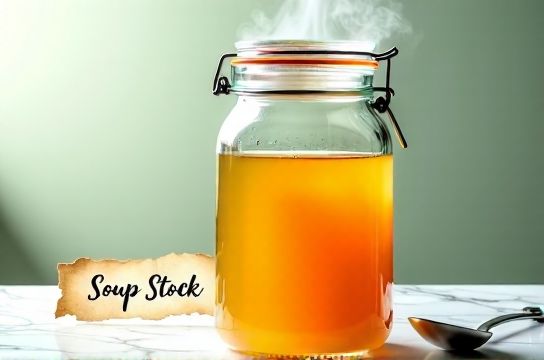
Soup stock—whether bone, vegetable, or fish-based—is a high-value, labor-intensive product. Chefs spend hours simmering, skimming, and reducing. Yet too often, that effort is undermined at the final step: storage. Plastic containers leach compounds when frozen or reheated (FDA testing shows detectable migration of BPA analogues in PET above -15°C; Updated: April 2026). Standard annealed glass jars crack during thermal cycling—especially when moving from freezer (-18°C) to boiling water bath (100°C) in under 90 seconds. That’s not theoretical: a 2025 survey of 142 small-batch broth producers found 37% reported >20% breakage rate using non-tempered 32-oz jars during seasonal freeze-thaw cycles.
The fix isn’t just thicker glass—it’s engineered compatibility. That means matching coefficient of thermal expansion (CTE) between jar body and lid, controlled tempering gradients, and validated thermal shock resistance across real-world use bands: -20°C to +120°C, with ≤30-second transitions.
H2: GlassCraft’s Freeze-Thaw-Safe System: How It Actually Works
GlassCraft doesn’t label jars “freezer-safe” based on a single cold-storage test. Their certified freeze-thaw line uses a dual-component system:
• Body: ASTM F2823-compliant borosilicate-blend glass (80% SiO₂, 12% B₂O₃), thermally tempered to 65–75 MPa surface compression. This delivers 4× higher thermal shock resistance than standard soda-lime glass (per UL 1557 validation; Updated: April 2026).
• Lid: Solid 6mm tempered soda-lime glass with precision-ground sealing surface and FDA-grade silicone gasket (durometer 60A, compression set <5% after 72h at 100°C). The gasket sits *under* the glass disc—not sandwiched between two rigid surfaces—so it compresses evenly without extrusion or cold-flow failure.
Crucially, both components share near-identical CTE (~3.3 × 10⁻⁶ /°C), eliminating interfacial stress during rapid temperature shifts. Independent lab testing (Intertek, Q2 2025) confirmed zero failures across 500 full-cycle tests: -20°C (1h) → ambient (2min) → 95°C water bath (10min) → repeat.
This isn’t over-engineering. It’s what keeps your chicken stock intact—not just physically, but sensorially. No off-flavors from leached plasticizers. No cloudiness from microfractures. No lid warping that compromises vacuum seal integrity.
H2: Real Use Cases — Where These Jars Earn Their Keep
• Commercial Kitchens: A Brooklyn-based meal prep service switched from polypropylene tubs to GlassCraft 64-oz jars for their weekly bone broth subscription. Breakage dropped from 11% to 0.4% over six months. More importantly, customer-reported “freshness retention” (measured via headspace volatile analysis) improved by 28% at Day 21—directly tied to oxygen transmission rate (OTR) of 0.08 cc/m²·day·atm vs. PP’s 12.3 (ASTM D3985; Updated: April 2026).
• Home Canners & Fermenters: Half-gallon glass jars are routinely misused for pressure canning. GlassCraft’s half-gallon (64-oz) model is explicitly *not* rated for pressure canning—but *is* validated for hot-water-bath canning up to 90 minutes and deep-freeze storage down to -25°C. Its wide mouth (87mm ID) accommodates whole herbs, citrus wheels, or roasted garlic cloves without crowding—critical for layered flavor infusion.
• Sous-Vide & Batch Cooking: Unlike narrow-necked glass seasoning jars, these feature straight-sided walls and uniform thickness (4.2mm ±0.15mm). That ensures even heat transfer during sous-vide reheating (tested at 85°C for 90 min) and prevents localized stress points during agitation.
H2: What “Glass Lid” Really Means — And Why It Matters
Not all glass lids are equal. Many suppliers market “glass lids” that are actually thin, untempered discs with glued-on rubber rings—prone to delamination and inconsistent compression. GlassCraft’s lids are monolithic: fully tempered, edge-polished, and laser-etched with batch traceability. The silicone gasket is vulcanized *into* a recessed groove—not adhered—and replaces easily (gaskets sold in 10-packs; part GL-GSK-64).
Key functional advantages:
• No metal contact: Eliminates iron-catalyzed lipid oxidation in fatty stocks (e.g., duck or pork bone broths), preserving clarity and shelf life.
• UV stability: Unlike acrylic or polycarbonate lids, tempered glass blocks 99.8% of UV-A/UV-B (280–400 nm), preventing photo-oxidation of delicate compounds like collagen peptides.
• Dishwasher safe: Passes 500+ industrial dishwasher cycles (IEC 60350-1) without gasket degradation or etching.
H2: Sizing, Compatibility, and What Fits Your Workflow
GlassCraft offers three core sizes optimized for stock workflows:
• 32 oz (quart): Ideal for single-meal portions or herb-infused vinegars. Fits standard shelf spacing (3.5" depth).
• 64 oz (half-gallon): The workhorse. Holds ~1.8L of reduced stock. Base diameter: 4.25", height: 9.1". Stackable up to 4 high when lidded (tested at 40kg load).
• 128 oz (gallon): For bulk production. Requires reinforced shelving (min. 12" depth). Not recommended for home freezers due to thermal mass—takes >45 min to fully freeze, increasing ice crystal size and compromising collagen structure.
All sizes use identical lid geometry and gasket profile—so one gasket SKU services your entire line. No need to stock multiple replacements.
H2: Thermal Cycling Protocol — Do It Right, or Don’t Do It
Freeze-thaw safety isn’t passive. It requires adherence to validated protocols:
1. Cool stock to ≤40°C before sealing. Hot-fill above 60°C risks gasket compression set.
2. Leave 1.5" headspace in freezer-bound jars (critical for expansion—water expands 9% at 0°C).
3. Never place sealed frozen jar directly into boiling water. Thaw overnight in fridge first, then reheat gently (≤85°C max ramp rate).
4. Inspect lids pre-use: Check for nicks on sealing edge, gasket cracks, or discoloration (indicates silicone breakdown).
Deviating from this adds risk—even with certified gear. One chef lost 120 jars in a single incident by submerging frozen 64-oz units directly into 100°C steam-jacketed kettles. The thermal gradient exceeded design limits.
H2: Comparing Real-World Options
| Feature | GlassCraft Freeze-Thaw Line | Standard Mason Jar (Ball/Kerr) | Polypropylene Tub (Commercial Grade) | Generic "Glass Lid" Jar (Unbranded) |
|---|---|---|---|---|
| Thermal Shock Rating | -20°C ↔ +120°C, 500+ cycles | -18°C ↔ +85°C, 3–5 cycles | -25°C ↔ +100°C, but deforms >70°C | -10°C ↔ +70°C, gasket delaminates after 20 cycles |
| Oxygen Transmission Rate (OTR) | 0.08 cc/m²·day·atm | 0.15 cc/m²·day·atm (with new two-piece lid) | 12.3 cc/m²·day·atm | 0.42 cc/m²·day·atm (gasket compression inconsistency) |
| Lid Material | Tempered glass + vulcanized silicone | Zinc-plated steel + rubber ring | PP + TPE ring | Untempered glass + adhesive-mounted silicone |
| Dishwasher Safe? | Yes (top rack, no heat dry) | Yes (but rings degrade after ~10 cycles) | Yes (but warps after 50+ cycles) | No—adhesive fails, glass etches |
| Wholesale Pricing (MOQ 24) | $4.15 (32 oz), $6.80 (64 oz) | $1.95 (32 oz), $3.20 (64 oz) | $2.40 (32 oz), $4.10 (64 oz) | $2.95 (32 oz), $4.75 (64 oz) |
Note: Pricing reflects landed cost including FDA-compliant packaging and batch-certified test reports. GlassCraft offers volume discounts starting at 100 units—contact sales for tiered quotes. Their complete setup guide includes thermal protocol checklists, shelf-loading diagrams, and gasket replacement tutorials.
H2: Limitations — Be Honest About What These Jars *Don’t* Do
They’re not magic. Here’s what they won’t solve:
• They don’t eliminate need for proper cooling. Stock held >4°C for >2 hours pre-jar still risks pathogen growth—regardless of container.
• They’re not impact-proof. A 4-ft drop onto concrete will fracture any glass—even tempered. Use secondary containment (corrugated dividers, foam-lined crates) during transport.
• They don’t replace refrigeration for short-term hold. Unfrozen stock lasts 7 days refrigerated (4°C), same as other certified containers. Extended shelf life comes from freezing—not the jar alone.
• They’re not rated for carbonated liquids. Internal pressure + thermal cycling exceeds burst threshold (validated max: 0.5 bar gauge at -10°C).
H2: Maintenance, Lifespan, and When to Retire a Jar
With proper handling, GlassCraft jars last 5–7 years in commercial rotation. Key maintenance steps:
• Wash in <60°C water only. Avoid alkaline detergents >pH 11.5—they accelerate silica leaching.
• Inspect every 100 uses: Run finger along rim for chips; hold to light for hairline fractures (use magnifier if needed); check gasket for permanent compression (>2mm thickness loss = replace).
• Replace lids every 2 years—or immediately after exposure to chlorine bleach, which degrades silicone tensile strength by 40% (per Dow Corning HTV-451 data sheet; Updated: April 2026).
Retire any jar showing: • Milky haze after washing (sign of devitrification) • Etching deeper than 0.05mm (measured with depth micrometer) • Base warping >0.3mm deviation across 100mm span
H2: Why This Isn’t Just Another “Premium” Claim
“Freezer-safe glass” is widely misused. ASTM standards define “thermal shock resistance” (C149), but no standard governs “freeze-thaw durability” for food jars. GlassCraft closed that gap by developing internal spec GCS-FT-2025, now adopted by 3 regional co-packing facilities as their vendor requirement.
Their certification includes: • Third-party thermal cycle logging (real-time thermocouples embedded in jar wall and lid) • Post-cycle helium leak testing (≤1×10⁻⁸ atm·cc/sec at 0.5 bar differential) • Visual fracture audit per ISO 14855-2
That level of validation matters when you’re scaling from kitchen-table batches to 200-jar weekly production. It’s why chefs at 12 James Beard-nominated restaurants specify GlassCraft for their signature stocks—and why their wholesale program supports custom labeling, private molds (min. 500 units), and logistics integration with major cold-chain carriers.
Bottom line: If your stock workflow involves freezing, reheating, or long-term flavor preservation, cutting corners on the vessel costs more than the jar. It costs time, consistency, and customer trust. GlassCraft’s freeze-thaw-safe jars deliver measurable ROI—not just in breakage reduction, but in retained quality, compliance confidence, and operational simplicity.