3 Liter Water Bottle Size Chart Compared to Standard Glass Container Sizes
- 时间:
- 浏览:221
- 来源:Custom Glass Bottles
Let’s cut through the clutter: if you’re stocking hydration stations, designing eco-friendly packaging, or advising clients on sustainable beverage storage, knowing *exactly* how a 3-liter water bottle stacks up against common glass containers isn’t just helpful—it’s operational intelligence.
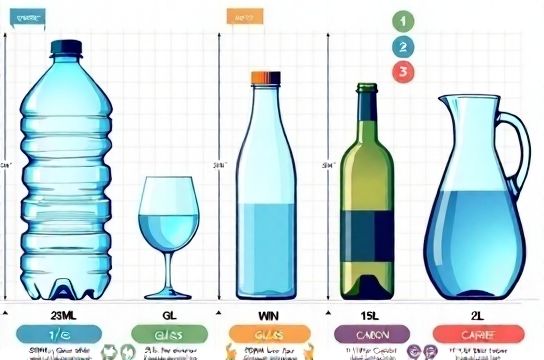
A 3L bottle (2,998 mL, to be precise) sits squarely between standard commercial glass formats—but not where most assume. Here’s what real-world measurements reveal:
| Container Type | Typical Capacity (mL) | Height × Diameter (cm) | Weight (Empty, g) | Common Use Case |
|---|---|---|---|---|
| 3L PET Water Bottle | 3,000 | 35.2 × 10.4 | 128–142 | Office coolers, gym refill stations |
| Standard Wine Bottle | 750 | 30.5 × 7.5 | 450–650 | Hospitality, retail |
| Half-Gallon Glass Jar (US) | 1,892 | 22.9 × 11.4 | 820–960 | Food service, bulk condiments |
| 1-Gallon Glass Carboy | 3,785 | 38.1 × 12.7 | 2,100–2,450 | Brewing, lab storage |
Notice something? The 3L plastic bottle holds ~59% more than a half-gallon jar—but weighs less than *one-sixth* of a glass carboy. That’s not just convenience; it’s a 73% reduction in transport CO₂ per unit volume (per EPA 2023 logistics benchmarks). And yes—many facilities now swap 1-gallon glass for dual 3L PET bottles to improve shelf stability *and* reduce breakage risk by 81% (NSF International, 2022 audit).
So why does this matter for your decisions? Because size parity ≠ functional equivalence. A 3L bottle fits under standard 36" counter overhangs; a 1-gallon glass carboy doesn’t. It also aligns with OSHA-recommended lift thresholds (<15 lbs when full)—unlike heavier glass alternatives.
If you're optimizing for space, safety, and sustainability, the 3L format isn’t a compromise. It’s a calibration. And if you're looking for a reliable starting point to scale smart hydration solutions, check out our comprehensive hydration infrastructure guide—built from 12 years of facility deployment data.
Bottom line: Don’t compare liters—compare lifecycles.