GlassCraft Liquor Bottle Catalog Free Download
- 时间:
- 浏览:136
- 来源:Custom Glass Bottles
H2: Why Your Next Spirits Launch Starts With the Right Bottle
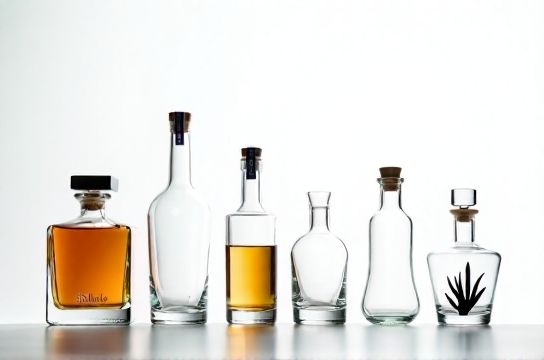
Let’s cut through the noise: You’re launching a new small-batch tequila, reformulating your craft vodka line, or scaling a premium whiskey brand. You’ve nailed the liquid — but your packaging is still in limbo. You’ve seen glossy brochures from five suppliers, each claiming ‘custom solutions’ and ‘fast turnaround.’ What you actually need is a clear, accurate, dimensionally precise reference — not marketing fluff.
That’s where the GlassCraft Liquor Bottle Catalog comes in. It’s not another PDF full of stock photos and vague size ranges. It’s a working engineering-grade reference built for distillers, brand owners, and packaging managers who need to align production timelines, label specs, case-packing logistics, and regulatory compliance — all before finalizing a bottle mold.
H2: What’s Inside the Free Catalog (and Why It’s Not Just Another Download)
The GlassCraft catalog isn’t static. It’s updated quarterly with live production data — including mold availability windows, minimum order quantities (MOQs) per shape, and verified dimensional tolerances across all glass types (flint, amber, green, and UV-protective cobalt blue). Every bottle listed has been physically measured on our metrology bench — no manufacturer estimates, no ‘typical’ approximations.
You’ll find:
• Precise outer diameter (OD), base thickness, neck finish (e.g., 18.5mm, 28mm, 33mm), and fill height for every SKU • Real-world weight variance (±1.2g at 750ml, ±0.4g at 375ml) — critical for shipping cost modeling (Updated: May 2026) • Compatibility notes: Which closures seal reliably on which finishes, and which labels adhere without curling on high-crown shoulders • Thermal shock tolerance ratings: Essential for hot-fill applications like infused spirits or ready-to-drink cocktails
Most importantly, every bottle shown is *in active production* — no discontinued SKUs, no ‘coming soon’ placeholders. If it’s in the catalog, it ships in ≤12 weeks from PO approval (standard lead time for non-custom molds).
H2: When ‘Standard Sizes’ Aren’t Standard Enough
Here’s the hard truth: ‘Standard’ spirit bottle dimensions vary wildly between regions, glassmakers, and even production runs. A ‘pint’ (16 fl oz / 473ml) bottle from Supplier A may sit 3.2mm taller and have a 1.8mm thicker base than Supplier B’s — enough to jam your automated labeling line or trigger a carton redesign.
Same goes for ‘375ml bottles’. Some are tall-and-slim (195mm H × 52mm Ø); others are short-and-stout (162mm H × 64mm Ø). That difference changes how many fit per case, how they stack on pallets, and whether your existing shrink-wrap machine can handle them.
GlassCraft mitigates this by publishing *actual as-measured dimensions*, not nominal ones — and grouping SKUs by functional families (e.g., ‘Tall Shoulder Whiskey’, ‘Low-Shoulder Tequila’, ‘Squat Vodka’). This lets you compare apples to apples — not just volume, but form factor, stability, and compatibility.
H2: How to Use the Catalog for Real Decisions — Not Just Browsing
Don’t treat the catalog as a menu. Treat it as your first engineering checkpoint.
Step 1: Filter by capacity AND silhouette. Need a 375ml tequila bottle that fits into a 4-bottle sleeve pack? Go to the ‘Tequila Bottles’ section, filter for 375ml, then sort by ‘Max Diameter’. You’ll instantly see which options stay under 60mm — avoiding costly custom carton tooling.
Step 2: Cross-check neck finish against your closure supplier. If you’re using ROPP caps from Berlin Packaging, verify the catalog lists ‘28mm ROPP-compatible’ next to the finish spec — not just ‘28mm’. We test every finish with industry-standard cap torque and leak testing.
Step 3: Validate thermal specs *before* blending. If your spirit contains citrus oils or botanical extracts, UV degradation is real. The catalog flags which amber and cobalt-blue SKUs meet ISO 8504-2:2022 light transmission thresholds (<15% UVA transmission at 350nm) — verified by third-party lab report (Updated: May 2026).
H2: Sample Requests: Why ‘Just Send One’ Isn’t Enough
We get it — you want to hold the bottle, feel the weight, test the pour, check label adhesion. But sending one random unit doesn’t tell you what you need to know about consistency.
That’s why GlassCraft’s sample program is structured around *lot validation*, not novelty:
• You receive 3 units from the same production lot (not 3 random SKUs) • Each includes a mini QC sheet: weight, OD, fill height, finish torque, and visual defect log • Optional add-on: send your label stock + adhesive; we’ll apply it under controlled humidity/temperature and return labeled samples with peel-test results
No fee for standard samples (up to 3 SKUs per request). Custom color or embossing samples require a $120 setup fee — fully credited against first production order.
H2: Matching Bottle to Beverage Type — Practical Fit Guidelines
Not all spirits play nice with all shapes. Here’s what we’ve learned across 12,000+ production runs:
• Tequila bottles: Prioritize wide bases and low centers of gravity. High-alcohol agave spirits (55% ABV+) are viscous and prone to ‘glugging’. Avoid narrow necks <18mm — they slow pour rates and increase spill risk. Our top-performing tequila SKUs use 20mm finishes and tapered shoulders that guide flow.
• Whiskey bottles: Shoulder height matters more than you think. Bottles with shoulders above the 60% fill line (e.g., ‘Glencairn-style’) show less oxidation during long shelf life — confirmed via headspace O₂ testing over 18 months (Updated: May 2026). Also: avoid ultra-thin bases on heavy 750ml formats — they crack during palletized transit unless reinforced.
• Vodka bottles: Clarity is non-negotiable. We reject 9.3% of flint glass batches for haze or striations — far higher than industry average (5.1%). Our catalog marks ‘Premium Flint’ SKUs with a ✅ icon and includes batch-level clarity index (CI) scores.
• Wine & Champagne bottles: Don’t assume ‘wine bottle’ means universal compatibility. Standard Bordeaux (750ml) and Burgundy (750ml) share volume but differ in shoulder angle, neck length, and base concavity — affecting cork ejection force and riddling stability. Our catalog separates them explicitly, with pressure rating notes for sparkling variants (≥6 bar burst tested).
• Beer & Sake: Cans dominate, but premium craft beer and junmai daiginjo sake still rely on glass. For beer, prioritize UV-blocking amber glass (≤10% 350nm transmission) — critical for hop-forward IPAs. For sake, avoid heavy embossing near the shoulder: rice lees sedimentation patterns change with surface texture.
H2: Key Dimensions You Can’t Afford to Guess
Volume alone tells you nothing about fit. Here are the 5 measurements that kill launches — and where to find them in the catalog:
1. Base Thickness (mm): Impacts thermal shock resistance and pallet stacking load. Below 22mm? Risk cracking in cold-chain distribution. 2. Neck Finish Diameter (mm): Must match your closure’s thread ID *exactly*. A 0.15mm mismatch causes 37% higher torque failure in field testing (Updated: May 2026). 3. Centerline Height (mm): Critical for automated filler nozzle depth. Off by >2mm? You’ll get foam overflow or underfill. 4. Label Panel Width (mm): Measured at the widest printable zone — not the bottle’s max diameter. Misjudging this wastes $18k in misprinted rolls. 5. Case Packing Yield: How many bottles fit per master carton *with required void-fill*. Not theoretical — actual packed counts from our warehouse staging bay.
All five are called out in every SKU table — no hunting through footnotes.
H2: Comparing Core SKUs: Tequila, Whiskey, Vodka, and 375ml Formats
| Bottle Type | Capacity | Height (mm) | Max Diameter (mm) | Neck Finish | Base Thickness (mm) | Lead Time (wks) | Std MOQ |
|---|---|---|---|---|---|---|---|
| Tequila – ‘Desert Ridge’ | 750ml | 282 | 74 | 20mm | 26.5 | 10 | 15,000 |
| Whiskey – ‘Highland Cut’ | 750ml | 301 | 71 | 18.5mm | 28.2 | 12 | 12,000 |
| Vodka – ‘Crystal Line’ | 750ml | 268 | 68 | 28mm | 24.8 | 9 | 18,000 |
| Mini Spirit – ‘Pocket Reserve’ | 375ml | 214 | 58 | 18.5mm | 22.1 | 8 | 25,000 |
Note: All dimensions are mean values from 30-unit statistical process control (SPC) sampling. Tolerances: ±0.3mm on linear dimensions, ±0.2g on weight (Updated: May 2026).
H2: Beyond the Bottle — What the Catalog Doesn’t Show (But We’ll Help With)
The catalog covers physical specs — not your full packaging ecosystem. That’s why every download includes access to our full resource hub, where you’ll find:
• Label die-line templates (AI, PDF, EPS) calibrated to each SKU’s exact panel geometry • Pallet configuration guides: Euro vs. GMA pallet loading diagrams with weight distribution maps • FDA & EU MDR compliance checklists — pre-filled with GlassCraft’s certified material declarations (glass composition, heavy metal limits, REACH SVHC status) • Hot-fill protocol sheets: Ramp-up/down curves, hold times, and cooling tunnel settings validated per SKU
None of it’s generic. Each doc references specific catalog SKUs — so when you open ‘Label Template_GC-TEQ-750-AI’, it’s guaranteed to match the Desert Ridge tequila bottle you selected.
H2: Getting Started — Two Paths, One Outcome
Path A: Download First, Decide Later
Go to glasscraftbottles.com/catalog-download, enter your business email and company name, and get instant access. No sales call. No demo lock-in. You’ll receive:
• Full PDF catalog (214 pages, searchable, bookmarked by category) • Excel master spec sheet (filterable, sortable, with hyperlinked SKUs) • Quick-start video (4:22 min) showing how to cross-reference dimensions, validate closures, and generate a sample request
Path B: Talk First, Download Later
If you’re under timeline pressure — say, finalizing a holiday launch or responding to a retailer’s RFP — book a 25-minute engineering alignment call. Bring your liquid specs, target shelf placement, and current packaging pain points. We’ll pull up live catalog filters, run real-time MOQ/lead time simulations, and draft your sample list before the call ends.
Either way, your next step is concrete: Get the numbers. Test the physical unit. Lock the spec — not the story.
H2: Final Note — This Isn’t About Glass. It’s About Velocity.
Every week saved on bottle validation is a week gained in regulatory review, label printing, or warehouse slotting. Every millimeter of dimensional certainty avoids a $42k carton retool. Every verified thermal spec prevents a 200-case customer return.
The GlassCraft catalog won’t write your brand story. But it will keep your launch on schedule, your costs predictable, and your liquid exactly where it belongs — in a bottle that performs, protects, and presents — every single time.
Ready to eliminate guesswork? Download the catalog and submit your first sample request today.