Liquor Bottle Customization End to End Service
- 时间:
- 浏览:136
- 来源:Custom Glass Bottles
H2: Why Off-the-Shelf Bottles Rarely Fit Your Brand’s Real Needs
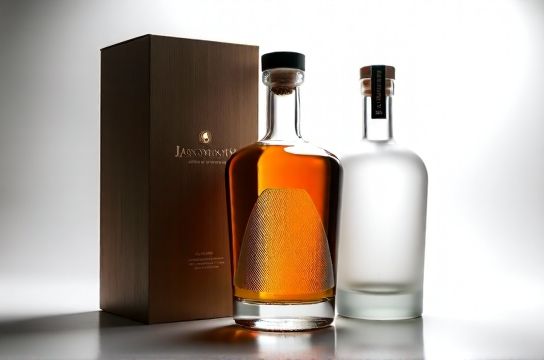
You’ve nailed the liquid—small-batch bourbon aged in French oak, a crisp agave-forward reposado, or a citrus-driven craft vodka. But when it comes time to bottle, you’re handed five generic options from a distributor catalog: a squat 750 ml ‘whiskey shape’, a fluted 750 ml ‘premium wine’ silhouette, and three variations of the same shoulderless cylinder labeled “versatile”. None reflect your brand’s texture, weight, or shelf presence. Worse—you discover too late that the neck finish doesn’t accept your chosen closure, the base diameter exceeds your automated filler’s tolerance, or the glass thickness causes label curling under humidity.
That’s not a bottleneck—it’s a systemic misalignment between beverage development and physical packaging execution. And it’s why leading distillers, importers, and NPD teams now treat bottle customization as a core product development phase—not a final logistics checkbox.
H2: What ‘End-to-End’ Actually Means (and Where Most Providers Fall Short)
“End-to-end” is overused. In practice, most vendors offer *one* of these:
• Design-only studios (no mold access, no glassmaking capacity) • Contract glass plants (accept only bulk orders ≥200,000 units, no design support) • Brokers (source overseas, mark up 35–50%, minimal QC control)
True end-to-end means owning—or tightly governing—every stage: concept sketch → 3D CAD validation → mold engineering → prototype blowing → lab-scale fill testing → decoration trial (screen print, ceramic coating, embossing) → compliance review (FDA 21 CFR, EU 1935/2004, Prop 65) → production run → freight coordination → customs documentation.
At GlassCraft, we operate two ISO 9001-certified facilities: one in Monterrey, Mexico (focused on amber and flint glass for tequila, whiskey, and vodka bottles), and one in northern Portugal (specializing in lightweighted, annealed flint for premium wine, champagne, and clear spirits). Both house in-house mold shops, optical metrology labs, and pilot filling lines synced with major OEM cappers and labelers.
H2: The 7-Stage Customization Workflow—No Black Boxes
H3: Stage 1: Technical Brief & Dimensional Alignment We start with your *actual constraints*, not aesthetics alone. That means:
• Filler specs: neck finish (e.g., 38 mm PCO 1881, 28 mm GL45), torque tolerance (±2 Nm), fill height variance (±1.5 mm) • Label real estate: printable surface area (accounting for curvature and shoulder taper), minimum clearance from base/shoulder • Shelf logistics: pallet pattern (how many per layer? 12 × 10? Euro-pallet vs. GMA?), case pack configuration (6 × 4 × 3 = 72 units) • Regulatory must-haves: volume marking location (must be within 15 mm of base on EU-bound goods), metric-only labeling (US allows dual, but Canada requires metric-first)
This isn’t theoretical. For example: a client launching a ready-to-drink tequila spritz needed a 375 ml bottle that fit existing 4-pack shrink-wrapped trays. Their previous supplier offered only 375 ml ‘wine-shaped’ bottles—too tall for the tray’s 240 mm height limit. We redesigned the silhouette to 228 mm H × 68 mm Ø, retained the signature tequila bottle shoulder angle (112°), and validated fit on their packing line *before* mold cutting.
H3: Stage 2: 3D CAD Modeling & Virtual Mock-Ups All geometry is modeled in SolidWorks, not Illustrator. Why? Because wall thickness distribution affects thermal shock resistance, annealing cycle time, and even CO₂ solubility retention in sparkling variants. We simulate:
• Blow pressure curves (to avoid thin spots at the heel or neck ring) • Mold cavity draft angles (minimum 0.5° for reliable ejection) • Weight optimization (target ±3 g variance across 10,000 units)
Clients receive interactive 3D PDFs viewable in Adobe Reader—rotatable, sectionable, with annotated GD&T callouts.
H3: Stage 3: Mold Engineering & Prototyping Molds are cut in-house using hardened H13 tool steel (52–54 HRC), CNC-machined to ±0.02 mm tolerance. Lead time: 14–18 days for single-cavity prototypes (vs. 6–10 weeks offshore). Each mold includes:
• Interchangeable neck rings (swap 28 mm → 30 mm in <90 minutes) • Quick-change base inserts (for testing different heel radii) • Embedded thermocouples (real-time cavity temp monitoring during trials)
We blow 50–100 prototype units per mold iteration. These go through:
• Drop testing (1.2 m onto concrete, 3 orientations) • Thermal cycling (−20°C → 70°C × 5 cycles) • Fill-line dry-run (using water + food-grade dye to map meniscus behavior)
H3: Stage 4: Decoration & Surface Engineering Glass isn’t just a vessel—it’s a tactile interface. Our decoration options include:
• Ceramic screen printing (up to 6 colors, lead-free frit, dishwasher-safe after firing at 580°C) • Acid etching (matte finish, depth-controlled to 12–18 µm) • Hot-stamping (foil application on cured labels—ideal for gold/silver accents on dark glass) • Embossing/debossing (integrated into mold—no secondary process, zero registration drift)
Critical note: Not all finishes survive bottling line friction. We test abrasion resistance using ASTM D4060 (Taber Abraser, CS-10 wheels, 1,000 cycles). Standard screen print passes; low-temp UV ink fails at ~200 cycles.
H3: Stage 5: Compliance & Certification Gate Every custom bottle ships with a Certificate of Conformance (CoC) listing:
• Heavy metals leach testing (CPSC-CH-C1001-09.3, lead/cadmium <0.1 ppm in 4% acetic acid extract) • Thermal shock resistance (EN 15173:2007, 65°C → 20°C, no crack propagation) • Dimensional traceability (CMM scan report, 32-point profile)
For US alcohol clients: we pre-validate TTB Form 5100.31 label templates—including mandatory statements (“Government Warning”, “Alcohol By Volume”, net contents in both mL and fl oz), font size minimums (2.4 mm for main text), and placement rules (no overlap with embossed logos).
H3: Stage 6: Production Scaling & Quality Gates Minimum order quantity (MOQ) depends on bottle complexity—not arbitrary tiers. Simple cylindrical 375 ml spirit bottles: MOQ = 15,000 units. Embossed tequila bottles with ceramic print + foil stamp: MOQ = 35,000 units. Why? Mold amortization, setup labor, and kiln load efficiency.
Every production run includes:
• First-article inspection (FAI) with full GD&T report • In-process sampling (AQL Level II, MIL-STD-1916) • Final random audit (100% visual, 5% dimensional, 2% pressure test)
Lead time from PO to dock: 10–12 weeks for first order (includes mold validation); 6–8 weeks for repeat runs.
H3: Stage 7: Delivery Coordination & Documentation We don’t just ship boxes—we deliver *certified readiness*. That means:
• Pre-loaded HS codes (e.g., 7010.90.50 for non-refillable glass spirit bottles, US) • ISPM-15 compliant wood pallets (heat-treated, stamped) • Commercial invoice with Incoterms® 2020 specified (FOB Monterrey, DAP Lisbon, etc.) • Packing list with unit-level serialization (for traceability down to batch and furnace run)
We integrate directly with major 3PLs (Kuehne+Nagel, DB Schenker) and provide real-time container tracking via API.
H2: Choosing the Right Base Dimensions—Beyond ‘Standard’
There is no universal “spirit bottle size”. Dimensions are driven by function, regulation, and channel.
• One pint (473 ml): Dominant in US on-premise (bars, hotels). Must comply with TTB’s “pint” definition (exactly 473.176 ml)—not approximate. Base diameter typically 68–72 mm to stabilize on speed rails. • 375 ml: Global RTD and sampler standard. Height rarely exceeds 235 mm to fit chilled display doors (e.g., 7-Eleven refrigerated racks max out at 240 mm H). • 750 ml: Still the retail workhorse—but shoulder height varies: bourbon bottles average 255 mm H with high shoulders (for wax-drip stability); tequila bottles trend taller (272–285 mm) with tapered necks to showcase agave leaf motifs. • Miniature (50 ml): Requires ultra-precise neck finish (22 mm child-resistant closure common). Wall thickness must be ≥1.8 mm to prevent breakage during vending machine dispensing.
| Bottle Type | Common Capacity | Typical Height (mm) | Base Diameter (mm) | Key Use Case | Mold Lead Time | MOQ |
|---|---|---|---|---|---|---|
| Tequila bottle | 750 ml | 278–285 | 70–74 | Premium shelf, gift sets | 16–18 days | 35,000 |
| Whiskey bottle | 750 ml | 248–256 | 72–76 | Bar pour, retail | 14–16 days | 25,000 |
| Vodka bottle | 750 ml | 290–310 | 62–66 | Design-led retail, lifestyle branding | 15–17 days | 20,000 |
| 375 ml bottle | 375 ml | 220–235 | 64–68 | RTD, travel retail, samplers | 12–14 days | 15,000 |
| Pint spirit bottle | 473 ml | 250–262 | 68–72 | On-premise, cocktail kits | 13–15 days | 18,000 |
Note: All dimensions reflect finished, annealed glass—no post-processing shrinkage or warping (Updated: May 2026). Tolerances held: ±0.7 mm on height, ±0.5 mm on diameter, ±2 g on weight.
H2: When to Consider Alternatives—and When Not To
Custom molds make sense when:
• You’re launching a permanent SKU (2+ year lifecycle) • Your volume exceeds 15,000 units/year • Shelf differentiation is non-negotiable (e.g., competing in premium tequila aisle against Casamigos, Teremana) • You require functional features (anti-roll base, integrated pour spout, tamper-evident collar)
Avoid custom molds if:
• You’re testing a limited-edition flavor (use stock 750 ml flint with custom sleeve + pressure-sensitive label) • Your budget excludes $12,000–$22,000 mold investment (depending on cavity count and complexity) • You need bottles in <8 weeks (stock program lead time: 3–4 weeks)
Our stock program includes 17 vetted base shapes—ranging from classic Bordeaux (for wine-infused spirits) to squared-shoulder Canadian rye profiles—all available in 375 ml, 750 ml, and 1 L, with full decoration capability. You get near-custom impact without mold risk.
H2: Getting Started—Your First Move
Don’t send us a logo and say “make it a bottle.” Start with your fill line spec sheet, your top three retail shelf photos, and your target launch date. We’ll respond within 48 business hours with:
• A dimensional feasibility assessment (what’s possible within your constraints) • A mold investment ROI projection (break-even volume vs. stock alternatives) • Three preliminary silhouette options—annotated with GD&T, weight estimate, and decoration-ready zones
Samples ship in 10 days. We cover outbound shipping for qualified projects. Just request “custom bottle sample kit” with your company name, annual projected volume, and primary market.
For hands-on guidance through every technical decision—from choosing between olive green and UV-amber glass for light-sensitive reposado to validating neck thread compatibility with your current capper—visit our complete setup guide. It walks through 22 common failure points with annotated photos, torque charts, and vendor-agnostic checklists.
Bottom line: Liquor bottle customization isn’t about making something ‘unique’. It’s about eliminating avoidable failure modes before launch—so your liquid gets the vessel it deserves, on time, in full compliance, and without surprise rework costs.