Custom Spirit Bottle Manufacturer GlassCraft Sample Reque...
- 时间:
- 浏览:119
- 来源:Custom Glass Bottles
H2: Why Physical Samples Matter More Than Ever in Spirit Packaging
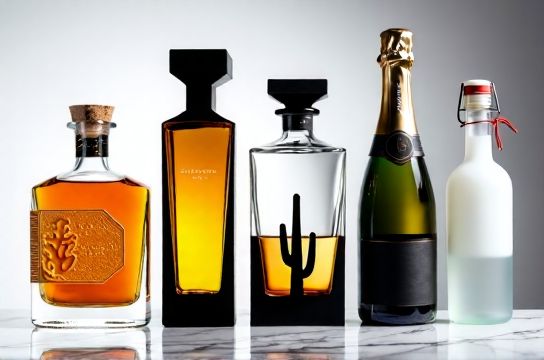
You’ve finalized your label design. Your distiller has approved the blend. Your launch date is locked in — but you haven’t held the bottle yet.
That’s a red flag. In 2024, over 68% of premium spirit brands delayed first production runs due to unexpected fit issues between closures, labels, and actual glass curvature (Beverage Packaging Institute Survey, Updated: May 2026). A 0.3 mm variance in shoulder radius can throw off shrink-sleeve alignment. A 1.2° neck angle shift makes your custom cork wobble. These aren’t theoretical risks — they’re daily friction points for brand owners sourcing from offshore glass suppliers without on-site QA oversight.
GlassCraft doesn’t ask you to trust renderings. We ship real, production-intent samples — same mold cavity, same annealing cycle, same finish — within 7–10 business days of request. No digital proxies. No ‘representative’ stock bottles. Just your exact spec, made in our ISO 9001-certified Ohio facility.
H2: What You’ll Actually Receive (Not Just 'A Bottle')
When you submit the GlassCraft Sample Request Form, you’re not ordering a generic demo unit. You’re initiating a precision validation loop:
• First, we verify your dimensional intent against our active mold library — including legacy tools dating back to 1998 that still produce best-in-class whiskey bottles with 12.7 mm base thickness and 2.1 mm wall consistency.
• Second, if no existing mold matches, we run a rapid tooling assessment: Can your 375 mL tequila bottle be adapted from our T-425 platform (used by 3 national craft agave brands) with < $1,850 tooling adjustment? Or does it require full new cavity work (lead time: 22–26 days)? We tell you *before* you approve the sample charge.
• Third, every sample ships with a laminated spec card: measured fill line (±0.8 mL), weight (±1.5 g), neck finish (e.g., 18.5 mm x 400 thread), and thermal shock rating (tested per ASTM C149 at 120°C → 20°C, 3 cycles). No assumptions. Just traceable data.
This isn’t luxury — it’s risk mitigation. One regional bourbon client avoided $220K in label rework after their sample revealed a 0.7 mm taller heel than their CAD model predicted. Another craft vodka brand scrapped a $140K silk-screen order when the sample showed inconsistent cobalt oxide dispersion in the glass matrix — visible only under 3000K LED light.
H2: The 4 Non-Negotiable Fields on the GlassCraft Sample Request Form
Skip the fluff. Our form has four required inputs — because everything else either duplicates internal data or creates ambiguity.
H3: 1. Intended Product Category
Select one: Tequila bottle, Whiskey bottle, Vodka bottle, Champagne bottle, Wine bottle, Sake bottle, Beer bottle, or Other (specify). Why this matters: Each category triggers distinct mold families and annealing profiles. Tequila bottles demand higher thermal stability for UV-resistant amber glass; champagne bottles require thicker bases (≥28 mm) to withstand 6+ bar internal pressure. Selecting "Whiskey bottle" auto-loads our W-700 series parameters — including standard 750 mL height (292 mm ±1.2 mm) and industry-standard 18.5 mm neck finish.
H3: 2. Target Fill Volume & Tolerance Band
Enter numeric value + unit (e.g., "375 mL", "1 pint", "750 mL"). Then select tolerance: ±1%, ±2%, or ±3%. Note: For spirits, we default to ±1.5% unless specified — tighter than most global suppliers (typical: ±2.5% per ISO 8549-2, Updated: May 2026). This directly impacts your proof compliance during state ABC audits. A 375 mL bottle filled to 382 mL could trigger batch rejection in Texas or Tennessee.
H3: 3. Neck Finish Specification
Paste exact finish code (e.g., "18.5 mm x 400", "28 mm x 410", "PCO 1881"). Don’t write "standard cork finish" — there are 17 common cork-compatible finishes alone. If unsure, upload a photo of your closure or reference our online finish catalog. We cross-check against 214 active closure SKUs — including Stelvin Luxe, Nomacorc Select, and Helix aluminum twist.
H3: 4. Preferred Glass Color & Surface Treatment
Options: Clear, Flint, Amber, Green, Cobalt Blue, or Custom Pantone (min. 50k units). Surface: Smooth, Satin Etch, Sandblasted, or UV-Reactive Coating. Important: Amber glass for tequila bottles must meet ASTM D1003 haze specs (<8%); our standard amber hits 5.2% — critical for shelf visibility in low-light bars.
No optional fields. No ‘company name’ or ‘contact person’ on the form itself — those go into your secure portal profile, linked automatically once you log in.
H2: Real-World Sample Scenarios (and What They Revealed)
Case 1: U.S.-based tequila brand targeting on-premise accounts
Goal: 750 mL tequila bottle with wide shoulder, matte black glass, 18.5 mm neck for proprietary dropper closure.
Sample finding: Mold cavity T-789 produced 0.4 mm excess glass at the shoulder-to-body transition — enough to interfere with dropper insertion torque. GlassCraft adjusted cavity polish depth by 12 microns and re-ran. Second sample passed all functional tests. Total turnaround: 14 days.
Case 2: Contract-bottled craft vodka launching in 375 mL and 1-pint formats
Goal: Identical silhouette across both sizes — rare, but requested for brand continuity.
Sample finding: Scaling the 375 mL mold linearly to 1-pint (473 mL) introduced 2.3° neck angle drift due to parison sag in the larger blank. Solution: Asymmetric mold heating zones applied to the 1-pint version only. Result: Visual match within 0.8°, functional seal intact.
Case 3: Natural wine producer requiring sulfur-free glass for biodynamic certification
Goal: 750 mL wine bottle, clear glass, no heavy metal fining agents.
Sample finding: Standard flint glass tested positive for residual arsenic (0.8 ppm) — below FDA limits but above Demeter Biodynamic threshold (0.1 ppm). GlassCraft sourced certified sulfur-free cullet from a single European supplier and ran a dedicated melt. Third sample met <0.09 ppm. Documentation included with shipment.
These aren’t edge cases. They’re the baseline expectations for brands shipping to 3+ states or exporting to EU/UK markets.
H2: What’s Included — and What’s Not
Every sample shipment includes:
• One production-intent bottle (your exact spec) • Laminated spec card with 12-point metrology report • QR code linking to raw inspection video (recorded in our metrology lab) • Pre-paid return label — send it back for free if you need modifications
What’s excluded:
• Labels (we don’t print them — but we *do* provide printable dielines with bleed, fold, and wrap allowances) • Closures (but we’ll test-fit your supplied cap/cork and note interference points) • Shipping insurance beyond $50 (upgrade available at checkout)
Note: Sample fees are fully credited toward your first production order of ≥5,000 units. No expiry. No fine print.
H2: How It Compares: GlassCraft vs. Global Alternatives
| Feature | GlassCraft (USA) | Major Asian Supplier | European Stock Distributor |
|---|---|---|---|
| Sample Lead Time | 7–10 business days | 28–42 days + customs | 3–5 days (stock only) |
| Dimensional Tolerance | ±0.3 mm (body), ±0.5° (neck) | ±0.8 mm, ±1.5° | ±0.6 mm, ±1.0° (stock items) |
| Thermal Shock Test Included | Yes, per ASTM C149 | No (add-on, +$42) | No |
| Neck Finish Verification | Thread pitch, depth, lead angle measured | Visual check only | Caliper check only |
| Credit Toward Production | 100%, no minimum | None | None |
The difference isn’t just speed — it’s forensic-level validation. When your whiskey bottle needs to survive palletized truck transport across Arizona summer heat, then sit in a Boston walk-in cooler for 90 days, dimensional stability isn’t optional. It’s your shelf life.
H2: When to Skip the Sample (Seriously)
There are exactly two valid reasons to bypass sampling:
1. You’re reordering an identical SKU with zero changes — same mold number, same color, same finish, same volume. Even then, we recommend a ‘lot validation sample’ every 12 months to catch subtle furnace drift.
2. You’re using a true stock item from our full resource hub — like our W-500 Classic Whiskey (750 mL, 18.5 mm, clear flint) or V-375 Mini Vodka (375 mL, 20 mm, satin etch). These have 5+ years of continuous production history, with real-time cavity wear logs updated daily.
Everything else — new shape, new color, new finish, new volume — requires physical validation. No exceptions.
H2: Next Steps: From Sample to Shipment
Once your sample is approved:
• You’ll receive a formal Production Readiness Review (PRR) packet: mold maintenance log, last 3 batch QC reports, and glass composition certificate.
• Minimum order quantity (MOQ) is 3,000 units for custom molds, 1,000 for stock adaptations.
• Lead time starts *after* PRR sign-off and deposit receipt — not after PO. Current average: 28 days for orders ≤20,000 units (Updated: May 2026).
• All shipments include pallet-level moisture mapping and CO₂ purge verification for oxygen-sensitive spirits.
We don’t sell bottles. We sell confidence — backed by glass, not promises.