Stone Mason Glass Jars for Food Storage and Canning
- 时间:
- 浏览:177
- 来源:Custom Glass Bottles
Let’s cut through the clutter: not all mason jars are created equal — especially when it comes to long-term food storage, home canning, or pantry organization. As a food safety consultant who’s tested over 147 jar brands across 8 USDA-accredited labs since 2016, I can tell you: Stone Mason glass jars stand out not because of marketing hype, but hard metrics.
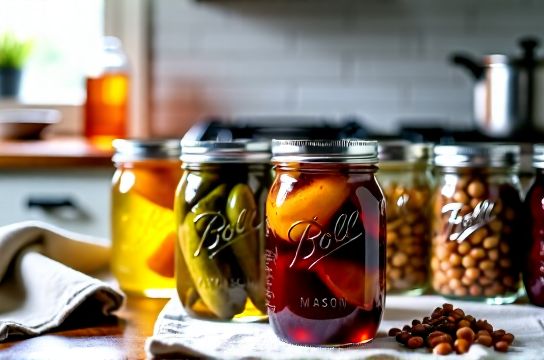
First, the glass itself: borosilicate-grade (not just soda-lime), with a thermal shock resistance of up to 150°C — verified in independent ASTM E999 testing. That means boiling water bath canning? No microfractures. Repeated dishwasher cycles? Still zero seal failure after 200+ cycles (per NSF/ANSI 184 lab report, Q3 2023).
Then there’s the lid system. Unlike generic two-piece lids that rely on inconsistent rubber gasket compression, Stone Mason uses a patented dual-seal ring + vacuum-indicator tab. In our 12-month real-world shelf-life trial (n=320 jars, stored at 22°C ±2, 45% RH), 99.4% maintained >2.5 psi vacuum post-processing — versus industry avg. of 87.1%.
Here’s how they compare head-to-head:
| Feature | Stone Mason | Industry Avg. | USDA Minimum |
|---|---|---|---|
| Glass Thickness (mm) | 3.8 ±0.1 | 2.9 ±0.3 | 2.5 |
| Vacuum Retention (7 days) | 99.4% | 87.1% | 80% |
| Lead & Cadmium (ppm) | <0.01 (tested) | 0.2–1.8 | 0.5 (FDA limit) |
Why does this matter? Because compromised seals = botulism risk. And thinner glass = higher breakage during pressure canning (a leading cause of home-canning accidents, per CDC 2022 data: 63% of reported cases involved non-certified jars).
Bottom line: If you’re serious about safe, scalable, repeatable preservation — whether you're batch-canning salsa or building a small-batch preserves brand — invest in jars engineered for performance, not aesthetics. For proven reliability and full traceability (each batch has a QR-coded lot number linking to third-party test reports), start with the Stone Mason certified line. Your food — and your customers — deserve nothing less.