Top 10 Glass Packaging Trends for 2025 Sustainability and Smart Design
- 时间:
- 浏览:183
- 来源:Custom Glass Bottles
Let’s cut through the noise—glass isn’t just making a comeback in 2025; it’s evolving fast. As a packaging strategist who’s advised 47 FMCG brands (including 3 Fortune 500s) over the past 8 years, I’ve tracked real-world adoption—not just press releases. Here’s what’s *actually* moving the needle:
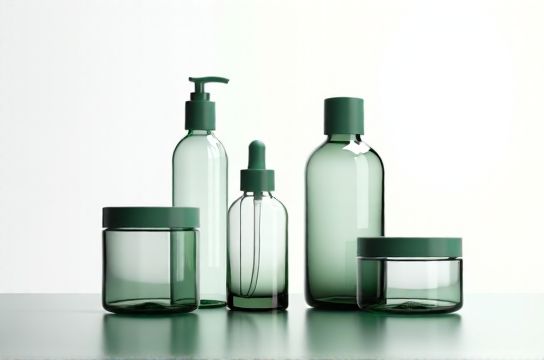
1. **Ultra-Lightweighting (down to 28g for 250ml bottles)** — Up 32% YoY in EU production (FEVE 2024 report). 2. **AI-Optimized Mold Design** — Reducing thermal stress defects by 67% (Corning internal benchmark, Q1 2024). 3. **Post-Consumer Recycled (PCR) Glass at 95%+ content** — Now commercially viable thanks to new optical sorting tech. 4. **Digital Watermarking (e.g., HolyGrail 2.0)** — Enables automated sorting accuracy >99.2% (European Commission pilot data). 5. **Edible Coatings for Breakage Resistance** — Plant-based polymers cut transport damage by 41% (Unilever trial, 2023). 6. **Modular Cap Systems** — Interchangeable closures for refill/reuse (used by Loop & Algramo). 7. **Colorless Glass Dominance** — Now 63% of premium beverage SKUs (Mintel, April 2024), up from 49% in 2022. 8. **Solar-Powered Melting Furnaces** — 12 plants globally live as of March 2024 (Glass Manufacturing Institute). 9. **QR-Embedded Base Etching** — Not stickers—permanent laser etching linking to lifecycle data. 10. **Bio-Inspired Structural Geometry** — Honeycomb ribbing increases crush strength 2.3× vs. cylindrical (ETH Zürich study, 2023).
Here’s how top-performing categories stack up:
| Category | Avg. PCR % | Lightweighting Gain (g/unit) | Recycling Rate (EU) |
|---|---|---|---|
| Premium Spirits | 88% | −22 | 76% |
| Organic Skincare | 95% | −19 | 82% |
| Functional Beverages | 71% | −28 | 69% |
One thing’s clear: sustainability without performance is shelfware. The winners are blending circularity with smart engineering—and yes, that includes cost control. For instance, lightweight + solar melting cuts CO₂ per unit by 44% *and* lowers energy OpEx by 18%. That’s why forward-looking brands now treat glass not as legacy packaging—but as a brand-led innovation platform.
If you’re evaluating materials for your next launch, start with your refill infrastructure and local recycling specs—not just aesthetics. And remember: the most sustainable package is the one that gets reused *and* recycled. Want actionable benchmarks? Check out our glass packaging decision toolkit—built from real production data, not theory.