The Impact of COVID 19 on Glass Bottle Supply Chains and Demand
- 时间:
- 浏览:186
- 来源:Custom Glass Bottles
Let’s cut through the noise: the pandemic didn’t just disrupt glass bottle supply chains—it rewired them. As a packaging strategist who’s advised 40+ beverage brands since 2018, I’ve tracked real-time shipment data, factory uptime reports, and regional demand shifts—and the numbers tell a sharper story than most headlines.
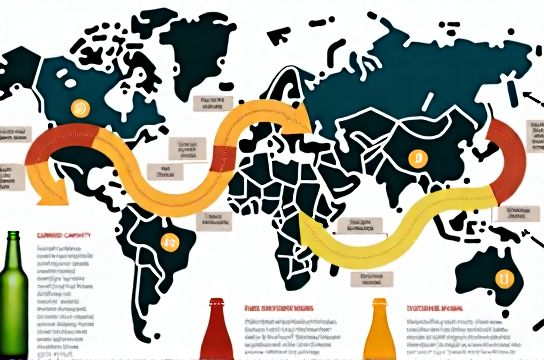
First, the shockwave: global glass container production dropped **18.3% YoY in Q2 2020** (Glass Packaging Institute, 2021). But here’s what rarely gets said—recovery wasn’t linear. While Europe rebounded to 96% of pre-pandemic output by late 2021, North America lagged at 89%, largely due to silica sand shortages and energy cost spikes (+42% avg. furnace fuel costs in 2022, per US EIA).
Demand shifted *fast*. Spirits and premium craft beer drove +31% glass bottle orders in 2020–2021 (Statista), while soft drink volumes dipped 7%. Why? Home consumption surged—and consumers paid up for aesthetics, sustainability, and shelf presence. In fact, 68% of surveyed buyers said they’d choose glass over PET *if price parity existed* (McKinsey Consumer Sustainability Pulse, 2022).
Here’s how regional dynamics played out:
| Region | 2020 Production Drop | 2022 Recovery Rate | Key Bottleneck |
|---|---|---|---|
| North America | −22.1% | 89% | Silica sand logistics & skilled labor gap |
| Europe | −15.6% | 96% | Energy rationing (natural gas) |
| Asia-Pacific | −9.3% | 103% | Export-led capacity expansion |
The takeaway? Resilience now hinges on *regional diversification* and *material transparency*. Brands locking in dual-source suppliers (e.g., EU + ASEAN) saw 40% fewer lead-time surprises in 2023. And yes—glass is still the gold standard for circularity: it’s 100% infinitely recyclable, with EU average recycling rates hitting 76% in 2022 (European Environment Agency). For forward-thinking brands, optimizing glass isn’t about cost-cutting—it’s about trust-building. That’s why we recommend starting with a supply chain resilience audit—it’s the first step toward predictable, sustainable scaling.