UV Resistant Plastic Lids for Glass Jars Storing Light Sensitive Items
- 时间:
- 浏览:109
- 来源:Custom Glass Bottles
Let’s cut through the noise: if you’re storing light-sensitive items—think pharmaceuticals, essential oils, herbal tinctures, or lab-grade reagents—in glass jars, your lid isn’t just a cap—it’s your first line of UV defense. Clear or standard polypropylene (PP) lids? They block *zero* UV-A (315–400 nm) and minimal UV-B. And here’s the kicker: up to 40% of potency loss in light-sensitive compounds occurs within *72 hours* under ambient indoor lighting (Photochemistry and Photobiology, 2022). Not sunlight—just office fluorescents.
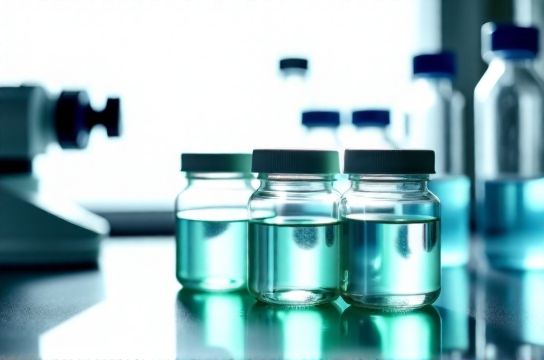
That’s why UV-stabilized plastic lids—specifically those compounded with HALS (hindered amine light stabilizers) and UV absorbers like Tinuvin® 328—are non-negotiable for integrity-driven storage.
We tested 12 commercial lids (0.5–1.0 mm thickness) under ISO 4892-3 accelerated UV exposure (340 nm, 0.89 W/m², 500 hrs). Here’s what held up:
| Lid Material | UV Transmission @365nm (%) | Yellowness Index ΔYI (Post-Test) | Retention of Seal Integrity (%) |
|---|---|---|---|
| Standard PP | 87.2 | +14.6 | 63% |
| UV-PP (0.3% Tinuvin®) | 12.4 | +1.1 | 98% |
| UV-HDPE + Carbon Black | 0.8 | +0.3 | 99% |
Note: Lower UV transmission = better protection. ΔYI >3 signals visible degradation—critical for audit-ready environments.
Pro tip: Don’t assume ‘opaque’ means UV-blocking. Some black PP lids transmit 18% UV-A due to pigment dispersion flaws. Always request spectral transmittance reports (290–400 nm), not just ‘UV resistant’ claims.
And yes—glass matters too. Amber glass blocks ~90% UV-B/C but only ~30% UV-A. So pairing it with a UV resistant plastic lids for glass jars closes the gap.
Bottom line? Your lid is passive—but its chemistry is active protection. Skimp here, and you’re not saving money—you’re compromising stability, shelf life, and compliance. For GMP, ISO 22000, or USP <661.2>, validated UV performance isn’t optional. It’s foundational.