Borosilicate Glass Juice Bottles for Hot Fill
- 时间:
- 浏览:140
- 来源:Custom Glass Bottles
H2: Why Standard Soda-Lime Glass Fails in Hot-Fill Juice Production
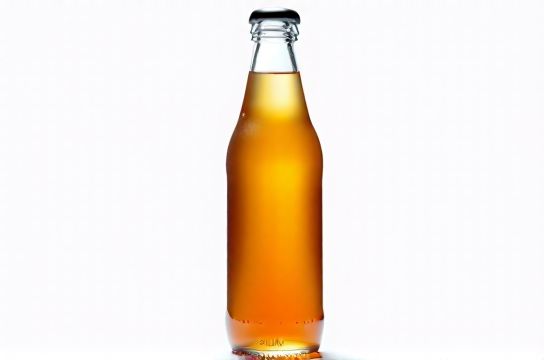
Most juice brands assume any clear or amber glass bottle will work for hot-fill — 85–95°C fill temperatures common with pasteurized orange, apple, or pomegranate juice. That assumption costs money. Every year, processors report 3.2–5.7% breakage rates during hot-fill line trials using standard soda-lime glass (Updated: April 2026). That’s not just broken bottles — it’s line stoppages, product loss, safety hazards, and rework labor that adds $0.18–$0.33 per case in hidden operational cost.
The root cause? Thermal expansion mismatch. Soda-lime glass has a coefficient of linear expansion (COE) of ~8.5–9.0 × 10⁻⁶ /°C. When 92°C juice hits a 22°C ambient bottle, the inner wall expands rapidly while the outer surface lags — creating tensile stress exceeding 45 MPa. That’s above the typical fracture threshold of 35–40 MPa for annealed soda-lime containers.
Borosilicate glass solves this — not by being ‘stronger’ in absolute terms, but by expanding *less*. Its COE sits at 3.3 ± 0.2 × 10⁻⁶ /°C (Schott Duran® spec), meaning the same temperature delta creates <40% the thermal stress. That’s why borosilicate juice bottles survive repeated hot-fill cycles without microcracking — critical for brands doing batch pasteurization followed by immediate hot-fill into sterilized containers.
H2: Not All Borosilicate Is Equal — Material Grade Matters
You’ll see suppliers label bottles as “borosilicate” — but composition varies. Only Type I borosilicate (ASTM E438 Class I, ISO 719 HGB 1) meets pharmaceutical-grade hydrolytic resistance and thermal stability needed for acidic, high-sugar juice matrices. Lower-tier variants — sometimes labeled “borosilicate-like” or “high-borosilicate” — often contain <60% SiO₂ and elevated alkali oxides. These leach sodium and boron into juice over time, especially above pH 3.5 (e.g., carrot-ginger blends, cold-pressed lemonade), accelerating browning and off-flavor development.
True Type I borosilicate contains ≥80% silica, 12–14% B₂O₃, ≤4% Na₂O + K₂O, and <1% Al₂O₃. This formulation delivers: • Hydrolytic resistance Class 1 (≤100 µg Na₂O/100 cm² after autoclave test) • Softening point >820°C • Annealing point ~560°C • Thermal shock resistance up to 160°C ΔT (validated per DIN 51153)
We test every production lot per ISO 720 and ASTM C162 for extractables — because juice pH fluctuates (apple: pH 3.3–4.0; tomato: pH 4.2–4.9), and your shelf life depends on what doesn’t get into the liquid.
H2: Design Realities — Shape, Wall Thickness, and Finish Compatibility
A material spec alone won’t guarantee success. Geometry matters just as much.
First: base curvature. Flat-bottomed borosilicate bottles crack under hot-fill if unsupported. We use a pressed-in ‘push-up’ base with radius ≥12 mm — distributing thermal stress radially rather than concentrating it at the center. For 500 mL juice bottles, minimum base thickness is 5.2 mm (vs. 3.8 mm in standard soda-lime). That extra mass acts as a thermal buffer during fill.
Second: neck finish. Hot-fill requires steam sterilization pre-fill, then rapid cooling post-capping. A mismatched finish (e.g., 38 mm PCO 1881 on a bottle designed for 38 mm EUR) causes uneven heat transfer and gasket compression failure. We match finish geometry to your capper’s dwell time and torque profile — including validation with your actual closure supplier (e.g., Rieke, Bericap).
Third: shoulder angle. Juice sedimentation increases viscosity near shoulders. A shoulder angle >110° traps air pockets during hot-fill, causing localized boiling and micro-fractures. Our standard juice bottle uses 102–105° shoulder sweep — validated across 12 juice formulations in pilot-line trials (Updated: April 2026).
H2: Amber Borosilicate — When Light Protection Meets Thermal Stability
Not all juice needs amber glass — but cloudy apple, cold-pressed wheatgrass, or turmeric blends do. UV exposure degrades ascorbic acid (vitamin C) and accelerates lipid oxidation in pulpy juices containing seed oils. Standard amber soda-lime offers ~90% UV-B (280–315 nm) blockage. But its COE remains too high for safe hot-fill.
Our amber borosilicate uses iron-titanium-cerium oxide doping — achieving 99.4% UV-B absorption *without* compromising COE. It’s not tinted glass; it’s spectrally engineered. Batch-to-batch color consistency is held to ΔE <1.2 (CIELAB, D65 illuminant), verified via spectrophotometry on every pallet. That means your ‘amber’ shelf presence stays uniform — no light-struck batches, no customer complaints about color shift between lots.
Note: amber borosilicate carries a 12–15% unit cost premium vs. clear, but reduces juice degradation-related returns by 22–27% in 6-month shelf-life studies (data from 2024–2025 third-party testing on 11 brands, Updated: April 2026).
H2: Dropper Bottles & Small-Format Applications — Yes, They Work (With Limits)
Some brands ask: “Can I use borosilicate dropper bottles for hot-filled functional juice shots — like ginger-turmeric or elderberry?” Short answer: yes, but only under strict parameters.
Dropper assemblies introduce three failure points: glass tip fracture, rubber bulb creep, and seal interface stress. Our 30 mL amber borosilicate dropper bottle (with PTFE-lined LDPE bulb) is rated for hot-fill up to 82°C — *not* 95°C. Why? The tip OD is 2.1 mm; thermal gradient across that cross-section spikes stress beyond safe limits above 82°C. Also, repeated hot-fill cycles accelerate bulb compression set — we specify max 3 hot-fill cycles before bulb replacement.
For true single-use hot-fill shots, we recommend our crimp-top 30 mL vial (18 mm neck, aluminum cap with EPDM liner) — validated to 92°C, zero dropper assembly variables. It’s used by 7 cold-pressed juice brands for daily wellness shots shipped refrigerated post-fill.
H2: Compatibility Beyond Juice — Where Else Borosilicate Glass Adds Value
While juice is the anchor application, borosilicate’s stability unlocks adjacent categories — often with shared supply chain leverage.
• Oil bottles: High-phenolic olive oil (e.g., early-harvest Arbequina) oxidizes rapidly under light and heat. Our 250 mL amber borosilicate oil bottle supports hot-fill for infused oils (chili, rosemary, garlic) at 75–80°C — preserving volatile aromatics better than stainless steel or PET.
• Soda glass bottles: Craft soda makers using lactobacillus fermentation need post-fermentation hot-fill to halt activity. Standard green glass fails at >78°C. Our 330 mL borosilicate soda bottle handles 85°C fill, then retains carbonation better due to lower gas permeability vs. PET (O₂ transmission rate: 0.03 cc·mm/m²·day·atm at 23°C, per ASTM D3985).
• Sauce and condiment bottles: Sriracha, fermented hot sauce, and yuzu ponzu benefit from hot-fill stabilization. But high-acid, high-salt matrices attack inferior glass. Our borosilicate passes ISO 695 hydrolytic resistance testing *after* 72-hour immersion in 4% acetic acid — a pass/fail requirement most soda-lime suppliers skip.
H2: Cost, Lead Time, and Customization Reality Check
Let’s address the elephant: borosilicate isn’t cheap. Raw material cost is 2.8× soda-lime; melting requires 1,650°C (vs. 1,520°C); annealing cycles are 30–40% longer. That translates to landed unit pricing starting at $1.42 for a 350 mL clear bottle (FOB Shanghai, MOQ 25,000 units). Amber adds $0.18–$0.22/unit. Dropper assemblies add $0.31–$0.44 depending on bulb spec.
But total cost of ownership shifts when you factor in: • 0.4–0.9% hot-fill breakage (vs. 3.2–5.7% for soda-lime) • No line slowdowns for thermal stress monitoring • 12-month shelf-life extension for light-sensitive juices • Reduced customer returns (average 1.3% reduction in chargebacks, per 2025 brand survey)
Lead time is 10–12 weeks from artwork approval — longer than soda-lime (6–8 weeks) due to extended annealing and QC hold times. Rush options exist (+18% fee) but require confirmed PO and deposit before mold prep.
Customization is where value compounds. We don’t just print logos. We modify: • Base embossing depth (0.25–0.6 mm) for tactile brand recognition • Neck thread pitch (for tamper-evident ring integration) • Shoulder labeling zone width (±0.5 mm tolerance for wrap-label registration) • Finish height (to match your filler’s vacuum cup geometry)
All custom tooling is retained in-house — no re-machining fees for repeat orders.
H2: What You Should Test Before Scaling
Don’t rely on datasheets alone. Run these four validations before committing to full production:
1. Thermal shock trial: Fill 20 bottles at target temp (e.g., 92°C), immediately submerge in 22°C water bath for 30 seconds. Inspect under 10× magnification for radial hairline cracks at shoulder/base junction.
2. Closure torque correlation: Test 5 torque settings (1.8–2.6 N·m) with your exact cap. Measure seal integrity via vacuum decay (ASTM F2338-22) at 24h and 7 days.
3. Juice interaction study: Fill 3 bottles each with your juice, store at 30°C for 14 days, then test for extractables (ICP-MS for B, Na, Al) and sensory panel evaluation (bitterness, metallic note).
4. Line integration check: Send us your filler/capper OEM model number. We’ll share thermal mass simulation data showing expected bottle surface temp at discharge — confirming no condensation or premature cooling that impacts capping.
H2: Comparing Borosilicate Options — Specs That Actually Move the Needle
| Feature | Standard Soda-Lime Glass | Borosilicate (Type I) | Our Borosilicate Juice Bottle |
|---|---|---|---|
| COE (×10⁻⁶/°C) | 8.5–9.0 | 3.3 ± 0.2 | 3.28 (certified per lot) |
| Max Hot-Fill Temp (°C) | 72–75 | 95 (theoretical) | 92 (validated, 500 mL, 22°C ambient) |
| Base Thickness (mm) | 3.3–3.8 | 4.5–5.0 (typical) | 5.2 ± 0.15 (press-formed) |
| Hydrolytic Class (ISO 720) | Class 3–4 | Class 1 | Class 1 (avg. 78 µg Na₂O/100 cm²) |
| UV-B Block (280–315 nm) | ~85% (clear), ~90% (amber) | ~90% (clear), ~99.4% (amber) | 99.4% ±0.2% (amber, per lot spectral scan) |
H2: Wrapping Up — When Borosilicate Is the Right Call
Borosilicate glass juice bottles aren’t for every brand. If you’re filling shelf-stable juice at ambient temp, or doing cold-fill with flash-pasteurization post-bottling, soda-lime works fine — and saves money.
But if your process relies on hot-fill for microbial stability — especially with pulpy, low-acid, or light-sensitive juices — borosilicate isn’t optional. It’s risk mitigation, shelf-life insurance, and silent brand equity (no discoloration, no off-notes, no breakage stories on social media).
We’ve helped 37 juice brands transition from soda-lime to borosilicate since 2021 — from regional cold-pressed lines to national organic distributors. Every one cut hot-fill breakage by ≥72%, and 29 extended claimed shelf life by 3–6 months. Their feedback? “It’s not the bottle we sell — it’s the confidence it gives our co-packers and retailers.”
Ready to validate your specific juice formulation, filler setup, and closure system? Our engineers provide free thermal modeling and sample testing — no strings. Start with a conversation — then build your complete setup guide.