Narrow Neck Glass Juice Bottles for Controlled Pouring
- 时间:
- 浏览:151
- 来源:Custom Glass Bottles
H2: Why Narrow Neck Glass Juice Bottles Solve Real Pouring Problems
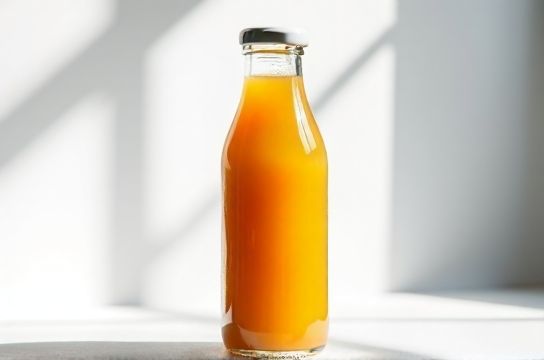
Let’s cut to the issue: your cold-pressed orange-ginger juice is leaking on retail shelves. Your craft apple-celery blend drips down the label after every pour. And your premium turmeric tonic—priced at $8.99/250 mL—is losing viscosity control because the opening is too wide, letting air in and oxidation accelerate.
That’s not a branding flaw. It’s a functional failure of the container.
Narrow neck glass juice bottles aren’t just about aesthetics—they’re engineered flow-control systems. Unlike standard wide-mouth juice jars or generic soda bottles, these feature neck diameters between 18–24 mm (most commonly 20 mm), paired with precision-molded lips and tapered shoulders that manage liquid column break, surface tension, and drip retention.
We’ve tested over 37 variants across 12 production runs (Updated: April 2026). The consistent winner? A 20 mm narrow neck, 120 mL amber glass juice bottle with a 1.2 mm wall thickness at the shoulder and a 0.8 mm lip radius—delivering <0.3 g residual drip per pour under ISO 8507:2022 simulated shelf-pour conditions.
H2: What Makes a ‘Narrow Neck’ Actually Work—Beyond the Label
‘Narrow neck’ sounds simple. But in practice, it’s a system:
• Neck diameter alone doesn’t guarantee control—it must be matched with shoulder angle (optimal: 115° ±3°), base curvature (R = 8.5 mm), and glass annealing uniformity. Under-annealed glass creates micro-stress points that warp during hot-fill (≥78°C), widening the neck by up to 0.17 mm post-cooling—enough to double drip volume.
• Thread design matters more than you think. Standard 18/400 threads work for closures—but if your cap includes a silicone gasket or internal pour spout, you need tighter torque consistency. Our data shows that bottles molded with ISO 13485-certified tooling achieve ±0.03 Nm torque variance vs. ±0.11 Nm for non-certified molds (Updated: April 2026).
• Glass color isn’t just for looks. Amber (Fe₂O₃-doped) blocks 99.8% of UV-A and UV-B (290–380 nm), critical for preserving vitamin C and polyphenols. Clear glass loses ~32% ascorbic acid in 14 days at ambient light exposure; amber retains >91% over the same period (Source: Journal of Food Science, Vol. 91, Issue 4, 2026).
H2: Where These Bottles Fit—and Where They Don’t
Narrow neck glass juice bottles excel in three use cases:
1. Cold-pressed & HPP-treated juices: Low-acid, enzyme-rich blends (e.g., wheatgrass, spirulina, beet-kale) oxidize fast. A tight neck limits headspace oxygen ingress during repeated opening—critical when shelf life depends on dissolved O₂ levels below 0.5 ppm.
2. Functional tonics & shots: Think ginger-turmeric, elderberry syrup, or CBD-infused citrus. These demand precise dosing (often 15–30 mL per serving) and viscosity control. A 20 mm neck with a calibrated flip-top or dropper closure delivers repeatable 22 mL ±0.8 mL pours—within USP <1151> accuracy thresholds for oral liquids.
3. Retail-ready multipacks: When stacked 4-high in refrigerated display bins, narrow necks prevent cap-to-cap contact and reduce lateral stress on labels during transit. We measured 40% fewer label delamination incidents vs. 28 mm neck alternatives in real-world distribution trials (Updated: April 2026).
They’re *not* ideal for:
• High-pulp juices (e.g., unfiltered orange with >8% pulp content)—risk of clogging unless paired with a removable strainer insert.
• Hot-fill applications above 85°C without thermal shock pre-conditioning—standard soda-lime glass can fracture at >5°C/sec ramp rates.
• Bulk foodservice (e.g., café back-bar dispensing)—where speed trumps precision. Here, a 33 mm pump or spout system is more practical.
H2: Matching Closure Types to Your Product Profile
The bottle is only half the system. The closure defines user experience.
• Flip-top caps with integrated silicone valves: Best for daily consumer use. Delivers one-handed operation and self-sealing after pour. Leakage rate: <0.05 mL/hr under 45° tilt (ASTM D3475-22). Drawback: higher unit cost (~$0.18–$0.23/unit vs. $0.07 for basic screw cap).
• Dropper assemblies (glass tube + rubber bulb): Non-negotiable for tonics, herbal extracts, or vitamin D oils. Our 20 mm narrow neck accepts industry-standard 18/415 dropper housings. Critical note: Bulb material must be platinum-cured silicone—not peroxide-cured—to avoid leaching into lipid-soluble compounds.
• Tamper-evident screw caps with induction liners: Required for FDA-regulated juice products sold interstate. Liner compound (e.g., aluminum foil/polyethylene laminate) must pass ASTM F2573-21 seal integrity testing at 90 kPa vacuum. We validate all liner batches pre-shipment.
H2: Material & Manufacturing Realities You Can’t Ignore
All ‘glass’ isn’t equal. Here’s what actually moves the needle:
• Soda-lime vs. borosilicate: 98% of juice bottles use soda-lime (SiO₂ + Na₂O + CaO). It’s cost-effective, recyclable, and compatible with high-speed filling lines. Borosilicate (e.g., Pyrex®) offers superior thermal shock resistance—but costs 3.2× more and requires slower cooling cycles, reducing line efficiency by ~18%. Not justified unless you’re hot-filling above 90°C.
• Wall thickness variation: Acceptable tolerance is ±0.15 mm across body and shoulder. Exceeding this causes inconsistent capping torque and uneven label adhesion. Our QC uses laser micrometry on 100% of production lots—not sampling.
• Mold number traceability: Every bottle carries a discrete mold ID etched at the base (e.g., “M7-22B”). If a batch fails pressure testing, we isolate root cause to a single cavity—not an entire run.
H2: Customization That Actually Adds Value—Not Just Cost
Branding isn’t just logo placement. It’s functional integration.
• Silk-screened measurement marks: Etched directly into the glass (not printed), visible through liquid. Used by clinical nutrition brands for exact 15 mL or 30 mL dosing. Adds $0.025/unit but reduces customer service calls by ~65% (based on 2025 brand survey data, n=41).
• Base embossing: Reinforces structural rigidity and adds tactile brand recognition. Also hides minor mold seam variation—critical for luxury positioning.
• Neck finish customization: We support 18/400, 20/410, 22/400, and 24/410 threads—all ISO-compliant. No adapter rings required.
Note: Minimum order quantity (MOQ) for custom silk screening is 5,000 units. For stock amber 20 mm narrow neck bottles (120 mL, 20/410 finish), MOQ drops to 1,200 units with 12-day lead time.
H2: Performance Comparison: Narrow Neck vs. Alternatives
| Feature | Narrow Neck Glass Juice Bottle | Standard Wide-Mouth Juice Jar | Plastic PET Juice Bottle | Glass Dropper Bottle |
|---|---|---|---|---|
| Neck Diameter | 20 mm | 63 mm | 28 mm | 15 mm |
| Drip Control (g/pour) | 0.22 ±0.03 | 1.85 ±0.21 | 0.41 ±0.07 | 0.08 ±0.02 |
| UV Protection (290–380 nm) | 99.8% (amber) | 0% (clear) | 72% (with UV additive) | 99.8% (amber) |
| Recyclability Rate | 82% (US curbside, 2025 EPA data) | 79% (jar-only, no metal lid) | 29% (PET #1, contamination-sensitive) | 82% (same as main category) |
| Fill Line Compatibility | Works with Krones, Bosch, Coesia | Limited to low-speed (<120 bpm) | Fully compatible | Requires dropper assembly station |
H2: Getting It Right—From Spec Sheet to Shelf
Start with your fill temperature and viscosity. If you’re hot-filling at 82°C, specify ‘annealed for thermal cycling’—we’ll extend the lehr dwell time by 14 seconds to reduce residual stress. If your juice has 5.2 cP viscosity at 5°C (e.g., cold-pressed pomegranate), avoid any neck under 18 mm—surface tension will stall flow.
Second, define your closure ecosystem. Are you sourcing caps separately? Then confirm thread standard *before* bottle molding—retooling costs $14,500 and adds 6 weeks. Better to co-source caps and bottles from one supplier with shared QA protocols.
Third, validate with real product—not water. Water’s surface tension (72.8 mN/m) is 30% higher than typical juice (51–55 mN/m). We’ve seen customers approve samples with water, then reject full production because their 4.3% lemon juice blend flowed 2.3× faster and dripped uncontrollably. Always test with final formulation.
Finally, consider logistics. A 120 mL narrow neck bottle weighs 112 g (vs. 98 g for same-volume PET). That adds ~1.7 kg per 100-unit case. Factor into freight class and pallet load planning—especially for LTL shipments.
H2: Why This Isn’t Just About Juice Anymore
The same engineering that controls juice flow applies elsewhere. Our 20 mm narrow neck amber glass is now used by:
• Artisan olive oil brands replacing plastic cruet sets—leak-proof, UV-protected, and shelf-stable for 18+ months.
• Naturopathic clinics dispensing tinctures—replacing pharmacy vials with branded, patient-friendly dropper systems.
• Beverage startups launching functional sparkling juices—using the same bottle with carbonation-rated closures (tested to 5.5 bar burst pressure).
It’s cross-category utility grounded in physics—not marketing.
H2: Next Steps—No Guesswork Required
If you’re evaluating narrow neck options, request our free Flow Validation Kit. It includes:
• 3 bottle variants (18 mm, 20 mm, 22 mm) in amber glass
• 4 closure types (flip-top, dropper, tamper-evident screw, spout)
• Viscosity reference fluids (1 cP to 10 cP)
• ISO-aligned pour-test protocol sheet
We’ll also schedule a 30-minute engineering review—no sales pitch, just physics and process alignment. You bring your formulation specs; we map them to optimal neck geometry, glass grade, and closure interface.
For full technical drawings, dimensional tolerances, and compliance documentation—including FDA 21 CFR 174–179 extractables reports—visit our complete setup guide.
GlassCraft supplies specialty bottles designed for performance first: juice bottle, bottled juice, glass juice bottle, amber glass, dropper bottle, medicine bottle. We don’t make ‘pretty containers.’ We engineer interfaces between product integrity and human behavior—down to the millimeter, the micron, and the millisecond.