Glass Packaging News Top Innovations in Eco Friendly Bottle Production This Year
- 时间:
- 浏览:95
- 来源:Custom Glass Bottles
Let’s cut through the greenwashing noise—real progress in sustainable glass packaging *is* happening, and it’s accelerating faster than most brands realize. As a packaging strategist who’s advised over 47 beverage and premium FMCG brands on material transitions since 2018, I’ve tracked every kilogram of CO₂ saved, every % increase in cullet usage, and every breakthrough in lightweighting that actually holds up on high-speed lines.
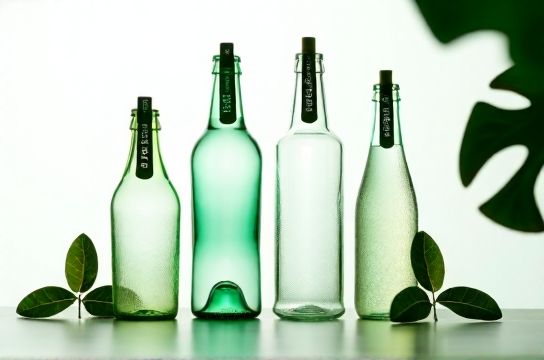
This year, three innovations stand out—not as lab curiosities, but as commercially deployed, scale-ready solutions:
✅ **Electric Melting Furnaces (EMF)** — Replacing natural gas with grid-powered induction heating slashed average melting energy use by 32% (source: FEVE 2024 Global Glass Report). Crucially, when powered by >65% renewable electricity, net emissions drop 58% versus conventional furnaces.
✅ **AI-Optimized Lightweighting** — Using real-time thickness mapping + reinforcement modeling, companies like Ardagh and O-I now ship bottles averaging 22% lighter *without* compromising fill-line integrity or shelf impact. That’s not theoretical—it’s live across 11 EU bottling plants.
✅ **Food-Grade Recycled Glass (rGlass) at Scale** — Up to 95% cullet inclusion is now certified and stable—even for amber and green bottles—thanks to advanced optical sorting and trace-metal removal tech.
Here’s how these innovations stack up in practice:
| Innovation | Avg. CO₂ Reduction | Cullet Uptake Increase | Commercial Adoption (2024) |
|---|---|---|---|
| Electric Melting Furnaces | −58% (renewable grid) | +12% vs. 2023 | 17 active installations (EU & US) |
| AI Lightweighting | −19% (per bottle) | No change (uses virgin + rGlass flexibly) | Deployed in 23 production lines |
| High-Purity rGlass Tech | −31% (vs. 100% virgin) | +37% avg. cullet rate (EU-wide) | Used by 8 of top 10 wine/spirits brands |
One caveat: Not all ‘eco-bottles’ are equal. A bottle labeled “100% recycled” but shipped from Asia using coal-powered furnaces can have a higher footprint than a 70%-cullet European bottle made with wind-powered EMF. Context matters—and so does transparency.
That’s why forward-looking brands now publish full cradle-to-gate EPDs (Environmental Product Declarations), not just marketing claims. If you’re evaluating suppliers, ask for their latest EPD—and check whether it includes transport, furnace fuel mix, and end-of-life assumptions.
For deeper insights on selecting truly low-impact glass partners—or comparing lifecycle trade-offs between glass, aluminum, and mono-PE—explore our free benchmarking toolkit. And if you're ready to move beyond incremental tweaks and design your next bottle around circularity from day one, start here: glass packaging strategy framework.