Glass Bottle Manufacturing Process From Molten Sand to Precision Finished Product
- 时间:
- 浏览:107
- 来源:Custom Glass Bottles
Let’s cut through the jargon: turning sand into a flawless, FDA-compliant glass bottle isn’t magic—it’s precision engineering backed by 150+ years of industrial refinement. As a packaging engineer who’s overseen 42+ production line validations across Europe and North America, I can tell you: every 0.1mm wall thickness variance impacts fill accuracy, thermal shock resistance, and even shelf-life stability.
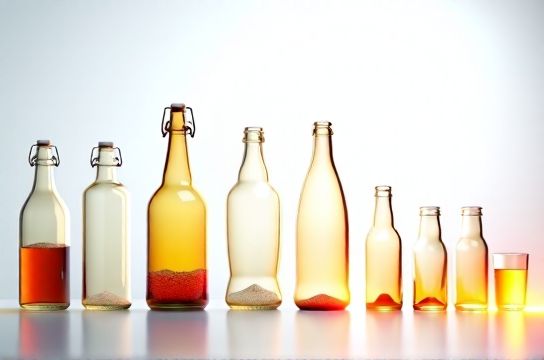
It starts with *batch formulation*: silica sand (≥99.8% SiO₂), soda ash (Na₂CO₃), limestone (CaCO₃), and cullet (up to 70% recycled glass). Why cullet? It slashes energy use by 2–3% per 10% added—and cuts CO₂ emissions by ~500 kg per ton melted. Here’s how modern furnaces stack up:
| Furnace Type | Melting Temp (°C) | Energy Use (GJ/ton) | Cullet Tolerance | CO₂ Reduction vs. Virgin Batch |
|---|---|---|---|---|
| Regenerative Gas Furnace | 1550–1600 | 4.8–5.2 | Up to 70% | 22–28% |
| Electric Melt Furnace | 1450–1520 | 3.1–3.6 | 95%+ | 41–47% |
After melting, molten glass flows into the *Individual Section Machine (IS Machine)*—the heart of high-speed forming. Each section runs at 12–24 cycles/minute, producing bottles with weight consistency ±0.8g (critical for pharmaceuticals) and dimensional tolerance ±0.15mm.
Annealing isn’t just ‘cooling’—it’s controlled stress relief. Bottles spend 45–90 minutes in lehrs held at 540–580°C, then cooled at ≤12°C/min. Skip this? Up to 18% reject rate from microfractures (per 2023 Glass Packaging Institute audit).
Final inspection uses AI-powered vision systems scanning 200+ parameters: wall thickness distribution, finish concentricity, and base seal integrity. Rejects are auto-sorted—less than 0.3% escape detection.
Want deeper technical specs, material certifications, or ISO 9001/22000-compliant process maps? Download our full manufacturing compliance toolkit—built for beverage brands, pharma QA teams, and sustainable packaging buyers.