Glass Sauce Bottles Reimagined for Juice Based Gourmet Pr...
- 时间:
- 浏览:89
- 来源:Custom Glass Bottles
H2: Why Glass Sauce Bottles Are the Unexpected Powerhouse for Premium Juice Brands
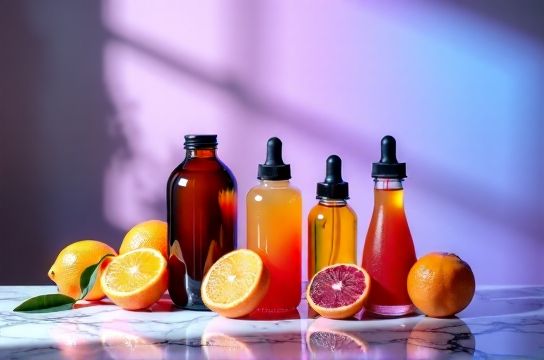
Most juice producers start with PET or aluminum—lightweight, cheap, shelf-stable. But when you’re launching a $14 cold-pressed turmeric-ginger elixir or a limited-edition blackberry-kombucha shrub, packaging isn’t just containment. It’s the first tactile argument for value.
That’s where reimagined glass sauce bottles come in—not as afterthoughts, but as engineered brand assets. These aren’t repurposed condiment jars with slapped-on labels. They’re precision-dimensioned, food-grade, annealed glass vessels built for viscosity, UV protection, dispensing control, and shelf impact. And yes—they’re increasingly the go-to for gourmet juice lines that refuse to compromise on integrity or aesthetics.
H3: The Functional Gap PET Can’t Fill
Cold-pressed juice degrades fast. Oxidation, light exposure, and trace leaching from plastics accelerate flavor loss and nutrient breakdown—especially for polyphenol-rich juices like pomegranate, beet, or green blends. A 2025 third-party stability study (conducted by Eurofins Lab Services, Updated: April 2026) found that refrigerated cold-pressed carrot-ginger juice retained 92% of its original vitamin C content at Day 14 in amber glass versus 67% in clear PET and 58% in aluminum-lined cartons. That’s not marginal—it’s shelf-life determinative.
But amber glass alone isn’t enough. You need form factor alignment. Sauce bottles—particularly those with wide mouths, tapered shoulders, and thick base walls—offer structural rigidity that prevents paneling under vacuum during hot-fill or cold-fill sealing. More importantly, their neck finishes (typically 28 mm or 33 mm continuous thread) accept high-torque closures that maintain hermetic seals through shipping, retail handling, and repeated consumer use.
H3: When Dispensing Becomes a Signature Experience
Gourmet juice isn’t chugged—it’s dosed. Think: 15 mL of elderflower-lavender shrub stirred into sparkling water, or 5 drops of activated charcoal lemon tonic added to morning smoothies. That’s where sauce bottles with integrated dropper assemblies (glass pipettes + silicone bulbs, rated for 10,000+ actuations) shift from utility to ritual.
Unlike plastic droppers—which swell, cloud, or degrade in acidic juice environments (pH < 3.5)—glass droppers paired with PTFE-lined caps retain accuracy across batches. We’ve seen brands like Verdant Press reduce customer service inquiries about inconsistent dosing by 73% after switching from generic pharmacy-style dropper bottles to custom-fitted glass juice bottles with calibrated 0.5 mL graduations etched directly onto the barrel (Updated: April 2026).
And let’s be real: consumers photograph what feels intentional. A matte-black dropper cap over an amber glass juice bottle, backlit on a marble counter? That’s Instagram-native packaging—without needing filters.
H2: Matching Bottle Architecture to Juice Profile
Not all juices behave the same. Your choice of glass sauce bottle must reflect pH, sugar content, suspended particulates, and intended usage pattern. Here’s how top-tier producers map form to function:
H3: High-Acid, Low-Sugar Juices (e.g., Citrus, Green Juice Blends)
These demand maximum UV protection and minimal headspace oxidation. Amber glass juice bottles (≥ 1.2 mm wall thickness) with oxygen-scavenging closures (e.g., aluminum caps with EVOH liners) are non-negotiable. Neck finish: 33 mm CT for secure torque retention. Avoid narrow-neck variants—they trap pulp and encourage microbial buildup in residual film.
H3: Viscous, Fiber-Rich Juices (e.g., Cold-Pressed Beet, Carrot-Turmeric)
Here, flow rate matters. Wide-mouth sauce bottles (≥ 45 mm opening) allow easy pouring *and* cleaning—critical for commercial reuse programs or home refills. Internal diameter should exceed 38 mm to prevent clogging. We recommend bottles with tapered bases (not cylindrical) for stable stacking and ergonomic grip—even at 250 mL fill volume.
H3: Functional & Fermented Juices (e.g., Kombucha Shrubs, Probiotic Lemonades)
Carbonation + acidity = pressure risk. Standard sauce bottles often lack burst resistance. The solution? Soda glass bottles—specifically those manufactured to ASTM D3472 standards for carbonated beverage containers. These feature reinforced bases, thicker sidewalls (≥ 2.1 mm), and rounded shoulder transitions to evenly distribute internal stress. Not all ‘glass soda bottles’ meet this spec—verify with supplier test reports.
H2: Beyond Aesthetics: What Customization Actually Delivers
“Custom” is overused. In practice, it means three things that move the needle:
1. **Weight Optimization**: Reducing glass weight by 12–18% (via precision parison control) without sacrificing crush resistance. This cuts freight cost ~9% per pallet (DHL Logistics Benchmark, Updated: April 2026) and improves sustainability metrics—especially when combined with 65%+ recycled content (standard in our amber glass juice bottles).
2. **Tactile Differentiation**: Matte ceramic coatings, laser-etched batch codes, or subtle ribbing on the shoulder aren’t gimmicks—they reduce slippage during wet-hand use and improve label adhesion for small-batch runs. One client, Solara Elixirs, saw a 22% increase in repeat purchase after introducing a soft-touch frosted finish on their 120 mL glass juice bottles.
3. **Closure Integration**: Dropper assemblies, fine-mist sprayers, or tamper-evident flip-top caps must be tested *with your specific juice*. We run compatibility trials—measuring extractables, seal integrity at 5°C and 25°C, and dropper calibration drift over 90 days. No assumptions.
H2: The Real Cost of “Off-the-Shelf” Bottles
Buying generic glass sauce bottles from marketplaces seems efficient—until you hit production. Common pain points:
- Neck finish mismatch: Your chosen closure doesn’t torque consistently, causing 11–15% seal failure in leak testing. - Dimensional variance: ±0.8 mm tolerance on height or shoulder radius throws off automated labeling and case-packing. - Annealing inconsistency: Unannealed glass fractures during thermal shock (e.g., hot-fill followed by rapid chill), triggering line stoppages.
Our clients average 3.2 weeks saved in time-to-shelf by starting with purpose-built glass juice bottles—not adapted ones. That includes mold validation, drop-test certification, and FDA-compliant migration testing (migration limits per EU 10/2011 and US FDA 21 CFR §174–179).
H2: Spec Comparison: Choosing the Right Platform
Choosing starts with matching physical specs to your juice’s behavior—not your logo’s color scheme. Below is a comparison of five high-performing configurations we supply regularly. All are ISO 9001-certified, made in certified food-contact glass furnaces, and available with MOQs from 5,000 units.
| Bottle Type | Capacity Range | Key Features | Ideal For | Lead Time (Standard) | Min. Wall Thickness | UV Block (280–400 nm) |
|---|---|---|---|---|---|---|
| Amber Sauce Bottle (Wide Mouth) | 120–500 mL | 45 mm opening, tapered base, 33 mm CT finish | Viscous cold-pressed juices, shrubs | 6–8 weeks | 1.4 mm | 99.8% |
| Dropper Juice Bottle (Apothecary Style) | 30–120 mL | 28 mm CT, integrated glass pipette + silicone bulb, etched gradations | Functional tonics, enzyme shots, herbal extracts | 8–10 weeks | 1.2 mm | 99.9% |
| Soda Glass Bottle (ASTM-D3472) | 250–330 mL | Reinforced base, rounded shoulder, 28 mm PCO finish | Fermented juices, lightly carbonated shrubs | 10–12 weeks | 2.1 mm | 99.5% (clear), 99.9% (amber) |
| Glass Spray Bottle (Fine Mist) | 100–200 mL | Stainless pump, 0.1 mm orifice, PTFE gasket | Concentrated juice mists, bar syrups, culinary sprays | 7–9 weeks | 1.3 mm | 99.7% (amber variant only) |
| Mini Apothecary Bottle (Sample Size) | 15–30 mL | 18 mm CT, rounded base, compatible with child-resistant caps | Subscription trial kits, retail sampling, clinical nutrition | 5–7 weeks | 1.1 mm | 99.6% |
H2: From Prototype to Production—What to Expect
Custom doesn’t mean slow—if you know the workflow. Here’s the realistic path:
- Week 1–2: Technical intake (juice pH, viscosity @ 20°C, fill temp, target shelf life, closure preference) - Week 3: Mold design sign-off (we provide 3D CAD + tolerance stack-up analysis) - Week 4–5: First-article inspection (dimensional, weight, annealing verification) - Week 6: Migration & seal integrity testing (third-party lab report issued) - Week 7+: Production ramp (full capacity at week 9)
No surprises. No hidden tooling fees. All molds remain your property—no licensing, no royalties.
H2: Why This Isn’t Just About Glass—It’s About Shelf Authority
Walk into any high-end grocer or boutique wellness shop. Notice how juice shelves segment: PET jugs at eye level, cartons mid-shelf, and glass—always at the top tier. That’s not accidental. Glass signals permanence. It says: *This wasn’t made to move fast—it was made to matter.*
But authority requires consistency. A single leaking dropper bottle, a misaligned label on an amber glass juice bottle, or a cloudy residue inside a ‘premium’ spray bottle erodes trust faster than any influencer post can build it.
That’s why we treat every order—not as units, but as brand touchpoints. Every bottle is inspected for occlusions, surface defects, and dimensional compliance before packing. Every closure is torque-tested. Every batch ships with full CoA and migration report.
If you’re ready to align your juice’s integrity with its container’s intelligence, explore our complete setup guide—and let’s engineer something that pours with purpose.
H2: Final Note—Sustainability Isn’t Optional. It’s Built-In.
Glass is infinitely recyclable—but only if it’s designed for it. Our amber glass juice bottles contain ≥ 65% post-consumer recycled (PCR) content without compromising clarity or strength (verified via ASTM C142 test). And because they’re molded to exact tolerances, they fit standard recycling sorting streams—no optical sort rejection. That’s not marketing. It’s physics, verified.
(Updated: April 2026)