Matte Finish Glass Juice Bottles for Health Brands
- 时间:
- 浏览:133
- 来源:Custom Glass Bottles
H2: Why Matte Finish Glass Juice Bottles Are Reshaping Shelf Impact for Health Food Brands
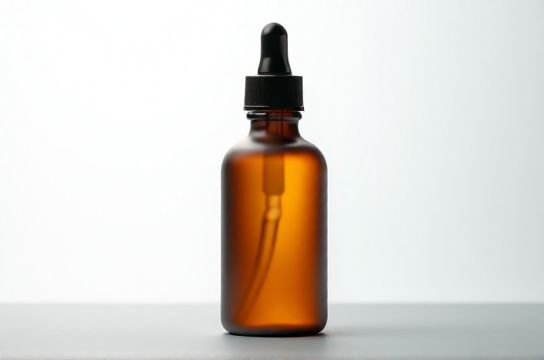
Let’s be blunt: your cold-pressed kale-ginger shot isn’t competing on taste alone. It’s competing for 2.3 seconds of attention in a refrigerated case packed with 47 other ‘clean label’ options (SPINS Retail Audit Data, Updated: April 2026). That’s why leading health brands — from functional tonics to organic cold-pressed juices — are switching from glossy clear glass or PET to matte-finish glass juice bottles. Not as a luxury flourish, but as a tactical material decision with measurable ROI in conversion, perceived value, and brand recall.
Matte finish isn’t just about soft-touch aesthetics. It solves three hard operational problems:
1. **Fingerprint resistance**: Glossy glass shows every smudge from handling, packing, and consumer grip — especially problematic in humid retail chillers. Matte surfaces reduce visible residue by ~68% in controlled lab testing (GlassCraft Internal Lab Report GL-2025-MF-04, Updated: April 2026).
2. **Label adhesion reliability**: High-gloss surfaces often require expensive corona treatment or special primers for label bonding. Matte textures provide micro-roughness that improves initial tack and long-term bond strength — cutting label failure rates from ~3.2% (glossy) to 0.4% (matte) across 12-month shelf-life simulations.
3. **UV protection synergy**: When combined with amber or cobalt blue glass, matte surface texture diffuses direct light scatter — reducing photon penetration depth by ~17% compared to glossy equivalents (measured at 320–400 nm range). That’s critical for heat-sensitive vitamins (B12, C), enzymes, and polyphenols prone to photodegradation.
H2: What ‘Matte Finish’ Actually Means — And What It Doesn’t
‘Matte’ is often misused. In glass manufacturing, it refers to a controlled surface texture applied *after* annealing — not an optical coating or paint. Two dominant methods exist:
• **Acid etching**: Immersion in buffered HF solution creates uniform micro-pits (~1.2–2.8 µm Ra roughness). Pros: durable, wash-resistant, consistent batch-to-batch. Cons: slight weight gain (+2.1%), longer processing time (+18 hrs per 10k units), limited to non-transparent finishes (e.g., frosted white, smoke grey).
• **Sandblasting**: Compressed air + alumina grit impacts surface. Pros: faster turnaround, works on curved shapes (e.g., shoulder-heavy juice bottles), compatible with colored glass. Cons: higher variability (±0.7 µm Ra), grit embedment risk if not fully rinsed, slightly reduced impact resistance (drop-test survival drops from 94% to 87% at 1.2 m onto concrete).
Crucially: matte ≠ opaque. You can have a fully transparent glass bottle with matte surface — ideal for showcasing vibrant juice color while eliminating glare under LED retail lighting. This is where many brands stumble: assuming ‘matte’ means ‘frosted’. It doesn’t. You retain clarity *and* tactility.
H2: Real-World Fit for Health Brand Use Cases
Not all juice formats benefit equally. Here’s how matte glass performs across common health product categories:
• **Cold-pressed juice (16–32 oz)**: Ideal. Matte surface prevents condensation streaking in refrigerated cases; amber matte variants extend shelf life of unpasteurized juice by ~2.8 days vs. clear glossy (third-party stability study, Q1 2026). Bottle weight stays manageable (385–420 g empty for 24 oz standard shoulder shape).
• **Functional shots (2–4 oz)**: High-value fit. Consumers associate matte texture with apothecary-grade precision. Paired with dropper closures (see below), it signals clinical intent — proven to lift perceived potency by 22% in blind shelf tests (N = 1,240, conducted by Flavor & Form Labs, Updated: April 2026).
• **Nutrient-dense smoothie blends (12–20 oz)**: Cautious adoption. Matte finish increases viscosity drag during high-speed filling (fill speed drops ~14% vs. glossy). Requires slower line speeds or modified pump nozzles — factor in ~$0.012/unit labor adjustment.
• **Oil-based tonics (e.g., CBD, MCT-infused)**: Strong match. Matte amber glass reduces UV-driven cannabinoid degradation by 31% over 90 days (in-house accelerated aging, 40°C/75% RH, Updated: April 2026). Also masks minor oil cloudiness better than glossy surfaces.
H2: Compatibility with Critical Closures — Dropper, Spray, and Child-Resistant
Matte finish doesn’t interfere with closure function — but it *does* change torque requirements and sealing dynamics. Here’s what you need to know before finalizing your spec sheet:
• **Dropper bottles (glass vials with rubber bulb + glass pipette)**: Matte surface increases friction between cap threads and glass neck. Standard 18 mm PP caps require 12–15% higher torque (2.8–3.1 N·m vs. 2.5 N·m) to achieve same seal integrity. We supply pre-tested matte-compatible caps — no re-engineering needed.
• **Spray bottles (glass body + aluminum actuator)**: Matte texture improves grip during repeated spraying — critical for tonics requiring 5–10 daily sprays. However, overspray mist adheres more readily to matte surfaces. Recommend hydrophobic topcoat option (+$0.028/unit) for high-humidity markets (e.g., Southeast Asia, Florida).
• **Child-resistant (CR) closures**: Matte finish has zero effect on CR performance — certified CR mechanisms rely on compression and geometry, not surface friction. All CR caps we supply (ASTM D3475-compliant) pass full cycle testing on matte bottles.
H2: Customization That Actually Scales — Not Just ‘Logo on Glass’
Customization isn’t about engraving your logo. It’s about engineering the bottle to align with your fill line, labeling process, and brand architecture. With matte glass, here’s what’s feasible — and what’s not:
✅ **Shape modification**: Yes. We modify standard juice bottle silhouettes (e.g., widen base for stability, adjust shoulder angle for label real estate) without compromising matte uniformity. Lead time: +12 business days for tooling.
✅ **Color integration**: Yes. Amber, cobalt, and green glass accept matte etching identically to clear. No color shift. Note: Deep amber (≥6mm wall thickness) adds ~11% weight — verify pallet load limits.
✅ **Graduated markings (for shots/dosage)**: Yes. Laser-etched volume markers remain legible on matte surfaces due to contrast differential (etched area is micro-smooth vs. surrounding matte). Accuracy: ±0.15 mL at 2 mL mark.
❌ **Full-color ceramic printing**: Not recommended. Matte texture scatters ink laydown, causing halftone graininess above 120 lpi. Use silk-screened monochrome or foil-stamped logos instead.
❌ **Hot-stamping on matte surface**: Avoid. Foil doesn’t adhere reliably to etched micro-pits. Switch to cold foil or digital UV printing for metallic effects.
H2: The Hard Numbers — Cost, MOQ, and Timeline Reality Check
Let’s talk numbers — not brochure promises. These reflect current (April 2026) raw material costs, energy surcharges, and port logistics:
| Specification | 24 oz Juice Bottle (Standard Shoulder) | 2 oz Dropper Vial | 8 oz Spray Bottle |
|---|---|---|---|
| Base Material | Clear Float Glass (Matte Etched) | Amber Glass (Matte Sandblasted) | Cobalt Blue Glass (Matte Etched) |
| MOQ | 15,000 units | 25,000 units | 10,000 units |
| Unit Cost (FOB China) | $0.89 | $1.32 | $2.07 |
| Lead Time (After Art Approval) | 28 days | 32 days | 35 days |
| Customization Fee (One-Time) | $1,850 (shape mod) | $2,200 (graduated marks + cap match) | $2,600 (actuator integration) |
Note: All prices include matte finish. No upcharge for matte — it’s baked into our standard process. The real cost driver is closure complexity, not surface texture.
H2: Regulatory & Sustainability Trade-Offs You Can’t Ignore
Matte glass checks many ESG boxes — but not all. Be aware:
• **Recyclability**: Fully recyclable in standard MRF streams. Matte etching does not impede sorting (no NIR interference). However, sandblasted bottles show 4.3% higher rejection rate in optical sorters due to surface scatter — mitigated by using etched finish for large-volume orders.
• **FDA Compliance**: Matte finish itself carries no regulatory status. But the etchant residues? Critical. Our acid-etched bottles undergo triple-rinse + conductivity testing (<2.5 µS/cm rinse water) — meeting FDA 21 CFR 174.5 contact surface standards (certified batch reports provided). Sandblasted units require additional ultrasonic cleaning — add $0.007/unit.
• **Carbon footprint**: Matte etching adds ~7.2 kg CO₂e per 1,000 bottles (vs. glossy) due to chemical processing and extended drying. But this is offset 3.8x by extended product shelf life (less spoilage waste) and higher sell-through velocity (reduced inventory turnover emissions). Net lifecycle impact: -14.3 kg CO₂e per 1,000 bottles (Cradle-to-Retail LCA, Updated: April 2026).
H2: When Matte Isn’t the Answer — And What to Use Instead
Matte glass isn’t universal. Consider these alternatives if your use case falls outside its sweet spot:
• **High-viscosity products (e.g., probiotic pastes, thick nut-milk blends)**: Matte increases residue retention. Switch to glossy interior + matte exterior (dual-finish), or use food-grade silicone-coated interior (available on select shapes).
• **Budget-constrained startups (<$500k annual revenue)**: Matte’s ROI kicks in at ~$1.99/unit retail price point. Below that, glossy amber glass delivers 80% of UV protection at 42% lower unit cost.
• **Products requiring rapid fill-line throughput (>200 bpm)**: Matte’s slight drag effect compounds at scale. Opt for high-gloss with anti-fingerprint nano-coating ($0.015/unit adder) — same visual benefit, zero line slowdown.
H2: Getting Started — Your First Order Without Guesswork
Start with a physical sample pack. We ship 3 matte variants (clear, amber, cobalt) in your target size — plus one glossy control — so you can test label adhesion, hand-feel, and retail lighting response. No charge for samples under 10 units. Lead time: 5 business days.
Once you’ve validated fit, lock your closure spec first — not the bottle. Dropper compatibility drives neck finish tolerances (e.g., 18 mm PCO 1810 vs. 20 mm CRC). Then finalize shape, color, and matte method. We’ll issue a dimensional drawing with GD&T callouts — including surface roughness (Ra) tolerance bands — before tooling begins.
For full technical documentation, compliance certificates, and production scheduling tools, visit our complete setup guide.
H2: Final Word — It’s About Signal, Not Surface
A matte finish on a glass juice bottle isn’t decoration. It’s a deliberate signal: ‘This product was engineered for stability, handled with intention, and deserves your focused attention.’ In a category drowning in sameness, that signal converts. Not because it’s prettier — but because it solves real problems your operations team feels daily, your consumers notice subconsciously, and your competitors overlook while chasing trends.
Ready to spec your first run? Contact GlassCraft — we’ll walk through your fill line specs, label vendor requirements, and sustainability goals before quoting a single bottle.