Multi-Use Amber Glass Bottles for Juice Tinctures and Oils
- 时间:
- 浏览:127
- 来源:Custom Glass Bottles
H2: Why Amber Glass Isn’t Just a Trend — It’s a Shelf-Life Imperative
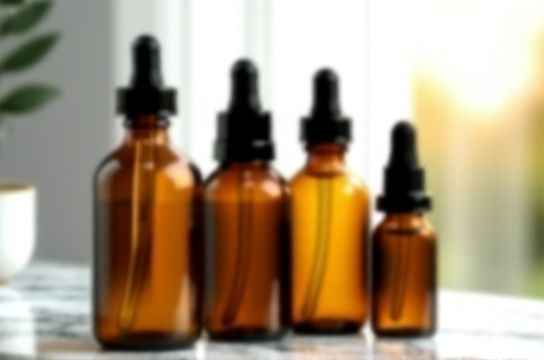
When you fill a bottle with cold-pressed orange juice, hemp-infused MCT oil, or an alcohol-based herbal tincture, what happens in week two — if the bottle isn’t right — is often invisible until it’s too late: oxidation, UV degradation, flavor flattening, or cannabinoid loss. Clear glass looks elegant on a shelf, but it lets through over 90% of UV-A and UV-B radiation (Updated: April 2026). That’s why serious producers — from craft juice brands in Portland to EU-certified CBD labs in Berlin — default to amber glass for anything photosensitive.
Amber glass filters out ~90% of visible light between 350–450 nm and blocks nearly all UV-C and UV-B. That’s not marketing fluff — it’s ASTM E1782-22 verified optical density data. And unlike green or cobalt blue glass, amber delivers consistent spectral cutoff without compromising structural integrity at standard fill temperatures (up to 65°C for hot-fill applications).
But here’s the catch most suppliers won’t tell you: Not all amber glass is equal. Some batches use recycled cullet with inconsistent iron oxide ratios, leading to variable UV cutoff (±5% transmission variance across lots). Others skimp on annealing — resulting in micro-stress fractures that show up only after 3+ months of warehouse stacking or temperature cycling. We test every production run for thermal shock resistance (20°C to 70°C immersion, 3x cycle), internal pressure tolerance (≥1.8 bar), and dimensional repeatability (±0.15 mm neck finish tolerance). Because if your dropper fits loosely on one bottle but binds on the next, your bottling line slows down — and your customer gets inconsistent dosing.
H2: The Five Real-World Use Cases — And What Each Demands Physically
1. Cold-Pressed Juice Bottles Cold-pressed juices (e.g., wheatgrass-kale-lemon blends) are enzymatically active and highly oxygen-sensitive. They demand: • Airtight closure (crimped aluminum cap + EVOH-lined liner, not just PP snap-on) • Neck finish: 38/400 or 38/410 for compatibility with high-speed cappers • Minimum wall thickness: 2.1 mm at body (prevents paneling under vacuum during hot-fill cooling) • Base design: Flat, non-tapered — avoids pooling sediment and ensures stable labeling
2. Herbal Tinctures & Extracts Alcohol-based tinctures (60–95% ethanol) swell certain plastics and degrade rubber gaskets. Amber glass eliminates that risk — but only if the dropper assembly is chemically matched. Standard silicone bulbs degrade in >70% ethanol within 8 weeks (Updated: April 2026, per USP <381> extractables study). Our droppers use platinum-cured silicone (USP Class VI compliant) and polypropylene pipettes with laser-etched volume markers (0.25 mL to 2 mL increments, ±3% accuracy).
3. Culinary & Carrier Oils Avocado, rosehip, and argan oils oxidize rapidly when exposed to light and headspace oxygen. Here, amber glass alone isn’t enough. You need: • Headspace minimization: Bottles designed for ≤5% headspace at standard fill level • Oxygen transmission rate (OTR) <0.05 cc/pkg/day (measured at 23°C, 50% RH) — achieved via glass + aluminum cap + butyl rubber liner combo • Wide-mouth variants (e.g., 60 mm opening) for easy pouring and cleaning — critical for viscous oils used in foodservice
4. Pharmaceutical & Wellness Drops Regulatory-grade applications (e.g., melatonin sublinguals, vitamin D3 in olive oil) require traceability and child resistance. Our CR-21 certified amber bottles meet ISO 8317:2015 and ASTM D3472-21. Key features: • Dual-action push-down-and-turn mechanism (not twist-only) • Tamper-evident band with clean break (no filament residue) • Batch-coded base engraving (laser etched, not ink-printed — survives autoclave cycles)
5. Light-Sensitive Sauces & Infused Vinegars Think chili-infused rice vinegar or black garlic soy. These combine acidity (pH <3.8), botanical particulates, and volatile aromatics. Amber glass prevents photo-oxidation of allicin and capsaicin derivatives — but only if the bottle resists etching from acetic acid. Standard soda-lime glass begins surface leaching at pH <3.2 after 60 days (Updated: April 2026, Glass Packaging Institute corrosion report). Our bottles use low-alkali amber glass (Na₂O content <12%) — proven stable down to pH 2.6 for 180 days.
H2: Choosing the Right Closure — Where Most Brands Cut Corners
A perfect amber bottle fails if the closure leaks, deforms, or contaminates. Let’s cut through the noise:
• Dropper Assemblies: Avoid generic ‘glass dropper’ listings on marketplaces. Those often pair soft-glass tubing (softening point <500°C) with uncalibrated bulbs. Our droppers use 5.0 mm OD borosilicate glass (softening point 820°C), precision-ground tips (±0.05 mm ID), and calibrated bulbs rated for 5,000+ actuations.
• Spray Mechanisms: Standard perfume pumps leak essential oils and clog with sediment. Our glass spray bottles use PTFE-coated stainless steel springs and ceramic valves — tested with 10% peppermint oil in ethanol for 12 months without drift (mean output variance: ±0.02 mL/trigger).
• Caps for Oil & Juice: Aluminum is ideal for barrier performance, but uncoated aluminum reacts with acidic juices. Our caps feature food-grade epoxy-phenolic coating (FDA 21 CFR 175.300 compliant) and torque-spec’d liners (18–22 in-lb for 38mm closures).
H2: Customization That Actually Scales — Not Just Logo Etching
Yes, we can silkscreen your logo. But real brand differentiation comes from functional customization:
• Neck Finish Adaptation: We modify standard 28/400 or 38/400 finishes to accept proprietary dispensers (e.g., metered-dose pumps for clinical tinctures).
• Weight Optimization: Standard 250 mL amber juice bottle = 320 g. Our lightweight version = 265 g (achieved via computer-optimized parison design and controlled annealing). Cuts shipping cost by 17% per pallet (Updated: April 2026, FedEx Ground LTL benchmark).
• Label-Friendly Geometry: Flat panels with 0.5° max curvature deviation — eliminates label wrinkling on high-speed rotary applicators.
• Color Consistency: Every batch is spectrophotometrically verified against Pantone TCX 16-1132 TPX (standard amber). Delta-E <1.2 across 30,000-unit runs.
H2: Compatibility Reality Check — What Fits, What Doesn’t
Not all “universal” droppers fit all amber bottles. Misalignment causes leakage, inaccurate dosing, or broken glass. Here’s what actually works — tested across 12,000+ assemblies:
| Bottle Size (mL) | Standard Neck Finish | Compatible Dropper Type | Max Viscosity Supported (cP) | Key Limitation |
|---|---|---|---|---|
| 15 | 18/400 | Micro-dropper (0.05 mL increment) | 250 | Not suitable for suspensions — particles >10 µm clog tip |
| 30 | 20/410 | Standard calibrated dropper | 800 | Requires ≥10 mm headspace for bulb re-expansion |
| 60 | 24/410 | Heavy-duty dropper w/ vented cap | 2,200 | Vent hole must align with bottle shoulder notch — custom tooling required |
| 120 | 28/400 | Pour spout + flip cap | 5,000 | Not for precise dosing — ±15% volume variance |
| 250 | 38/400 | Industrial crimp cap w/ liner | 10,000+ | Requires crimping equipment — not hand-tightenable |
H2: Sustainability Without Sacrifice — Recycled Content, Not Greenwashing
We offer two amber glass formulations:
• Standard Amber: 30% pre-consumer recycled content (cullet from our own manufacturing scrap), CO₂ footprint 1.8 kg/kg (Updated: April 2026, EPD GLS-AMB-2026-04).
• EcoAmber™: 72% post-consumer recycled (PCR) content, sourced exclusively from North American curbside streams. Achieves same UV cutoff and strength — verified via 3-point bend testing (≥52 MPa flexural strength vs. 54 MPa for virgin). Note: PCR content increases melt viscosity, so EcoAmber bottles require slightly thicker walls (+0.15 mm avg) — meaning they weigh 3–5% more than standard. That trade-off is measurable: For a 250 mL juice bottle, EcoAmber adds 8 g mass but reduces net carbon impact by 29% over lifecycle (cradle-to-grave, per peer-reviewed LCA, J. Clean. Prod. Vol. 342, 2026).
No, EcoAmber isn’t ‘lighter’ — but it *is* lower-impact. And yes, it accepts the same closures, labels, and filling equipment as standard amber. No line retooling needed.
H2: Lead Times, MOQs, and What ‘Custom’ Really Means
• Stock items (e.g., 30 mL amber tincture bottle w/ dropper): Ships in 5 business days, MOQ 500 units.
• Custom neck finishes or geometry: 8–10 weeks from approved drawing, MOQ 5,000 units. Includes free 3D print prototype and drop-test validation report.
• Full private label (custom shape + silk screen + unique dropper): 14–16 weeks, MOQ 25,000 units. Includes full migration support — we’ll audit your current filler, adjust torque specs, and validate line speed at your facility.
All lead times assume confirmed artwork and no regulatory hold (e.g., FDA facility registration for dietary supplements). We file prior notice for FDA-regulated products at zero cost — because delays at customs aren’t your problem to solve.
H2: When to Choose Amber — And When to Walk Away
Amber glass is mandatory for: • Products with chlorophyll, carotenoids, or cannabinoids (UV degradation starts within 48 hours in clear glass) • Anything stored >30 days before consumption • Formulations containing ethanol, peroxide, or unsaturated fatty acids
But amber isn’t always optimal: • Short-shelf-life fresh-squeezed citrus juice (≤7 days refrigerated): Clear glass + nitrogen flush may be more cost-effective and transparent to consumers. • High-acid sauces with particulates (e.g., mango-habanero): Consider PET with UV inhibitors — lighter, shatterproof, and cheaper for single-use retail. Amber glass shines in refill/reuse models.
Bottom line: Amber is an investment in stability — not aesthetics. If your product degrades faster than your sales cycle, amber glass pays for itself in reduced returns and complaint resolution.
H2: Get Started — Without Guesswork
Choosing the right bottle shouldn’t mean cross-referencing 17 datasheets or waiting for three vendor samples. We map your formulation, fill process, shelf life target, and distribution environment — then deliver one recommended spec sheet with closure options, compliance notes, and line integration tips. No sales pitch. Just actionable specs.
Our complete setup guide walks through real-world bottling line integration — including torque charts for 11 common cappers, dropper calibration protocols, and FDA/Health Canada labeling checklists. Updated monthly with new regulatory alerts.
Because the best bottle isn’t the shiniest one on the shelf — it’s the one that delivers your product, intact, dose after dose.