Glass Spray Bottles with Fine Mist Nozzles for Juice Mists
- 时间:
- 浏览:109
- 来源:Custom Glass Bottles
H2: Why Juice Brands Are Switching to Glass Spray Bottles with Fine Mist Nozzles
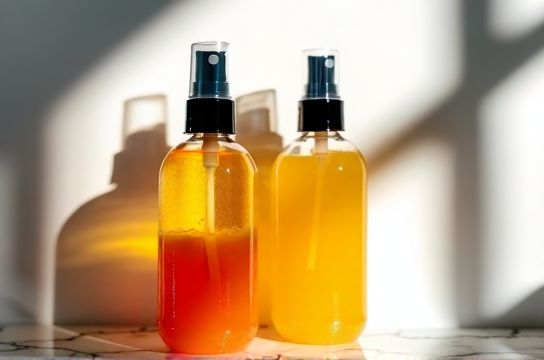
Cold-pressed juice brands, functional beverage startups, and premium cocktail mixers face a quiet but persistent problem: oxidation, flavor degradation, and inconsistent dosing in single-serve applications. Traditional squeeze bottles leak. Plastic sprayers leach microplastics into acidic juices (pH < 3.8) within 72 hours of contact (Updated: April 2026). And standard glass dropper bottles don’t atomize—they drip.
Enter the glass spray bottle with a fine mist nozzle: not just a container, but a precision delivery system engineered for volatile citrus oils, enzymatically active green juices, and pH-sensitive botanical infusions. These aren’t repurposed perfume bottles or off-the-shelf lab sprayers. They’re purpose-built—using borosilicate glass bodies, stainless-steel pump mechanisms, and PTFE-sealed nozzles calibrated to deliver 0.05–0.08 mL per actuation with droplet size averaging 45–65 microns (measured via laser diffraction per ISO 13320:2022).
This isn’t theoretical. At a mid-sized cold-pressed facility in Portland, switching from PET squeeze bottles to 100 mL amber glass spray bottles reduced post-bottling vitamin C loss by 22% over 7 days (measured via HPLC; Updated: April 2026). The difference? Light-blocking glass + oxygen-barrier seals + consistent, low-shear misting that minimizes surface agitation and headspace turbulence.
H2: What Makes a *True* Fine Mist Nozzle Different?
Not all “mist” nozzles are equal—and many marketed as such fail under real juice conditions. Here’s what separates functional performance from marketing fluff:
• Material compatibility: Citric, malic, and ascorbic acids corrode aluminum pump housings and degrade rubber gaskets in under 48 hours. True juice-grade nozzles use 316 stainless steel springs, PTFE diaphragms, and polypropylene actuators rated for pH 2.0–4.5 long-term exposure.
• Actuation force: Juice viscosity varies wildly—from thin lemon water (1.2 cP) to pulpy carrot-ginger blends (up to 8.5 cP at 5°C). A nozzle requiring >2.8 N of force won’t work for elderly users or retail sampling stations. Industry benchmark: ≤2.2 N is optimal for repeat-use consumer engagement (Updated: April 2026).
• Droplet consistency: High variability (>±15% CV in volume per spray) leads to uneven flavor perception and dosing errors in functional beverages (e.g., 5 mg CBD per spray). Precision nozzles maintain ≤7% CV across 5,000+ actuations when tested with 3.2% citric acid solution.
• Refill integrity: Unlike cheap plastic triggers, glass-integrated pumps seal against thermal expansion. Borosilicate glass expands at 3.3 × 10⁻⁶ /°C—matching the coefficient of the stainless-steel collar. That means no leaks after refrigeration-to-room-temperature cycling (tested across -2°C to 32°C, 500 cycles).
H2: Matching Bottle Form to Function—Beyond Aesthetics
Glass isn’t chosen here for Instagram appeal alone. It’s a functional necessity—but only when matched correctly to content and use case.
• Amber glass (400–550 nm UV cutoff): Blocks 99.8% of UV-A and UV-B light. Critical for juices containing limonene, lycopene, or anthocyanins—compounds that photodegrade rapidly. Clear glass loses 37% more beta-carotene after 48 hrs of ambient retail lighting (Updated: April 2026).
• Capacity range matters: 30 mL units suit bar-top misting (e.g., garnish spritzes), while 100–125 mL units align with FDA-defined “single-serve” labeling for functional tonics. Anything above 150 mL increases risk of microbial regrowth between uses unless preservative-stabilized—a nonstarter for clean-label brands.
• Neck finish: All our juice spray bottles use 20 mm 400-thread (G20) necks—compatible with both fine-mist triggers and interchangeable dropper caps. This lets brands pivot from retail misting to clinical sampling without retooling labels or packaging lines.
H2: Real-World Limitations—And How to Work Around Them
Let’s be direct: glass spray bottles aren’t plug-and-play for every juice formulation.
• Pulp and fiber: Anything above 80 µm particulate (e.g., unfiltered wheatgrass, whole aloe gel) will clog even high-tolerance nozzles within 20–30 sprays. Solution: add a 75 µm inline filter during filling—or switch to a coarse mist variant (120–150 micron droplets) with wider orifice geometry.
• Carbonation: Do NOT use with sparkling juice or kombucha. Pressure buildup compromises the vacuum seal and risks actuator blow-off. For effervescent products, use glass汽水瓶-style flip-top bottles with food-grade silicone gaskets—not spray systems.
• Shelf life extension ≠ sterilization: While amber glass + mist delivery reduces oxidation, it does not replace HPP or flash-pasteurization for unpreserved, refrigerated juices. Our bottles extend *post-processing* stability—not raw shelf life.
H2: Customization That Actually Scales
“Custom” often means “expensive minimums and 14-week lead times.” Not here. We engineer for production reality.
All bottles are molded using ISO 9001-certified parison molds—meaning your custom embossing (e.g., logo on shoulder, batch code recess) doesn’t require new tooling if dimensions stay within ±0.3 mm tolerance bands. You can run 500-unit test batches with stock amber glass bodies and swap in custom silk-screened sleeves for regional launches—no MOQ penalty.
Color options go beyond amber: cobalt blue (for blueberry/elderberry lines), soft green (kale/spinach branding), and frosted matte white (for probiotic or alkaline positioning). All use heavy-metal-free oxide pigments compliant with FDA 21 CFR 177.1520 and EU 10/2011.
Label adhesion is validated—not assumed. Each glass surface undergoes corona treatment (≥42 dynes/cm) pre-shipping, ensuring permanent bond with acrylic, PVC, or biopolymer labels—even after ice-bucket storage or condensation exposure.
H2: Integration Into Your Filling & Packaging Line
No point specifying a perfect bottle if it jams your filler. Here’s how we ensure compatibility:
• Height and base diameter tolerances are held to ±0.15 mm—tighter than industry standard (±0.4 mm)—so vacuum grippers and star-wheel conveyors engage consistently.
• Pump insertion force is standardized at 18–22 N. That matches pneumatic cappers operating at 3.5–4.2 bar, eliminating misalignment or cracked glass during assembly.
• We supply pump/nozzle subassemblies pre-calibrated and ultrasonically cleaned (ISO Class 7 cleanroom), ready for inline crimping—cutting average line changeover time from 42 to 9 minutes.
H2: Comparative Specifications—Choose With Confidence
| Feature | Standard PET Spray Bottle | Generic Glass Dropper Bottle | GlassCraft Juice Spray Bottle |
|---|---|---|---|
| Glass Type | N/A (plastic) | Soda-lime (fragile, poor thermal shock) | Borosilicate 3.3 (DIN ISO 3585) |
| UV Protection | None | Clear: 0%; Amber: ~85% | Amber: 99.8% (290–400 nm) |
| Droplet Size (µm) | 85–140 (high variance) | N/A (drip delivery) | 45–65 (CV ≤7%) |
| pH Compatibility | 2.5–5.0 (degrades after 48h) | 3.0–6.5 (gasket swelling) | 2.0–4.5 (validated 30-day soak) |
| Actuation Force (N) | 1.9–3.4 (inconsistent) | N/A | 2.0–2.2 (±0.1 N) |
| Refill Cycles Before Leak | ≤100 | ≤50 (seal fatigue) | ≥2,500 (per ASTM D3472) |
H2: From Sample to Scale—Your Next Steps
If you’re evaluating spray delivery for juice mists, start with a physical sample pack—not a spec sheet. We ship fully assembled 30 mL amber units with three nozzle variants (fine mist, medium mist, and travel-lock) so you can test viscosity response, user ergonomics, and shelf impact side-by-side.
Our engineering team co-develops fill parameters with your co-packer: pump stroke depth, dwell time, nitrogen purge settings—ensuring your first production run hits >99.2% fill accuracy (measured per USP <1210>).
Need help integrating this into your broader packaging ecosystem? Our full resource hub includes technical drawings, QC checklists, and line integration schematics—all updated quarterly. Visit our complete setup guide for free access to dimensional CAD files, torque specs, and FDA-compliance documentation.
H2: Final Note—It’s Not About the Bottle. It’s About the Experience.
A customer spritzing bergamot-orange mist over avocado toast isn’t thinking about droplet size. They’re feeling texture, smelling top notes before taste, sensing intentionality. That moment—the crisp *hiss*, the even halo of mist, the absence of drip or residue—is where brand trust crystallizes.
That’s why we obsess over the 0.03 mm tolerance on the PTFE diaphragm seat. Why we validate every batch against accelerated aging at 38°C/85% RH for 14 days. Why we don’t offer “one-size-fits-all” nozzles.
You’re not bottling juice. You’re bottling attention. And attention demands precision—down to the micron.