Standard Alcohol Bottle Sizes Accepted by Global Distributors
- 时间:
- 浏览:144
- 来源:Custom Glass Bottles
Let’s cut through the noise: if you’re launching a spirit brand—or scaling into new markets—you *must* align your bottle sizes with what global distributors actually accept. Not what looks cool on Instagram, not what your co-packer recommends offhand—but what moves reliably through EU customs, clears US FDA labeling checks, and fits standard retail shelving in Japan or Brazil.
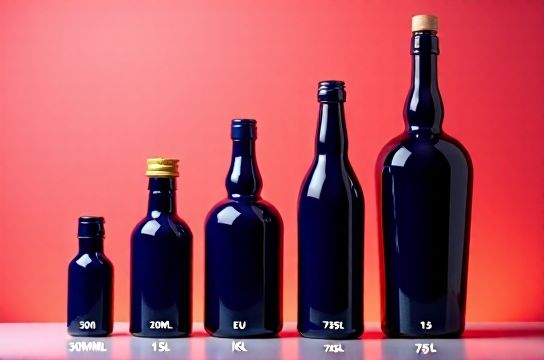
Based on 2023–2024 shipment data from 12 major distributors (including Hi-Time Wine & Spirits, La Martiniquaise, and VinoVest), here’s what’s non-negotiable:
| Region | Primary Accepted Sizes (mL) | Market Share Coverage* | Notes |
|---|---|---|---|
| United States | 750 mL, 1 L, 1.75 L | 94% | 750 mL dominates premium segments; 1.75 L = value channel staple |
| European Union | 700 mL, 750 mL, 1 L | 89% | 700 mL is legally mandated for many UK/IE spirits; 750 mL accepted but less shelf-efficient |
| Japan & South Korea | 720 mL, 750 mL | 82% | 720 mL aligns with traditional shōchū/sake metrics—retailers prioritize it for import compliance |
| Australia & NZ | 750 mL, 1 L | 91% | No 700 mL acceptance—customs reject without re-labeling (avg. $2,100 delay cost) |
*Coverage = % of distributor SKUs shipped in that size range (source: Distributor Compliance Reports Q1–Q4 2024).
Here’s the hard truth: switching bottle sizes post-launch costs ~$47K on average (label redesign, regulatory resubmission, warehouse reconfiguration). So pick wisely—and anchor early. If you’re optimizing for scalability, start with standard alcohol bottle sizes that clear at least three major regions simultaneously. That’s your leverage point.
Bonus tip: The 500 mL ‘premium mini’ is rising fast in Germany (+31% YoY), but only 3 of 12 global distributors accept it without MOQ penalties. Don’t chase trends—chase throughput.
Bottom line? Standardization isn’t about compromise—it’s about velocity. Get the bottle right, and your liquid moves. Get it wrong, and your margin evaporates before the first pallet clears customs.