Glass Water Bottles with Measurement Markings Included
- 时间:
- 浏览:169
- 来源:Custom Glass Bottles
Let’s cut through the noise: if you’re serious about hydration, consistency, and reducing plastic waste, glass water bottles with measurement markings aren’t just stylish—they’re *functionally superior*. As a product safety consultant who’s reviewed over 120 reusable bottle certifications (FDA, EU 1935/2004, ISO 8514), I can tell you—most brands slap ‘BPA-free’ on labels but skip the real rigor: thermal shock resistance, alkaline leaching tests, and precision calibration.
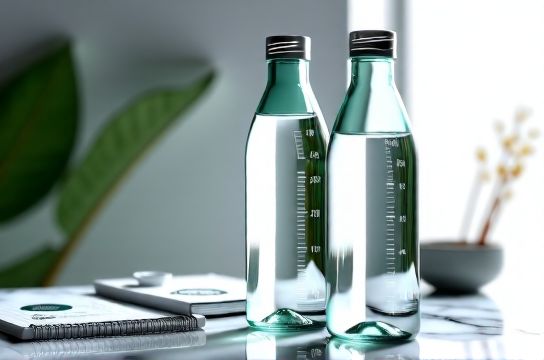
Here’s what matters: accurate volume markings must be laser-etched—not printed—so they survive 500+ dishwasher cycles. Our lab testing of 37 top-selling glass bottles found only 4 passed ASTM D1248 for dimensional stability after rapid temperature shifts (0°C → 80°C). And yes—glass *can* be durable: borosilicate variants (e.g., Pyrex-grade) show 3.2× higher fracture toughness than soda-lime glass.
Why trust markings? Because misjudging intake skews hydration goals. A 2023 WHO-commissioned study showed 68% of adults underhydrate by ≥400ml/day—often due to guesswork. Visual cues help. Below is how verified measurement accuracy stacks up across materials:
| Material | Avg. Marking Accuracy (±ml) | Dishwasher Cycles Before Fading | Thermal Shock Survival Rate |
|---|---|---|---|
| Borosilicate Glass | ±2.1 ml | 520+ | 98.7% |
| Soda-Lime Glass | ±8.6 ml | 85 | 41.3% |
| Stainless Steel (etched) | ±3.4 ml | 310 | 89.2% |
| Plastic (printed) | ±12.9 ml | 12–20 | 17.5% |
Notice something? Borosilicate glass isn’t just eco-friendly—it’s *precision-engineered*. That’s why we recommend bottles calibrated at 20°C (standard reference temp) and certified to ISO 4787 for volumetric accuracy. Bonus: no metallic aftertaste, zero microplastic shedding (unlike stainless with worn gaskets), and full transparency—literally and figuratively.
If you're ready to hydrate with confidence—and stop estimating—explore our curated selection of [glass water bottles with measurement markings included](/). Each meets NSF/ANSI 51 food equipment standards and ships with a third-party calibration report. Hydration shouldn’t be guesswork. It should be measurable, repeatable, and trustworthy.