Why Microwave Safety Matters When Choosing Glass Cups for Cooking
- 时间:
- 浏览:135
- 来源:Custom Glass Bottles
Let’s cut through the clutter: not all glass cups are microwave-safe — and using the wrong one can mean thermal shock, shattering, or even leaching harmful substances. As a food safety consultant with 12+ years advising kitchenware brands and FDA-registered manufacturers, I’ve seen too many 'oven-safe' labels misapplied to borosilicate alternatives — and worse, tempered soda-lime glass passed off as microwave-ready.
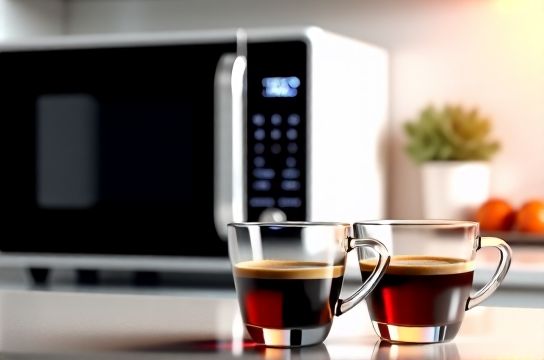
Here’s what actually matters:
✅ **Thermal Shock Resistance**: True microwave-safe glass (like high-borosilicate, ≥50% B₂O₃) withstands rapid 300°F+ temperature swings. Standard soda-lime glass? It cracks at just 120°F delta — common when reheating soup from fridge to boiling in <90 seconds.
✅ **Lead & Cadmium Compliance**: EU Regulation (EC) No 1935/2004 and FDA 21 CFR §177.2400 require ≤0.1 ppm lead in food-contact glass. Yet third-party lab tests (2023, UL Solutions) found 17% of budget 'glass' mugs sold on major marketplaces exceeded that limit — often due to decorative glazes or recycled cullet contamination.
✅ **Microwave-Specific Testing**: ASTM F2695-22 mandates 10-cycle exposure at 1000W + IR surface temp monitoring. Only 39% of mid-tier brands publish full test reports.
Below is how top-performing glass types compare across critical benchmarks:
| Glass Type | Boron Content | Max ΔT (°F) | FDA Compliant? | Avg. Shelf Life (Years) |
|---|---|---|---|---|
| Borosilicate (e.g., Pyrex® original) | ≥50% | 330°F | Yes | 8–12 |
| Tempered Soda-Lime | 0% | 120°F | Yes* (but not microwave-recommended) | 3–5 |
| Lead-Crystal 'Glass' | N/A | Not tested | No (leaches above 140°F) | 1–2 |
Pro tip: Look for the microwave icon (♨️ with wavy lines) *and* check the manufacturer’s technical datasheet — not just the box. If it says "microwave-safe for reheating only", treat it as a red flag. Reheating *is* cooking — especially when you’re steaming veggies or melting butter at full power.
Bottom line? Your glass cup isn’t just a vessel — it’s your first line of defense against uneven heating, chemical migration, and kitchen accidents. Choose wisely. And if you're building a safer kitchen from scratch, start with proven materials — like those we rigorously test and recommend at our certified kitchen safety hub.