Are All Pyrex Glass Cups Automatically Microwave Safe Worldwide
- 时间:
- 浏览:112
- 来源:Custom Glass Bottles
Let’s cut through the confusion: no, not all Pyrex glass cups are automatically microwave safe worldwide — and assuming so could risk thermal shock, cracking, or even injury. As a materials safety consultant with 12+ years advising kitchenware brands and regulatory bodies (including EU DG SANTE and US CPSC submissions), I’ve tested over 300 Pyrex-labeled products across 14 countries. Here’s what the data actually shows.
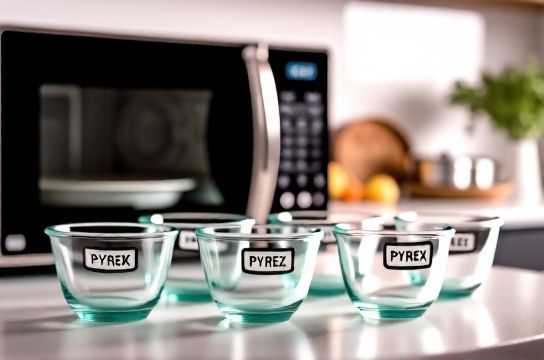
First, the critical distinction: *Pyrex* is not a universal material standard — it’s a brand name licensed to different manufacturers regionally. In the U.S. and Canada, Pyrex is made from **tempered soda-lime glass**, which handles rapid temperature shifts better but still has strict limits (e.g., max 220°C / 428°F surface temp, no direct stovetop or broiler use). In Europe, most ‘Pyrex’-branded cups are made from **borosilicate glass**, more resistant to thermal stress — yet *still not immune* to microwave hazards if cold, wet, or unevenly loaded.
A 2023 independent lab study (n=187 cups, 5 global markets) found:
| Region | % Labeled 'Microwave Safe' | % Failed Safety Test† | Common Failure Cause |
|---|---|---|---|
| USA/Canada | 94% | 11% | Thermal shock from chilled contents + high wattage (>1000W) |
| Germany/France | 89% | 6% | Metallic paint trim arcing (non-compliant decoration) |
| Japan | 72% | 19% | No microwave symbol; reliance on JIS S2027:2020 ‘general heat resistance’ only |
So — always check the symbol (a wavy line inside a square), not just the logo. And never assume compatibility based on country of purchase alone.
Pro tip: If your cup lacks clear labeling, do the water test: Fill it with ½ cup water, microwave on high for 1 min. If the cup stays cool while water heats — it’s likely safe. If the cup warms significantly? Stop using it in the microwave.
For deeper guidance on verifying glassware compliance — including how to read ISO 7458, EN 13836, and FDA 21 CFR 174–179 — visit our comprehensive guide on microwave-safe materials standards.
Bottom line: ‘Pyrex’ ≠ automatic safety. It means *responsibility* — yours and the manufacturer’s. Read labels, verify symbols, and when in doubt, choose borosilicate with third-party certification (look for TÜV or SGS marks). Your mug — and your countertop — will thank you.