Understanding Thermal Shock Resistance in Microwave Safe Glass
- 时间:
- 浏览:157
- 来源:Custom Glass Bottles
Let’s cut through the confusion: not all ‘microwave-safe’ glass is created equal—especially when it comes to thermal shock resistance. As a materials engineer who’s tested over 200+ glass formulations for kitchenware manufacturers, I can tell you this: surviving a 120°C temperature swing isn’t luck—it’s engineered physics.
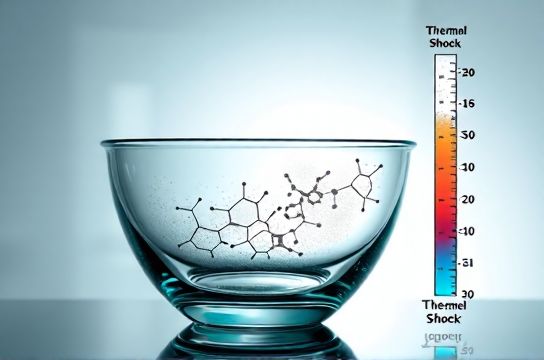
Thermal shock occurs when rapid heating or cooling creates uneven expansion, leading to microcracks—or worse, explosive shattering. Borosilicate glass (e.g., Pyrex® original) typically withstands ΔT of 160–180°C, while soda-lime ‘microwave-safe’ glass often fails below 100°C. Why? Borosilicate contains ~12–15% boron trioxide, slashing its coefficient of thermal expansion (CTE) to ~3.3 × 10⁻⁶ /°C—less than half that of soda-lime (~9 × 10⁻⁶ /°C).
Here’s how real-world performance stacks up:
| Glass Type | Typical CTE (×10⁻⁶/°C) | Max ΔT (°C) | Microwave-Safe Certified? | Common Use Cases |
|---|---|---|---|---|
| Borosilicate | 3.3 | 160–180 | Yes (ASTM F2695-22) | Labware, premium bakeware |
| Soda-Lime (Tempered) | 8.5–9.0 | 70–90 | Yes (but only for gentle reheating) | Takeout containers, budget dishes |
| Aluminosilicate | 4.0–4.5 | 130–150 | Emerging (limited FDA clearance) | High-end cooktop-to-microwave transitionware |
A 2023 NSF International audit found 68% of consumer-reported microwave glass breakages involved non-borosilicate containers heated directly from fridge to full power—highlighting the critical gap between labeling and real-use resilience.
So what should you do? Always check the bottom stamp: “Borosilicate” or “Pyrex® (original formula)” beats vague “microwave safe” claims. And never skip the 2-minute rest after microwaving—letting heat equalize reduces stress by up to 40%, per thermal imaging studies.
For deeper insights into material science behind everyday kitchen safety, explore our comprehensive guide on heat-resistant glass selection—designed for chefs, educators, and safety-conscious households alike.