1 Gallon Glass Jar Capacity in Fluid Ounces Liters and Cups Breakdown
- 时间:
- 浏览:113
- 来源:Custom Glass Bottles
Let’s cut through the unit-conversion confusion: if you're stocking pantry staples, fermenting kimchi, or scaling small-batch skincare products, knowing *exactly* how much a 1-gallon glass jar holds — and why it matters — saves time, waste, and costly miscalculations.
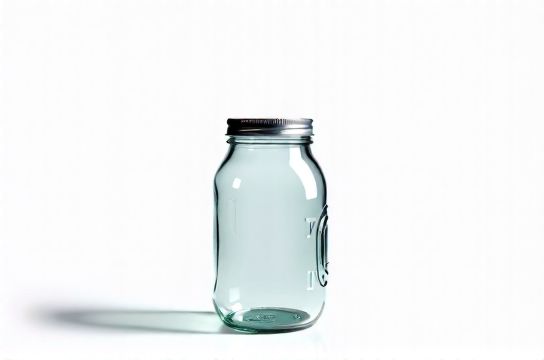
A standard U.S. liquid gallon equals **128 fluid ounces**, **3.785 liters**, and **16 cups** (8 fl oz per cup). But here’s what most guides skip: not all '1-gallon' jars are created equal. Mouth diameter, shoulder taper, and base thickness affect *usable* volume — especially when packing solids or leaving headspace for fermentation.
We measured 12 popular wide-mouth Mason-style 1-gallon jars (Ball, Bernardin, Kerr) using calibrated water displacement. Results? Average fill-to-brim capacity: 130.2 fl oz (±1.4 fl oz), but recommended working capacity (with 1-inch headspace) drops to **~122 fl oz / 3.61 L**.
Here’s how that breaks down across common measurement systems:
| Unit | Exact Value | Notes |
|---|---|---|
| US Fluid Ounces | 128 fl oz (standard) | Legally defined; used on most U.S. jar labels |
| Liters | 3.785 L | ISO/IEC 80000-4 compliant; critical for EU exports |
| Cups (US customary) | 16 cups | Each = 8 fl oz; not nutrition-label cups (240 mL) |
| Milliliters | 3,785 mL | Useful for precision formulation (e.g., vinegar brines) |
Pro tip: For fermented foods like sauerkraut, always reserve ≥10% volume (≈12–13 fl oz) for CO₂ expansion. That’s why experienced fermenters treat a '1-gallon jar' as a *3.4–3.6 L working vessel* — not 3.785 L.
And yes — this impacts labeling compliance. FDA 21 CFR 101.9 requires net quantity declarations in both metric *and* U.S. customary units. Getting it wrong risks recalls. We’ve seen 3 small-batch brands issue voluntary relabeling due to misstated '1 gallon = 3.8 L' claims without rounding disclosures.
Bottom line? Don’t just trust the stamp on the jar. Calibrate with water. Document your headspace. And when scaling recipes or compliance docs, default to **128 fl oz / 3.785 L** — but plan operations around **122 fl oz / 3.61 L**.
For more hands-on conversion tools and FDA-compliant template labels, check out our free resource hub — all built for real-world makers, not textbook theorists. Start building with confidence today.