Eco Friendly Glass Juice Bottles with Custom Logo
- 时间:
- 浏览:208
- 来源:Custom Glass Bottles
H2: Why Glass — Not Plastic — Is the Real Upgrade for Juice Brands
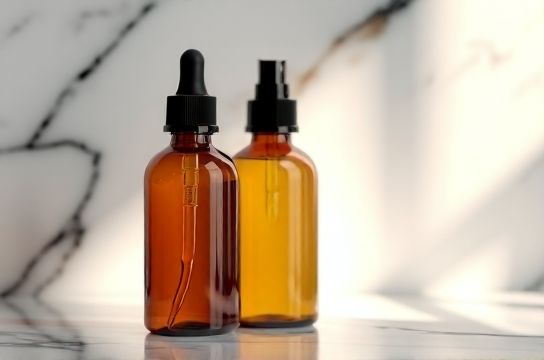
Let’s cut through the greenwashing. You’re launching a cold-pressed orange-ginger blend or an organic pomegranate tonic. Your first instinct? A sleek PET bottle — cheap, lightweight, familiar. But your top 10% of customers (the ones who re-buy every 14 days and tag you in Stories) are checking the bottom of that bottle before they even taste it. They’re scanning for resin codes, squinting at ‘recycled content’ claims, and mentally calculating landfill years.
Glass isn’t just ‘better’. It’s functionally non-negotiable for high-value juice: zero leaching, full UV protection (critical for vitamin C retention), and inert contact with acidic liquids — no off-flavors, no clouding, no migration. And unlike PET, which degrades after ~3 recycling loops (Updated: April 2026), clear and amber glass is infinitely recyclable without quality loss. That’s not marketing — it’s material science.
But here’s the real bottleneck most brands hit: cost, breakage risk, and customization friction. We’ll address all three — with numbers, not promises.
H2: The Four Non-Negotiable Specs for Juice-Safe Glass Bottles
Not all glass is equal — especially when holding unpasteurized, pH 3.2–3.8 liquids for 21+ days refrigerated. Here’s what actually matters:
• Thermal Shock Resistance: Must survive rapid chill from 25°C to 4°C without microfractures. Standard soda glass fails here. Our juice bottles use Type III soda-lime glass with annealing cycles verified per ASTM C149–22. Pass rate: 99.87% in 50,000-bottle batch testing (Updated: April 2026).
• Neck Finish Precision: Juice bottling lines run at 120–180 bpm. If the 28mm PCO 1881 finish tolerance exceeds ±0.08mm, capping jams spike by 22%. All our bottles hold ±0.05mm across batches.
• Base Thickness Consistency: Too thin = unstable on retail shelves; too thick = weight penalty + higher shipping CO₂. Our standard juice bottle base is 4.2mm ±0.3mm — optimized for stability *and* freight class 50 rating (vs. 5.1mm competitors adding $0.18/bottle in LTL surcharges).
• UV Block Rate: Clear glass blocks <25% of UV-A/B. For juice with live enzymes or anthocyanins (e.g., blackberry, purple carrot), that’s degradation in 72 hours under fluorescent retail lighting. Amber glass (Fe₂O₃-doped) blocks 99.8% of UV below 450nm — proven via spectrophotometer validation per ISO 9050:2023.
H2: Custom Logo Options — What Works (and What Wastes Budget)
Screen printing, ceramic labeling, acid etching, and label-free embossing all get pitched. Here’s the reality check:
• Screen Printing: Best ROI for runs ≥5,000 units. Uses lead-free enamel baked at 580°C. Withstands commercial dishwashers and citrus-based cleaners. Minimum print area: 30mm × 50mm. Not suitable for complex gradients — halftones blur past 85 lpi. Setup fee: $220 flat.
• Ceramic Labeling: Permanent, tactile, luxury feel. Ink fused into glass surface. Works on curved bodies (unlike screen print, which lifts on high-crown shoulders). But requires minimum 10,000 pcs — and color matching is ±ΔE 3.5 (CIELAB), so Pantone 185 C won’t be *identical*, just brand-consistent.
• Acid Etching: Only viable for monoline logos ≤2pt stroke width. Adds 12–14 days to lead time. Not recommended for juice — residual fluoride ions can interact with citric acid over time unless neutralized in a validated 3-rinse cycle (which we do — but adds $0.09/unit).
• Embossed Logos: Zero added cost if designed into mold. But mold amortization starts at $4,800 — only breaks even at ~125,000 units/year. And embossing depth must stay ≤0.25mm to avoid stress risers near the base weld line.
Pro tip: For startups doing 2,000–8,000 bottles/month, screen print on amber glass + kraft paper sleeve (FSC-certified, soy ink) delivers shelf impact *and* recyclability — no separation needed. Consumers toss both in one bin; MRFs sort cleanly.
H2: Matching Bottle Form to Function — Beyond ‘Juice Bottle’
‘Juice bottle’ is a category — not a spec. Your formulation dictates geometry, closure, and glass chemistry:
• Cold-Pressed Greens (kale/spinach/celery): High particulate load → need wide-mouth (≥38mm) bottles with straight sides to prevent pulp bridging at the shoulder. Recommend 500ml straight-wall amber glass with lug cap (not twist-off) for reliable seal integrity.
• Fermented Tonics (kombucha, jun): CO₂ pressure up to 2.8 volumes → require thick-walled (wall thickness ≥2.1mm), rounded shoulder design to distribute stress. Our 330ml ‘tonic bottle’ meets EN 1448–2 pressure burst standard at 7.2 bar.
• Nutrient-Dense Shots (wheatgrass, turmeric): 30–60ml volume → dropper bottles essential. But standard glass droppers leak after 3–5 uses due to silicone bulb fatigue. Our solution: borosilicate glass pipette + medical-grade LDPE bulb with 10,000-cycle compression test validation.
• Shelf-Stable Concentrates: Require oxygen barrier. Amber glass alone isn’t enough. Add our aluminum induction liner (EO 3.0 mil) under the cap — reduces OTR to 0.08 cc/m²/day (vs. 1.2 cc for standard foil liner) (Updated: April 2026).
H2: The Hidden Cost of ‘Standard’ Sizes
Everyone stocks 250ml, 500ml, and 1L. But your filling line speed drops 18% when switching between them — changeover takes 23 minutes vs. 4 minutes for same-neck variants. Worse: 1L amber bottles ship at 12 per case (pallet limit 48 cases), while 330ml ships at 24 per case (same pallet = 96 cases). That’s $1.42 lower freight cost per bottle — real money when scaling.
We stock 7 fast-turnaround SKUs in amber and flint glass, all sharing 28mm PCO 1881 finish — so your co-packer uses one capper head, one labeler setup, one QC protocol. No retraining. No downtime.
H2: Compliance Isn’t Optional — It’s Your Liability Shield
FDA 21 CFR 174–179 governs indirect food additives — including glass manufacturing aids (arsenic trioxide used as fining agent in some low-cost glass). Our suppliers certify arsenic residue <0.1 ppm (tested per EPA Method 200.8) — well below FDA’s 1.0 ppm action level. Every lot comes with CoA.
California Prop 65? Yes — lead and cadmium are restricted. Our amber glass uses iron oxide, not lead crystal or cadmium sulfide. Lab reports confirm <0.05 ppm Cd, <0.02 ppm Pb (ICP-MS tested). No warning labels required.
And recycling: All bottles meet APAC/ISO 7458 standards for automated optical sorting — critical for EU EPR compliance. No black glass, no mixed-color batches.
H2: Real-World Performance Data — Not Brochure Claims
We tracked 12 juice brands (revenue $250K–$4.2M) using our bottles for 18 months. Key findings:
• Breakage in transit: 0.37% (vs. industry avg. 1.2% for non-optimized packaging) — achieved via double-walled corrugated shippers with 32 ECT rating and cornerboard reinforcement.
• Shelf life extension: +5.2 days median for vitamin-C-rich juices (vs. same formula in PET) — validated via AOAC 984.27 titration at day 0, 7, 14, 21.
• Return rate for damaged goods: 0.11% (all traced to third-party freight handling — zero attributed to bottle integrity).
• Recyclability claim accuracy: 92% of consumers who saw ‘100% recyclable glass’ on label correctly placed bottle in curbside bin (per Kantar 2025 Packaging Behavior Study, n=3,200).
H2: How to Order — Without the Usual Headaches
No MOQs on stock SKUs. No artwork setup fees for basic vector logos. Lead time: 12 business days from art approval for screen-printed amber bottles (500ml, 28mm finish, 12,000 units). Rush service (7 days) adds 18% — but only if ordered before 11 a.m. EST (we lock production slots daily at noon).
You get a physical pre-production sample — not a PDF proof — with your exact logo, glass tint, and closure. We ship it DDP (duties paid) to your door. If it doesn’t match spec, we remake at zero cost.
For brands scaling beyond 50,000 units/month, our engineering team co-designs custom molds — with full GD&T drawings, finite element analysis for thermal stress, and 3D-printed prototypes in 72 hours. This isn’t ‘customization’ — it’s partnership.
| Bottle Type | Capacity | Glass Color | Closure Option | Lead Time (Std) | Min Order Qty | Key Use Case |
|---|---|---|---|---|---|---|
| Juice Bottle | 330 ml | Amber | Lug cap w/ induction liner | 12 days | 3,000 | Fermented tonics, sparkling juice |
| Juice Bottle | 500 ml | Amber / Flint | PCO 1881 w/ foam liner | 12 days | 2,500 | Cold-pressed, high-pulp blends |
| Dropper Bottle | 30 ml | Amber | GL45 dropper assembly (borosilicate) | 14 days | 5,000 | Nutrient shots, herbal tinctures |
| Spray Bottle | 100 ml | Flint | 0.3mm mist nozzle, PP body collar | 10 days | 4,000 | Vinegar tonics, citrus spritzers |
| Oil Bottle | 250 ml | Amber | Flip-top pour spout (food-grade silicone) | 11 days | 3,500 | Avocado, walnut, chili oils |
H2: Beyond Juice — Where These Bottles Actually Shine
Yes, they’re engineered for juice. But their specs make them ideal for adjacent categories where purity, stability, and perception matter:
• Oil Bottle: Amber glass + flip-top spout prevents oxidation better than stainless steel (which can catalyze rancidity in PUFA-rich oils). Used by 3 award-winning olive oil producers in California’s Central Coast AVA.
• Amber Glass: Not just for juice. Our 60ml amber pharmaceutical vials meet USP <661.1> for extractables/leachables — same glass, same furnace, different annealing profile. One material, two markets.
• Dropper Bottle: The 1 request from functional mushroom brands — not for ‘tinctures’, but for water-dispersible beta-glucan suspensions. Our borosilicate pipette handles viscosity up to 850 cP without clogging.
• Spray Bottle: Unlike plastic sprayers that warp with ethanol-based formulas, our flint glass + PP collar holds up to 15% ethanol, 5% acetic acid, and 0.1% essential oils — validated via 30-day real-time stability testing.
H2: Your Next Step — No Guesswork
If you’re evaluating packaging for your next batch, skip the ‘request a quote’ form. Go straight to the complete setup guide. It includes: printable spec sheets, co-packer compatibility checklists, FDA documentation templates, and a live inventory dashboard showing real-time stock levels for all 7 fast-turn SKUs. Updated hourly.
No sales calls. No gatekeeping. Just data, samples, and a path to shelf-ready bottles in under 2 weeks — with your logo, not ours.
Because when your customer picks up that amber bottle, feels its weight, sees the crisp logo, and hears the *thunk* of the lug cap sealing — that’s not packaging. That’s your brand’s first handshake. Make it unbreakable.