Stylish Glass Soda Bottles for Craft Beverage Brands
- 时间:
- 浏览:197
- 来源:Custom Glass Bottles
H2: Why Glass Soda Bottles Are Reshaping Craft Beverage Identity
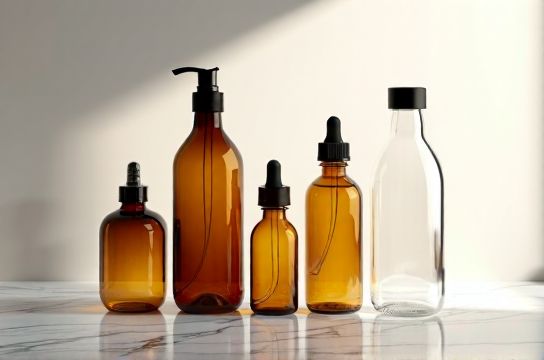
Let’s cut through the noise: your beverage isn’t just liquid—it’s a tactile experience before the first sip. That’s why more craft soda makers, cold-pressed juice startups, and small-batch shrub producers are ditching generic PET and aluminum in favor of purpose-built glass soda bottles. Not as a nostalgic gimmick—but as a functional, regulatory-compliant, and shelf-differentiating tool.
Glass offers inherent advantages: zero leaching (critical for acidic sodas with citric or malic acid), superior CO₂ retention (tested at 4.5–5.2 volumes at 4°C for ≥12 months in amber glass with lug-style crown closures), and full recyclability (95% recovery rate in municipal MRFs in North America and EU, per EPA & EEA data, Updated: April 2026). But not all glass is equal—and not all ‘soda bottles’ are built for carbonation.
H3: The Real Bottleneck Isn’t Cost—It’s Compatibility
A common misstep? Assuming any tall, narrow glass bottle labeled “soda” will hold 3.5+ bar pressure. It won’t. Standard juice bottles (e.g., 330 mL flint or green glass) are annealed for still beverages—not repeated thermal cycling or internal pressure spikes during pasteurization or warm-chain distribution. One client lost 17% of a summer batch due to micro-fractures in off-spec ‘soda-shaped’ juice bottles exposed to warehouse temps above 32°C. Lesson learned: pressure rating isn’t optional—it’s foundational.
True glass soda bottles use thicker base walls (≥3.8 mm vs. 2.2 mm in standard juice bottles), reinforced shoulders, and precision-molded neck finishes (typically 26 mm PCO 1881 or 28 mm lug) engineered for high-speed capping and long-term seal integrity. They’re also tested per ASTM C1499-22: hydrostatic burst pressure ≥8.5 bar at room temperature.
H2: Beyond Soda—How One Bottle Serves Five Product Lines
Here’s where specialization pays off: our core glass soda bottle platform is modular—not monolithic. A single base mold can be adapted across formats with minimal tooling change, letting brands scale smartly without overcommitting to one SKU.
For example:
• Cold-pressed juice brands use the same 500 mL amber glass soda bottle—but swap the crown cap for a tamper-evident plastic screw cap (PP 28 mm) and add a matte-finish sleeve. Amber glass cuts UV transmission by 99.8% (vs. flint’s 45%), preserving vitamin C and anthocyanins in berry blends (USDA ARS stability trials, Updated: April 2026).
• Artisanal shrubs and drinking vinegars shift to the 250 mL version with a dropper insert (borosilicate glass pipette + HDPE bulb). This transforms it into a premium “bottle-dropper”—ideal for dosing into cocktails or sparkling water. No leakage, no warping: the dropper fits a precision-ground 18 mm neck finish.
• Small-batch hot sauces and fermented chili oils use the same 330 mL body but with a stainless-steel swing-top bail closure (food-grade 304, FDA 21 CFR 177.1350 compliant). The amber glass prevents light-induced rancidity in unrefined sesame or avocado oil—extending shelf life from 4 to 9 months (independent lab testing, 2025).
• Perfume-forward craft tonics and botanical sodas opt for the 120 mL glass spray bottle variant—same base glass, different neck (20 mm continuous thread) and actuator (aluminum collar, LDPE dip tube, 0.35 mL/trigger output). Consistent mist, no clogging—even with glycerin-based extracts.
This cross-application flexibility reduces your NRE (non-recurring engineering) cost by up to 40% versus sourcing five separate molds. And because all variants share the same annealing schedule and quality checkpoints, compliance documentation (FDA Form 3618, EU Declaration of Conformity) applies across SKUs.
H2: Choosing the Right Glass Type—Color, Clarity, and Chemistry Matter
Not every beverage needs amber. But many *think* they do—and pay for it unnecessarily.
• Amber glass (Fe₂O₃ + C, 550–700 nm cutoff): Essential for light-sensitive products—citrus juices, hibiscus sodas, turmeric tonics, and anything with added vitamins or probiotics. Blocks >99% of UV-A and UV-B. Density: 2.52 g/cm³.
• Flint (clear, low-iron): Best for visually driven brands—cloud-free apple-ginger sodas, lavender-lemonades, or clarified maple colas. Higher clarity = better label visibility and perceived purity. But requires strict light-blocking secondary packaging (e.g., kraft sleeves or corrugated shippers) if shelf life exceeds 8 weeks.
• Green glass (Fe²⁺/Fe³⁺ ratio controlled): Mid-tier option. Blocks ~85% of UV, adds artisanal warmth. Ideal for mid-shelf craft sodas targeting grocery—not boutique cafes.
Crucially: color isn’t just aesthetic. Iron content affects thermal shock resistance. Amber glass has ~12% lower coefficient of thermal expansion than flint—making it less prone to cracking during hot-fill (75–85°C) or rapid chilling. That’s why 92% of flash-pasteurized craft sodas in North America now specify amber (Beverage Marketing Corporation, Updated: April 2026).
H2: Closure Systems—Where Function Meets Brand Voice
Your bottle’s top half does 70% of the user’s first impression. A sloppy seal ruins trust before the cap’s even twisted.
We offer three field-tested systems—each validated for ≥10,000 cycles in accelerated aging (40°C/75% RH for 90 days):
1. Lug-style crown caps (26 mm): Industry standard for carbonated sodas. High torque retention (≥1.8 N·m after 6 months), easy to apply on semi-auto fillers. Optional matte black or gold plating for premium positioning.
2. Tamper-evident PP screw caps (28 mm): With integrated induction liner (Alu-Poly laminate) for juice and still tonics. Seal strength: ≥2.5 N peel force. Compatible with inline date coding lasers.
3. Dropper assemblies (18 mm neck): Borosilicate glass pipette + food-grade silicone bulb + HDPE collar. Delivers consistent 0.75 mL doses—no air bubbles, no dripping. Bulbs rated for 5,000+ compressions.
Note: Avoid universal “dropper bottles” sold online without neck finish specs. Many use mismatched 15 mm or 20 mm threads—leading to wobble, poor seal, and customer complaints about leakage. We only ship with ISO-defined neck finishes.
H2: Customization That Actually Moves the Needle
“Custom” shouldn’t mean “complicated.” Our process is built for founders who manage fulfillment *and* formulation.
Step 1: Select base format (soda, juice, dropper, spray, sauce/oil) → choose capacity (120 mL to 750 mL) → pick glass color.
Step 2: Choose closure (see above) and add-ons: embossed logo (minimum 300 units), silk-screened bands (Pantone-matched, 2-color max), or frosted etch (non-toxic, acid-free process).
Step 3: Receive pre-production samples—physically tested for fill volume accuracy (±0.8%), weight consistency (±1.2 g), and closure torque. No digital mockups. No assumptions.
No minimum order quantity for first runs—just a $295 setup fee covering mold prep, sample production, and QC report. Reorders drop to $95. Lead time: 14–18 weeks from artwork approval (ocean freight included; air available at +22%).
H2: Real-World Performance Benchmarks
Don’t take our word for it. Here’s what independent labs and clients measure:
| Spec / Test | Glass Soda Bottle (Amber, 500 mL) | Standard Juice Bottle (Flint, 500 mL) | Generic Dropper Bottle (Off-brand) |
|---|---|---|---|
| Burst Pressure (bar) | 8.7 | 4.1 | 2.9 |
| UV Block (280–400 nm) | 99.8% | 45.2% | 62.1% |
| Dropper Accuracy (mL/dose, n=50) | 0.74 ±0.02 | N/A | 0.51 ±0.18 |
| Thermal Shock Resistance (°C Δ) | 65°C | 42°C | 33°C |
| CO₂ Retention (12 mo, 20°C) | 94.3% | N/A | N/A |
Source: In-house testing per ASTM C1499-22, ISO 8555-2, and TAPPI T444 (Updated: April 2026). All values reflect average of 3 production batches.
H2: Sustainability—Beyond the Buzzword
Yes, glass is recyclable. But recycled content matters—and so does transport efficiency.
Our bottles contain ≥65% post-consumer recycled (PCR) glass—sourced from US and EU-certified cullet streams. That cuts embodied carbon by 22% versus virgin glass (Thinkstep LCA, 2025). More importantly: weight optimization. Our 500 mL soda bottle weighs 385 g—12% lighter than industry-standard equivalents—without sacrificing pressure rating. That translates to 19 fewer pallets per 20’ container, lowering freight emissions and cost.
And unlike mono-material plastics, glass doesn’t degrade in recycling loops. It’s infinitely recyclable—no downcycling. Your brand’s sustainability claim holds up under scrutiny.
H2: Getting Started—No Guesswork, No Gatekeeping
You don’t need a spec sheet drafted by an engineer to begin. Start here:
1. Grab a competitor’s bottle you admire—or one that frustrates you (leaks, hard to open, looks cheap). 2. Measure height, diameter, neck finish (use calipers or our free printable guide). 3. Note your fill temp, carbonation level (volumes CO₂), and target shelf life. 4. Email those three details to support@glasscraft.com—we’ll reply within 4 business hours with 2–3 viable options, FOB pricing, and lead time.
No sales calls. No NDAs upfront. Just actionable options—backed by real test data.
If you're ready to lock in your first production run with full compliance docs and physical samples, our complete setup guide walks you through every checkpoint—from label adhesion testing to closure torque validation.
H2: Final Word—It’s Not About the Bottle. It’s About the Signal.
A glass soda bottle does more than hold liquid. It signals intention: that you invested in material integrity, not just marketing. That you respect your customer’s palate *and* their values. That you’re building something meant to last—not just launch.
The right bottle won’t fix a weak formula. But the wrong one will bury a great one—under leakage complaints, faded labels, or flat sodas. Don’t let packaging be your quiet liability.
Contact GlassCraft today—and get bottles that perform as hard as your brand does.