How Many 5 Ounce Servings Fit in a 750ml Wine Bottle Versus a 1 Liter Bottle
- 时间:
- 浏览:123
- 来源:Custom Glass Bottles
Let’s cut through the wine math confusion—once and for all. As someone who’s poured, measured, and advised on beverage service for over 12 years (from Michelin-starred cellars to boutique winery launches), I can tell you: misjudging servings isn’t just about wasted wine—it’s about margin erosion, guest satisfaction, and accurate menu costing.
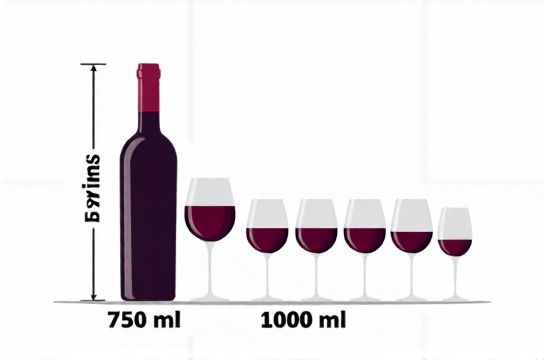
Here’s the hard truth: a standard 5-ounce pour—the universally accepted benchmark for wine service in the U.S. (per TTB and National Restaurant Association guidelines)—isn’t arbitrary. It balances flavor expression, alcohol moderation, and yield optimization.
So how many 5-oz servings do you actually get?
✅ 750 ml bottle = 25.36 fluid ounces → **5.07 servings** (practically **5 full pours**, with ~0.36 oz left over—enough for a tiny top-up, but not a sixth serving)
✅ 1 liter (1000 ml) bottle = 33.81 fluid ounces → **6.76 servings** → realistically **6 full pours**, plus ~12–14 ml leftover per pour if stretched evenly
But real-world yield? It’s lower. Pouring accuracy, sediment loss, glassware variance, and staff technique shave off ~3–5% per bottle. That’s why industry-standard yield tables use conservative rounding:
| Bottle Size | Milliliters | Fluid Ounces | Theoretical 5-oz Servings | Realistic Yield (with 4% pour variance) |
|---|---|---|---|---|
| 750 ml | 750 | 25.36 | 5.07 | 4.8–5.0 |
| 1 L | 1000 | 33.81 | 6.76 | 6.4–6.6 |
Why does this matter? Because pricing a $42 bottle of Pinot Noir at $14/glass only breaks even if you consistently hit 5+ servings from 750 ml. Drop to 4.5? Your gross margin drops from 66% to ~59%—fast.
Pro tip: If you’re scaling up for events or by-the-glass programs, the 1L bottle delivers ~32% more yield than 750 ml—but only if you’ve trained staff to maintain consistent 5-ounce pours (use measured pour spouts; audit weekly). And yes—wine portion control starts long before the first glass is poured.
Bottom line: Don’t guess. Measure. Track. Optimize. Your P&L—and your guests’ palates—will thank you.