Wine Bottle Size Guide From 187ml to 3 Liters Including 750ml and 1 Liter Options
- 时间:
- 浏览:153
- 来源:Custom Glass Bottles
Let’s cut through the clutter: wine bottle sizes aren’t just about aesthetics—they impact aging potential, serving flexibility, cost efficiency, and even perceived value. As a sommelier and wine logistics consultant with 12+ years advising restaurants, retailers, and importers, I’ve seen how misaligned bottle choices hurt margins and guest experience.
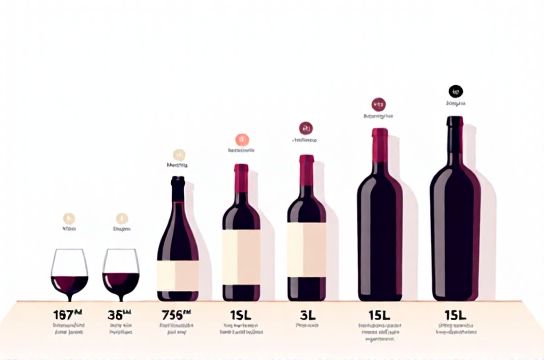
Here’s what actually matters:
• **187ml (Split)**: Ideal for single servings—especially in airlines or tasting flights. Accounts for ~4.2% of global premium wine sales (IWSR 2023). • **375ml (Half-bottle)**: Popular for low-alcohol or high-ABV wines; oxidizes faster than larger formats—so best consumed within 6–12 months. • **750ml (Standard)**: Dominates 78% of all still wine volume worldwide (OIV 2023). It’s the sweet spot for balance, shelf life, and consumer familiarity. • **1L**: Gaining traction in EU on-trade (up 11% YoY per Vinexpo 2024) — great for by-the-glass programs and sustainability (13% less glass weight per liter vs. two 750ml bottles). • **1.5L (Magnum)**: Not just showy—it ages 20–30% slower due to superior surface-area-to-volume ratio. Top Bordeaux and Burgundy producers reserve magnums for reserve-tier releases. • **3L (Double Magnum)**: Rare outside auctions and cellars. Only ~0.07% of global fine wine production (Liv-ex 2023), but commands 2.3× price premium over equivalent 750mls.
Below is a quick-reference comparison:
| Size (ml) | Name | Servings* | Aging Advantage | Market Share (Still Wine) |
|---|---|---|---|---|
| 187 | Split | 1 | None — consume within 3 days opened | 4.2% |
| 375 | Half-bottle | 2 | Minimal | 6.1% |
| 750 | Standard | 5 | Balanced — optimal for most varietals | 78.0% |
| 1000 | Liter | 6–7 | Moderate — lower oxygen ingress than 750ml | 3.9% |
| 1500 | Magnum | 10 | High — ideal for aging reds & sparkling | 1.2% |
| 3000 | Double Magnum | 20 | Very high — used for long-term cellaring | 0.07% |
*Assuming 150ml pour.
Pro tip: If you're building a wine list or sourcing for retail, prioritize 750ml and 1 liter options — they deliver the strongest ROI, lowest breakage risk, and highest consumer trust. And yes, that includes sparkling: 1L Prosecco outsold 750ml in Germany last year (+8.4% volume, Statista 2024).
Bottom line? Size isn’t just tradition—it’s science, economics, and psychology rolled into glass.