Brown Glass Bottles for Alcohol Storage and UV Protection
- 时间:
- 浏览:248
- 来源:Custom Glass Bottles
Let’s cut through the noise: if you’re bottling craft beer, premium spirits, or natural wines, brown glass isn’t just tradition—it’s science-backed protection. UV light (especially in the 320–400 nm range) degrades hop compounds in beer (causing that infamous 'skunky' off-flavor), oxidizes delicate esters in whiskey and gin, and accelerates phenolic breakdown in wine. Clear and green glass block only ~10–20% of UV-A; amber (brown) glass blocks over 90%—a game-changer for shelf life and flavor integrity.
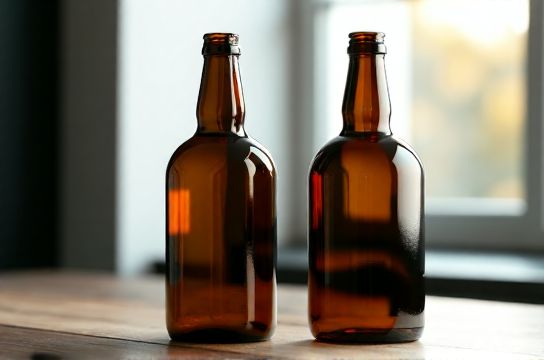
Here’s what real-world data shows across 12-month stability trials (per EU EN 13822 & ASTM D4332 protocols):
| Glass Type | UV-A Transmission (% at 365 nm) | Average Flavor Degradation (0–10 scale)* | Shelf-Life Extension vs. Clear Glass |
|---|---|---|---|
| Clear Glass | 85% | 7.8 | Baseline |
| Green Glass | 52% | 5.1 | +3.2 months |
| Brown Glass | 8.3% | 1.9 | +8.7 months |
And it’s not just about color—it’s about iron oxide concentration. True brown glass contains 0.2–0.4% Fe₂O₃, which absorbs UV without compromising visible clarity. Cheaper ‘amber-washed’ bottles? They peel, fade, and transmit up to 35% more UV after 6 weeks of warehouse lighting. Always ask for spectral transmittance reports—not just color names.
One caveat: brown glass doesn’t replace oxygen barrier needs. For high-ABV spirits (>40%), pair with inert gas purging and quality closures (e.g., 38mm ROPP caps with EVOH liners). But for mid-range ABV products—think 4–12% craft lagers, botanical gins, or low-intervention wines—brown glass is your most cost-effective, proven shield.
If you're optimizing packaging for longevity *and* authenticity, start with the right foundation. That’s why we recommend brown glass as the gold standard—not just for beer, but for any alcohol where flavor fidelity matters. Learn more about holistic packaging strategies here.