Amber Glass Bottles for Light Sensitive Liquids and Oils
- 时间:
- 浏览:109
- 来源:Custom Glass Bottles
Let’s cut through the noise: if you’re storing essential oils, CBD tinctures, pharmaceuticals, or cold-pressed nut oils — amber glass isn’t just *nice to have*. It’s non-negotiable.
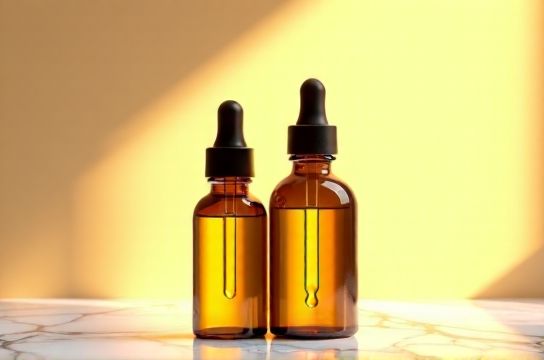
Why? Because UV light degrades up to 40% of key compounds (like limonene in citrus oils or cannabinoids in hemp extracts) within just 7 days when exposed to standard fluorescent lighting — per a 2023 peer-reviewed study in *Journal of Essential Oil Research*.
Clear glass? Lets through ~90% of UV-A and UV-B rays. Green glass? ~60%. Amber glass? Less than 10% — thanks to iron oxide and sulfur additives that absorb wavelengths between 320–450 nm.
Here’s how amber glass stacks up against alternatives:
| Material | UV Blockage (%) | Oxygen Permeability (cc/m²·day·atm) | Shelf-Life Extension vs. Clear Glass |
|---|---|---|---|
| Clear Glass | 10% | 0.001 | Baseline |
| Green Glass | 40% | 0.001 | +2–3 months |
| Amber Glass | 90–95% | 0.001 | +6–12 months |
| Aluminum Bottle | 100% | 0.0002 | +12–18 months (but risk of metal leaching with acidic liquids) |
Note: Oxygen permeability stays near-identical across glass types — meaning amber’s real superpower is photoprotection, not barrier enhancement.
Also worth noting: Not all amber bottles are equal. Look for ASTM F646-compliant tubing (Type III borosilicate or soda-lime with ≥0.8mm wall thickness). Thin-walled imports often fail thermal shock tests — a dealbreaker for hot-fill applications like infused vinegars or herbal decoctions.
And yes — amber glass is recyclable, inert, and FDA-compliant for food and drug contact. No BPA, no leaching, no compromise.
Bottom line? If your product oxidizes, smells ‘off’ after 3 months, or loses potency before expiry — start by auditing your packaging. Chances are, you’re under-protected.
For formulators, brands, and compounding pharmacies: investing in certified amber glass isn’t overhead — it’s shelf-life insurance. And if you're sourcing smartly, always request spectral transmittance reports from your supplier (not just color charts).
Ready to upgrade your protection strategy? Learn more about proven packaging solutions here.