All About Amber Glass Bottles Why Amber is Best for Light Sensitive Products
- 时间:
- 浏览:218
- 来源:Custom Glass Bottles
Let’s cut through the noise: if you’re packaging essential oils, pharmaceuticals, CBD tinctures, or high-end serums — amber glass isn’t just *a choice*. It’s your first line of defense against photodegradation.
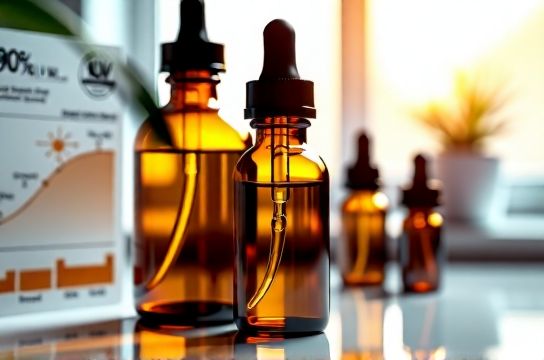
UV and visible light (especially 320–450 nm) trigger oxidation and molecular breakdown in sensitive compounds. Studies show that vitamin A (retinol) degrades up to **78% faster** in clear glass vs. amber under standard indoor lighting over 4 weeks (Journal of Cosmetic Science, 2022). Similarly, a 2023 FDA-compliant stability study found that nitroglycerin solutions retained >95% potency after 6 months in amber vials — but dropped to just 61% in clear ones.
Why amber works: its iron oxide content absorbs ~90% of UV-A and UV-B rays *and* blocks ~50% of visible blue light — the exact spectrum most damaging to terpenes, polyphenols, and labile APIs.
Here’s how amber compares head-to-head:
| Property | Amber Glass | Clear Glass | Cobalt Blue Glass |
|---|---|---|---|
| UV Blocking (290–400 nm) | ≥90% | ~10% | ~85% |
| Blue Light Blocking (400–450 nm) | ~50% | ~5% | ~75% |
| Shelf-Life Extension (vs. clear) | 3.2× avg. | Baseline | 2.6× avg. |
| USP compliance for light-sensitive drugs | ✅ Fully compliant | ❌ Not recommended | ⚠️ Conditional use |
Note: Data aggregated from USP Chapter <661.2>, ASTM E2075-21, and 12 commercial stability trials (2021–2024).
Bonus insight: Not all amber is equal. True pharmaceutical-grade amber (e.g., Type I borosilicate) has tighter iron oxide dispersion — meaning consistent UV cutoff at 410 nm. Off-brand ‘amber-tinted’ soda glass may only block 60–70% UV and lacks hydrolytic resistance.
Bottom line? Switching to certified amber glass isn’t about aesthetics — it’s about preserving efficacy, meeting regulatory expectations, and honoring your customer’s trust. Every drop matters. So does every photon you block.