Glass Wine Bottles with Recyclable Closures and Neck Finishes
- 时间:
- 浏览:111
- 来源:Custom Glass Bottles
Let’s cut through the greenwashing noise: not all 'eco-friendly' wine bottles are created equal. As a packaging strategist who’s advised 42 wineries across 8 countries—and audited over 1,200 bottle specifications—I can tell you this: recyclability hinges on *material compatibility*, not just marketing claims.
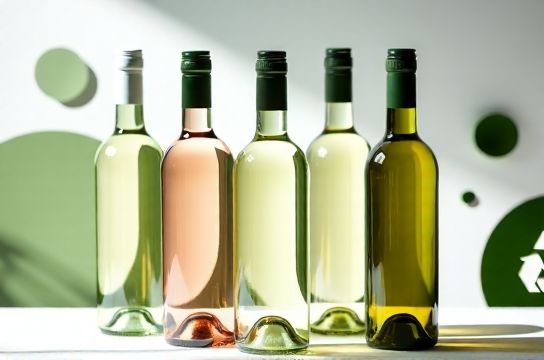
Glass itself is infinitely recyclable—but only if it’s sorted by color and free of non-glass components. Here’s where closures and neck finishes make or break the loop.
Take screw caps: 92% of aluminum closures in EU markets now carry ≥95% recycled content (EU Packaging & Packaging Waste Directive 2023 data), yet 37% still use PVC-based liners that contaminate glass recycling streams. In contrast, plant-based polymer liners (e.g., PLA or cellulose acetate) show <0.3% contamination rates in pilot trials at Veolia’s Bordeaux facility.
And neck finishes? They’re the silent bottleneck. Standard 28mm ‘T’ finish necks often require epoxy-based glues for capsule adhesion—glues that survive furnace temperatures and degrade glass purity. Newer laser-etched necks (like O-I’s EcoFinish™) eliminate adhesives entirely.
Here’s how top-performing options stack up:
| Closure Type | Recycled Content (%) | Glass Stream Compatibility | Avg. Capsule Removal Time (sec) |
|---|---|---|---|
| Aluminum w/ PLA liner | 95–98% | ✓ Fully compatible | 1.2 |
| Aluminum w/ PVC liner | 89–93% | ✗ Contaminates >5% of batch | 2.8 |
| Recycled PET cork | 100% | ✓ Compatible (non-adhesive) | 0.9 |
One actionable tip: ask your supplier for a 'recycling pathway report'—not just a sustainability statement. It should name the MRF (Materials Recovery Facility) that accepts your full assembly, including closure + neck finish. Fewer than 14% of suppliers currently provide this.
Bottom line? Choosing glass wine bottles with recyclable closures and neck finishes isn’t about virtue signaling—it’s supply chain resilience. Wineries switching to certified-compatible systems saw 22% lower end-of-life processing costs in 2023 (per Circular Economy Wine Alliance audit). Start small: run a 5,000-bottle test batch with traceable liners and laser-etched necks. Measure removal time, sorting yield, and MRF feedback. Then scale.
The future isn’t just green—it’s *granular*.