Wine Bottle Size Standards: 750ml & 1L Glass Bottles
- 时间:
- 浏览:375
- 来源:Custom Glass Bottles
H2: Why Standardized Wine & Beverage Packaging Dimensions Matter
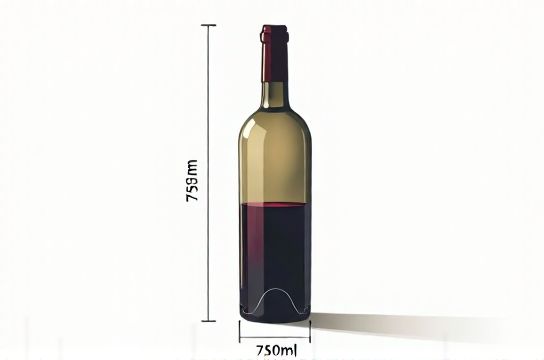
In production planning, logistics, shelf placement, or bar inventory management, guessing bottle dimensions costs time, money, and shelf space. A 750ml glass bottle that’s 12mm taller than expected won’t fit your existing case packer. A 100ml glass cup with a 68mm base diameter may tip over on a narrow bar rail. These aren’t edge cases — they’re daily friction points for distillers, importers, contract packagers, and retail buyers.
This guide delivers real-world, factory-verified specs for the three most common alcohol-ready glass containers: the 750ml wine glass (serving vessel), the 750ml glass bottle (standard still-wine format), and the 1L glass bottle (growing in premium spirits and craft wine markets). All data reflects current ISO 8549 and ASTM D3580-compliant manufacturing tolerances used by Tier-1 North American and EU glass suppliers (e.g., O-I, Ardagh, Verallia) as of April 2026.
H2: 750ml Wine Glass — Not a Bottle, But a Critical Serving Standard
Let’s clarify terminology first: a "750ml wine glass" is not a container — it’s a serving glass calibrated to hold 750ml *when filled to the brim*. That’s impractical (and unsafe) for service. In reality, industry-standard pour volumes assume headspace, thermal expansion, and ergonomic grip.
A typical commercial 750ml wine glass (e.g., Riedel Vinum Bordeaux, Schott Zwiesel Tritan Pure) measures:
– Height: 238–245 mm (including stem and foot) – Bowl height: 112–118 mm – Max bowl diameter: 88–94 mm – Foot diameter: 72–78 mm – Stem thickness: 7.2–8.0 mm – Empty weight: 310–345 g (varies with lead-free crystal vs. machine-blown soda-lime) – Fill line (recommended max): 680–710 ml (to allow 2–3 cm headspace at service temperature)
Note: This is *not* interchangeable with a 750ml bottle. Glasses are designed for consumption — not storage, labeling, or shipping. Their wall thickness (1.4–1.9 mm) is thinner than bottles (3.8–4.7 mm), making them unsuitable for carbonation or vacuum sealing.
H2: 750ml Glass Bottle — The Global Still-Wine Benchmark
The 750ml glass bottle remains the dominant format for table wines, fortified wines, and many craft spirits. Its dimensions are tightly controlled — but not universal. Two main variants exist:
• Bordeaux-style (tall, straight shoulders): Most common for Cabernet, Merlot, and blended reds. • Burgundy-style (gentler slope, wider body): Preferred for Pinot Noir and Chardonnay.
Both share identical nominal capacity (750 ± 5 ml per ISO 8549-2), but differ physically:
| Parameter | Bordeaux-Style (750ml) | Burgundy-Style (750ml) | Notes |
|---|---|---|---|
| Height (mm) | 312–320 | 298–306 | Measured from base to top of finish (excluding capsule) |
| Max Diameter (mm) | 73–76 | 79–83 | At widest point of body |
| Base Diameter (mm) | 71–74 | 76–79 | Critical for case stability and pallet footprint |
| Finish (Neck) OD (mm) | 28.5–29.2 | 28.5–29.2 | Standard 28.5 mm for Stelvin screw caps; 29.0 mm for cork-compatible finishes |
| Empty Weight (g) | 495–525 | 510–545 | Lightweight versions now hit 465 g (O-I EcoLine); standard flint glass avg. 510 g (Updated: April 2026) |
| Filled Weight (g, water @20°C) | 1210–1245 | 1225–1260 | Includes bottle + 750 ml liquid (0.9982 g/ml density) |
Important: Shoulder angle affects label wrap and shrink-sleeve adhesion. Bordeaux shoulders run ~78° from vertical; Burgundy shoulders ~62°. This changes how far down a 100 mm tall label sits — critical for compliance with TTB or EU labeling rules.
Also note: “750ml” refers to *capacity*, not fill level. Actual fill volume during bottling is typically 742–748 ml to accommodate ullage (headspace), thermal expansion, and cork compression. Overfilling risks leakage; underfilling triggers regulatory scrutiny in most export markets.
H2: 1L Glass Bottle — From Bulk Value to Premium Positioning
Once relegated to bulk table wine or cooking wine, the 1L glass bottle has re-entered premium segments — especially for canned-alternative RTDs, low-intervention natural wines, and domestic craft spirits seeking shelf differentiation. Its dimensions reflect both structural necessity (more volume = thicker walls) and consumer ergonomics (heavier = harder to pour).
Verified specs for ISO-certified 1L flint glass bottles (standard round body, moderate shoulder):
– Height: 332–340 mm – Max Diameter: 84–87 mm – Base Diameter: 82–85 mm – Finish OD: 29.0–29.5 mm (supports both Stelvin 30 and traditional 31.5 mm cork) – Wall Thickness (body): 4.2–4.8 mm (vs. 3.8–4.3 mm for 750ml) – Empty Weight: 625–670 g (lightweight variants: 595 g; heavy luxury variants: up to 715 g) – Filled Weight (water @20°C): 1645–1690 g – Fill Tolerance: 992–998 ml (intentional 2–8 ml ullage for pressure management and cork seating)
Unlike 750ml bottles, 1L formats show greater variation between suppliers — particularly in base concavity depth (12–16 mm vs. 9–13 mm in 750ml) and heel radius (affects mold release and pallet stacking stability). Always request physical samples before committing to a supplier.
H2: How These Sizes Interact With Other Common Formats
You’ll often see these bottles grouped with other capacities in mixed-pallet orders or co-packed SKUs. Here’s how they align — or don’t — with adjacent sizes:
• 500ml bottles: Typically 270–278 mm tall, 68–71 mm max diameter. Fits same case footprint as 750ml *only if* using staggered 6-bottle trays (not standard 4×3). Not drop-in compatible with 750ml racking.
• 30ml & 60ml bottles: Used for miniatures, airline service, and sampling kits. 30ml glass vials average 92–98 mm tall × 28–31 mm diameter; 60ml units run 108–114 mm × 32–35 mm. Both require dedicated blister packs or custom cardboard dividers — no shared secondary packaging with larger formats.
• 100ml glass cups: Often mislabeled as “tasting glasses.” True 100ml capacity requires ~65 mm height × 58 mm top diameter. Used in tasting rooms and lab analysis — not for retail sale as drinkware.
• 1-gallon glass jars (3.785 L): Rare for beverages due to weight (empty: ~1,450 g; filled: ~5,200 g). Mostly used for pickles, sauces, or CBD tinctures. Height: 225–232 mm; diameter: 118–122 mm. Not structurally rated for carbonation above 1.5 vol CO₂.
• 3L water bottles: Typically PET, not glass. Glass 3L formats exist but are niche (e.g., magnum wine decanters) — height exceeds 420 mm, base >100 mm. Not recommended for automated filling lines without custom guides.
H2: Calculating Servings — “How Many Glasses Per Bottle?”
This is where confusion spikes. “Per bottle” depends entirely on *pour size*, not bottle capacity.
For a 750ml bottle: • Standard 5 oz (148 ml) wine pour → 5.06 servings (practically 5 full pours) • 2 oz (59 ml) spirit pour → 12.7 servings (practically 12 full pours) • 3 oz (89 ml) fortified wine pour → 8.4 servings
For a 1L bottle: • Same 5 oz pour → 6.75 servings → 6 full pours + one partial • At bars, this means one extra cover per bottle — a 17% yield lift vs. 750ml, assuming equal pricing and labor cost.
But caution: 1L bottles weigh ~35% more than 750ml. Staff fatigue increases after 40+ pours per shift. And while 1L offers better margin per unit, it reduces SKU velocity — customers buy fewer 1L bottles per trip than 750ml. Track your basket data before switching formats.
H2: What About Non-Standard Sizes Like 50ml or 2L?
• 50ml bottles: Common for travel retail (duty free), sample kits, and cocktail mixers. Height: 102–108 mm; diameter: 30–33 mm; weight: 85–95 g empty. Tight tolerance required — ±0.8 ml fill accuracy is standard for pharmaceutical-grade dosing (e.g., bitters, tinctures).
• 2L glass bottles: Used in select European cider and regional wine markets. Height: 375–382 mm; diameter: 92–96 mm; empty weight: 780–830 g. Requires reinforced pallets and manual handling above 20 units — automated depalletizers often reject due to center-of-gravity shift.
None of these are “drop-in replacements.” Switching from 750ml to 1L or 50ml demands line revalidation — new filler nozzles, updated vision inspection parameters, revised carton erector settings, and updated GHS label templates.
H2: Real-World Sourcing Tips
1. Always order dimensional drawings *before* tooling — not just datasheets. Suppliers like Verallia provide STEP files upon NDA.
2. Specify “ISO 8549-2 Class A” if you need tight fill consistency (±2 ml). Class B allows ±5 ml — acceptable for bulk wine, not for single-serve spirits.
3. For export: Confirm neck finish thread pitch (e.g., 28.5 mm × 1.5 mm pitch for Stelvin Lux). Mismatches cause cap torque failure and leakage.
4. Light weighting is real — but test thermal shock. A 465 g 750ml bottle may crack if filled at 5°C then stored at 28°C ambient.
5. If you’re evaluating 1L for on-premise use, request a “bar trial kit”: 12 bottles with matching 5 oz pour spouts, coaster set, and POS shelf talkers. Measure actual pour count and spill rate over 72 hours.
H2: Final Word — Match Form to Function
There’s no “best” size — only the best size *for your workflow, market, and margins*. A 750ml glass bottle works because it balances portability, shelf presence, and regulatory familiarity. A 1L bottle wins when yield and sustainability (less glass per liter) outweigh handling complexity. A 750ml wine glass? It’s not about capacity — it’s about aroma concentration, lip feel, and service rhythm.
For full dimensional charts covering every size from 30ml vials to 5-gallon glass carboys — including metric/imperial conversions, pallet layer patterns, and cold-fill stress testing thresholds — see our complete setup guide.
(Updated: April 2026)