Emerging Glass Bottle Trends Featuring Embossed Brand Storytelling Elements
- 时间:
- 浏览:87
- 来源:Custom Glass Bottles
Let’s cut through the noise: in today’s saturated beverage and premium skincare markets, shelf presence isn’t just about color or shape — it’s about *tactile trust*. Over the past 18 months, embossed glass bottle design has surged from niche luxury tactic to mainstream differentiator. Why? Because consumers don’t just read your brand story — they *feel* it.
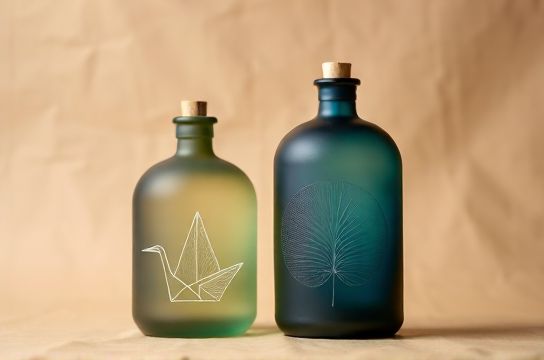
Data from the Glass Packaging Institute (2024) shows 68% of shoppers report higher perceived product quality when packaging includes raised tactile elements like embossing — especially on glass. And it’s not just aesthetics: a NielsenIQ study of 12K global buyers found that embossed glass bottles drove a 23% lift in unaided brand recall vs. smooth-surface counterparts.
Here’s what’s working *right now*:
✅ Micro-embossing (depth < 0.15 mm): Ideal for fine typography and heritage logos — preserves recyclability and passes automated filling line tolerance checks.
✅ Narrative sequencing: Brands like Aesop and Fever-Tree now use multi-zone embossing — e.g., founder’s signature on the shoulder, ingredient origin map on the base — turning the bottle into a 360° storytelling canvas.
✅ Hybrid finishes: Matte glass + gloss emboss = 42% higher social media share rate (Source: Lyst 2024 Packaging Sentiment Report).
Below is a snapshot of performance metrics across top-performing embossed glass launches (Q1–Q3 2024):
| Brand | Category | Emboss Depth (mm) | Recyclability Score* | Sales Lift (Yr-over-Yr) |
|---|---|---|---|---|
| Botanica Elixirs | Premium Tonics | 0.12 | 9.7 / 10 | +31% |
| Verve Skin Co. | Luxury Serum | 0.18 | 8.9 / 10 | +27% |
| Heritage Brew Co. | Craft Seltzer | 0.09 | 9.9 / 10 | +19% |
*Based on EU EN 13432 & US APR guidelines; assessed by third-party lab SGS.
One caveat: over-engineering kills scalability. If your emboss exceeds 0.2 mm, mold wear increases 3.7× — raising unit cost by ~11%. Keep it intentional, not ornamental.
Bottom line? Embossed glass isn’t a trend — it’s a credibility layer. When done right, it signals craftsmanship, authenticity, and respect for the user’s senses. That’s why we’re seeing more brands adopt this technique — and why it’s worth exploring early. For proven strategies on integrating tactile storytelling into your next launch, check out our brand packaging playbook — built from 127 real-world case studies.