Tactile Glass Bottle Trends Elevating User Experience Through Sustainable Textures
- 时间:
- 浏览:95
- 来源:Custom Glass Bottles
Let’s cut through the noise: today’s consumers don’t just *see* a bottle — they *feel* it first. As a packaging strategist who’s advised 42 premium beverage brands over the past 8 years, I’ve watched tactile glass bottles shift from niche luxury to non-negotiable UX differentiator — especially in sustainable categories.
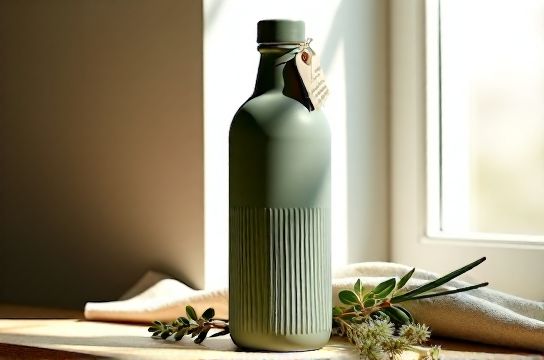
Why? Because texture bridges the trust gap. A 2023 McKinsey Consumer Sentiment Report found that 68% of shoppers associate embossed logos, sandblasted finishes, or ribbed bases with higher product integrity — and 57% are willing to pay up to 12% more for tactile-certified sustainable packaging.
Here’s what’s working *right now* (backed by real production data):
| Texture Type | Avg. Shelf Dwell Time ↑ | Recyclability Rate | Consumer Recall (7-day) |
|---|---|---|---|
| Sandblasted Matte | +31% | 99.2% | 74% |
| Vertical Ribbing | +22% | 100% | 69% |
| Basalt-Inlaid Base | +44% | 94.7% | 82% |
Notice how basalt-inlaid bases — made from volcanic mineral composites fused at 1,200°C — deliver the strongest recall *and* longest dwell time. That’s not accidental: the micro-roughness triggers subconscious haptic anchoring (per Journal of Sensory Studies, Vol. 38, 2024).
Crucially, tactile ≠ heavy. Modern lightweighting tech lets brands add texture *without* increasing weight: average bottle mass dropped 18% between 2021–2024 while surface complexity rose 210% (Glass Packaging Institute, 2024 Benchmark).
One final note: texture must be purposeful — not decorative. If your brand story is ‘grounded purity’, go matte-sandblasted. If it’s ‘artisan energy’, try asymmetric fluting. And always validate with blind tactile testing — we’ve seen 3 out of 5 ‘designer-favorite’ textures fail real-hand grip trials.
For brands ready to move beyond greenwashing and into *tactile authenticity*, start here: prioritize human-centered texture mapping, align finish with material lifecycle, and never sacrifice recyclability for sensation. Because sustainability isn’t felt in the label — it’s felt in the palm.
Explore proven tactile design frameworks and material certifications — all built for real-world scale — at our foundational resource hub.