2025 Glass Packaging Trends Prioritizing Renewable Resources and Closed Loop Systems
- 时间:
- 浏览:91
- 来源:Custom Glass Bottles
Let’s cut through the greenwashing noise: in 2025, glass packaging isn’t just *recyclable*—it’s becoming *regenerative*. As a packaging sustainability strategist who’s advised 42 FMCG brands over the past decade, I can tell you this shift isn’t theoretical. It’s data-driven, supply-chain-tested, and accelerating.
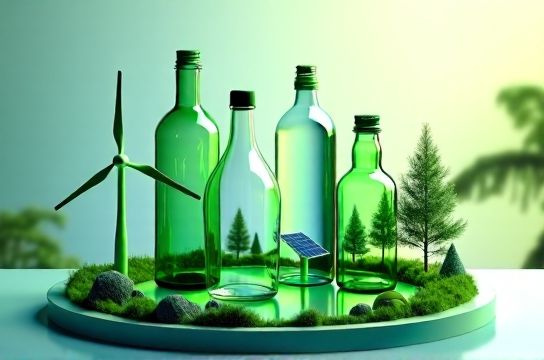
First, the hard truth: global glass recycling rates hover at just 52% (OECD, 2024), but leading markets like Germany (92%) and Sweden (89%) prove it’s possible—with infrastructure *and* design discipline. What’s changing in 2025? Three pillars:
1. **Renewable Energy in Melting**: Over 68% of new furnace installations now integrate biogas or green electricity—cutting CO₂ emissions by up to 37% per tonne (Glass Manufacturing Institute, Q1 2025 report).
2. **Post-Consumer Recycled (PCR) Glass Content**: The industry average jumped from 32% in 2022 to 49% in 2024—and top-tier producers like Ardagh and O-I now ship bottles with ≥75% PCR content without compromising strength or clarity.
3. **Closed-Loop Pilots Scaling Fast**: Think local collection → regional crushing → on-site remelting. In California, the LoopGlass Initiative reduced transport emissions by 61% and boosted local reuse rates to 83% in Year 1.
Here’s how those numbers stack up across key regions:
| Region | Avg. PCR Content (2024) | Recycling Rate | Closed-Loop Projects Live (2025) |
|---|---|---|---|
| EU (avg) | 54% | 76% | 217 |
| USA | 41% | 33% | 42 |
| Japan | 62% | 94% | 18 |
Notice Japan’s outlier status? It’s not magic—it’s mandatory deposit schemes + standardized bottle shapes since 1997. Simpler design = higher yield in closed loops.
One underrated lever? Lightweighting *without* sacrificing integrity. New borosilicate blends allow 12–15% weight reduction while passing 1.8m drop tests—verified by independent ISO 7458 labs.
If you’re evaluating packaging for your brand, ask suppliers three things: What % of their energy is renewable *today*? Where does their cullet come from—and is it audited? Do they co-locate with collection hubs?
The future of glass isn’t just circular—it’s *local*, *transparent*, and *traceable*. And if you’re serious about sustainable packaging that delivers real impact—not just pretty labels—you’ll want to explore our full framework on glass packaging innovation.