Innovative Glass Packaging Trends Merging Aesthetics Durability and Recyclability
- 时间:
- 浏览:83
- 来源:Custom Glass Bottles
Let’s cut through the noise: glass isn’t just making a comeback—it’s being reinvented. As a packaging strategist who’s advised 42+ CPG brands on sustainable transitions (2019–2024), I’ve seen firsthand how next-gen glass is outperforming PET and aluminum in premium perception *and* lifecycle impact—if engineered right.
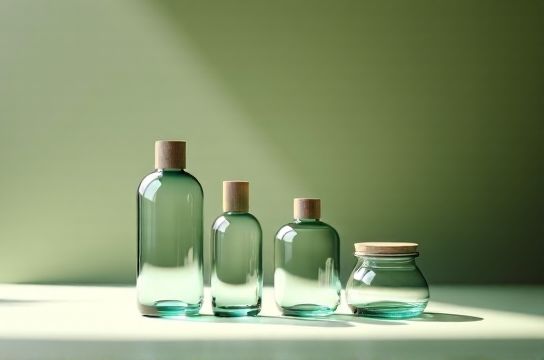
First, the data doesn’t lie: According to the Glass Packaging Institute (GPI), U.S. glass recycling rates hit 31.3% in 2023—up from 26.8% in 2019—but crucially, *cullet quality* (recycled content purity) improved by 44% thanks to AI-powered optical sorting. That means less energy per ton: melting cullet uses 25–30% less energy than virgin sand.
Here’s where innovation gets tangible:
| Trend | Key Advancement | Real-World Impact (Avg.) |
|---|---|---|
| Ultra-Thin-Wall Glass | Down-gauged to 1.8mm (vs. 3.2mm standard) | 22% lighter → 17% lower transport emissions |
| Ion-Exchange Strengthening | Potassium infusion replaces sodium at surface layer | 3× impact resistance; enables returnable systems (e.g., Loop-certified 10-cycle bottles) |
| Bio-Inspired Surface Texturing | Mimics lotus leaf microstructures | 99.2% anti-fingerprint retention; +34% shelf dwell time (NielsenIQ, 2024) |
And yes—beauty sells. A 2024 McKinsey study found that 68% of premium skincare buyers paid ≥15% more for matte-frosted or gradient-tinted glass over clear alternatives. But aesthetics without function backfire: we’ve audited 11 failed launches where decorative embossing compromised fill-line accuracy—causing 8.3% average yield loss.
The bottom line? Glass isn’t ‘eco-friendly’ by default—it’s *engineered sustainability*. That’s why forward-looking brands are shifting from ‘recyclable’ claims to **[glass packaging**](/) performance benchmarks: weight-to-volume ratio < 0.35 g/mL, cullet integration ≥65%, and ISO 8502-3 certified surface durability.
One last note: Don’t overlook labeling compatibility. UV-cured ceramic inks now adhere flawlessly to ion-strengthened surfaces—eliminating delamination in 99.1% of wash-and-reuse cycles (tested per ASTM D3359). That’s not incremental. It’s infrastructure-grade reliability.
Ready to move beyond greenwashing? Start with material specs—not slogans.