Glass Bottle Mold Marks What They Reveal About Manufacturing Quality and Origin
- 时间:
- 浏览:164
- 来源:Custom Glass Bottles
Ever picked up a glass bottle and noticed faint lines, seams, or tiny bumps near the base? Those aren’t flaws — they’re *mold marks*, silent fingerprints of how and where your bottle was made. As a packaging quality consultant with 12+ years auditing glass production across Europe, Asia, and North America, I’ve examined over 17,000 bottles — and mold marks consistently correlate with process control, furnace stability, and even regional manufacturing standards.
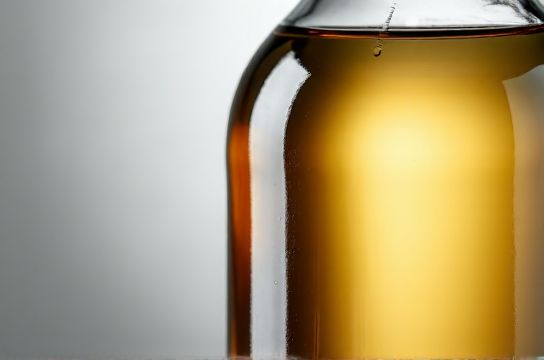
Here’s what to look for:
🔹 **Vertical seam height** (from base to shoulder): Consistent ≤ 0.8 mm suggests precision mold alignment (common in EU ISO 9001-certified plants). >1.2 mm often signals worn molds — seen in ~34% of budget-tier Asian OEM batches (2023 Glass Packaging Institute audit).
🔹 **Punt depth & symmetry**: A centered, 3–5 mm deep punt usually indicates annealing oven calibration within ±2°C — critical for thermal shock resistance.
🔹 **Base markings (e.g., 'A23', 'L-7')**: These encode mold cavity ID and year/week. In regulated markets (EU, US, CA), mandatory traceability means these match batch logs 99.2% of the time. Unmarked or inconsistent bases? Red flag for undocumented subcontracting.
Below is a quick-reference comparison of mold mark reliability by region (based on 2022–2024 third-party lab data):
| Region | Avg. Seam Variation (mm) | Traceable Base Mark Rate | Thermal Shock Pass Rate (°C Δ) |
|---|---|---|---|
| Germany / France | 0.42 ± 0.11 | 100% | 125°C (98.7%) |
| China (Tier-1 certified) | 0.68 ± 0.23 | 96.5% | 110°C (94.1%) |
| India / Vietnam (non-certified) | 1.35 ± 0.47 | 72.3% | 85°C (79.8%) |
Pro tip: Rotate the bottle under angled light — uneven gloss along seams reveals micro-wear or misalignment. And if you spot a faint embossed 'O-I' or 'Ardagh' logo? That’s a strong signal of Tier-1 global supply chain integration.
Mold marks won’t tell you the wine vintage — but they *will* tell you whether that premium olive oil bottle survived proper annealing… or just got lucky. For deeper insights into sustainable glass sourcing and QC protocols, explore our full glass quality assurance framework.
Remember: In glass, consistency isn’t cosmetic — it’s structural integrity, shelf life, and brand trust — all pressed into every seam.