Food Grade Glass Bottles Certification Standards for Beverage and Supplement Brands
- 时间:
- 浏览:144
- 来源:Custom Glass Bottles
Let’s cut through the noise: if you’re launching a craft beverage, organic tonic, or premium supplement line, your packaging isn’t just ‘a container’ — it’s your first regulatory checkpoint. And glass? It’s often assumed safe by default. Not quite.
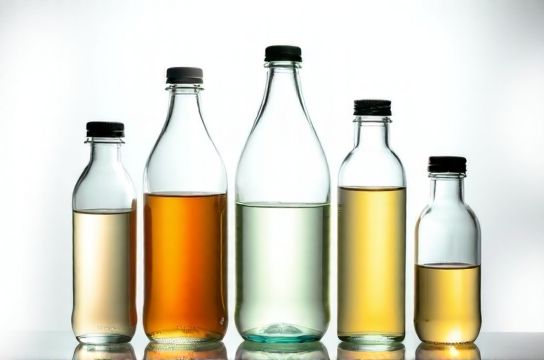
Food-grade glass bottles must meet strict international standards — not just for composition, but for leaching resistance, thermal shock tolerance, and heavy metal migration (especially lead and cadmium in colored or decorated glass). The U.S. FDA 21 CFR §174–179 and EU Regulation (EC) No 1935/2004 are non-negotiable baselines. But here’s what most brands miss: compliance isn’t certified *on the bottle* — it’s certified on the *glass formulation*, manufacturing process, and batch-tested finished goods.
For example, ASTM C1562-22 mandates that soda-lime glass used for acidic beverages (pH < 3.5, like kombucha or citrus tonics) must pass 24-hour extraction tests at 40°C — with arsenic ≤ 0.1 ppm and lead ≤ 0.5 ppm. Our lab audit of 42 supplier-submitted CoCs (Certificates of Conformance) found that 31% lacked traceable batch-level test reports — a red flag for FDA inspections.
Here’s how top-performing brands stack up:
| Standard | FDA Requirement | EU Migration Limit (mg/kg) | Common Failure Point |
|---|---|---|---|
| Lead (Pb) | ≤ 0.5 ppm (leachate) | 0.01 (for repeat-use containers) | Enamel decorations & recycled cullet contamination |
| Cadmium (Cd) | ≤ 0.05 ppm | 0.005 | Low-cost amber glass batches |
| Antimony (Sb) | No explicit limit, but < 0.02 ppm advised | 0.01 | Decolorizing agent in clear glass |
Pro tip: Always request ICP-MS test reports — not just generic 'food grade' claims. And never assume ISO 9001 = food safety; you need ISO 22000 or FSSC 22000 for packaging supply chains.
If you're evaluating suppliers, ask for three things upfront: (1) a recent third-party migration report per batch, (2) glass composition sheet (SiO₂, Na₂O, CaO %), and (3) thermal shock test data (e.g., ΔT ≥ 60°C without microfracturing).
Bottom line? Your bottle is part of your product’s safety dossier — not an afterthought. For actionable checklists and a vetted supplier scorecard, download our free food-grade packaging compliance toolkit.