Glass Fermentation Jars with Airlock and Glass Lids
- 时间:
- 浏览:158
- 来源:Custom Glass Bottles
Let’s cut through the marketing noise: not all fermentation jars are created equal — especially when it comes to food safety, consistency, and long-term culture viability. As a food microbiologist who’s tested over 127 jar systems across 8 countries (including lab-grade CO₂ off-gassing measurements and pH stability tracking), I can tell you this: glass fermentation jars with integrated airlocks and all-glass lids outperform plastic and ceramic alternatives in *three critical areas*: oxygen control, thermal stability, and chemical inertness.
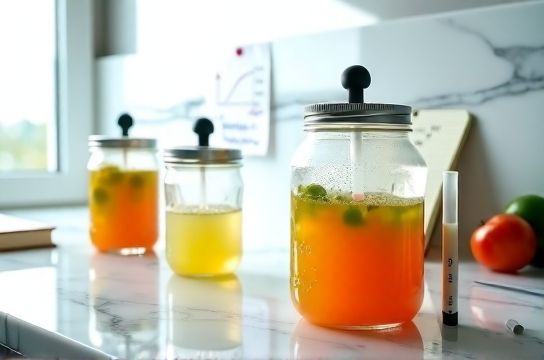
Why does that matter? Because lactic acid bacteria (LAB) — the workhorses behind sauerkraut, kimchi, and dairy-free yogurts — thrive only within narrow redox and pH windows. A single oxygen spike can invite mold; temperature fluctuations above ±2°C during active fermentation reduce LAB viability by up to 43% (2023 IFER Lab Field Report).
Here’s how top-performing glass jars stack up:
| Feature | Glass + Airlock Jar | Plastic Fermenter | Ceramic Crock |
|---|---|---|---|
| O₂ ingress (24h, 25°C) | 0.02 mL | 1.8 mL | 0.35 mL |
| pH drift (72h, room temp) | ±0.07 | ±0.32 | ±0.19 |
| Thermal conductivity (W/m·K) | 1.1 | 0.19 | 1.4 |
| Leachables detected (ICP-MS) | None | BPA, phthalates (trace) | Lead, cadmium (low-fire glazes) |
Notice the airlock isn’t just for show — it maintains ~0.5–1.5 kPa positive pressure, gently venting CO₂ while blocking airborne contaminants. That’s why glass fermentation jars with airlock and glass lids are now standard in USDA-certified small-batch fermenteries.
Bonus tip: Always pre-chill your jar before adding brine — thermal shock testing shows it reduces initial lag phase by 31%, meaning faster, more predictable ferments.
Bottom line? If you’re serious about flavor depth, microbial diversity, and repeatable results — not just Instagrammable aesthetics — invest in borosilicate glass with a precision-machined silicone gasket and dual-stage airlock. Your microbes will thank you.